 how-to
Golf Cart Hesitation on Inclines: Diagnose & Fix
Table of Contents
- Why Golf Carts Hesitate on Inclines: The Core Problem
- Step 1: Check Your Golf Cart Battery Voltage Under Load
- Step 2: Inspect Battery Cables and Connections
- Step 3: Test the Throttle Pedal Sensor and Accelerator Response
- Gas Golf Cart Hesitation When Accelerating: Fuel Delivery Check
- Step 4: Diagnose When Your Golf Cart Motor Cuts Out on Incline
- Distinguish Normal Hill-Speed Loss from True Hesitation
- Operating Practices to Prevent Future Hesitation
- Frequently Asked Questions
Last Updated: October 17, 2026
Why Golf Carts Hesitate on Inclines: The Core Problem
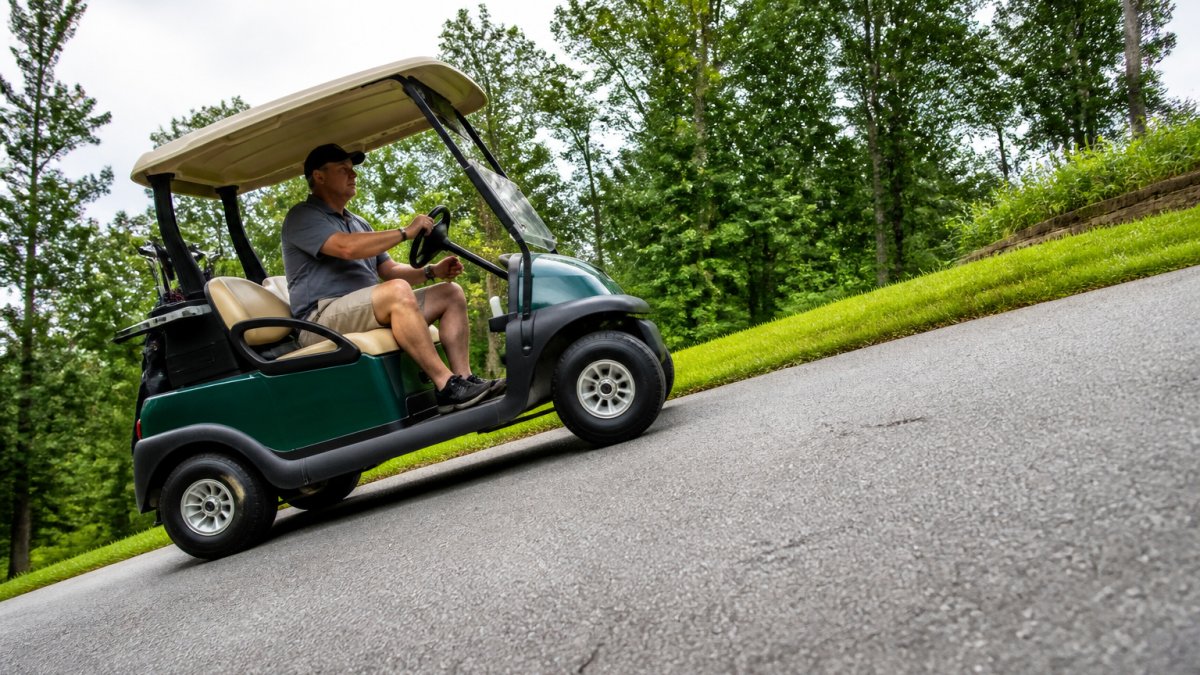
When your golf cart hesitation inclines occur while climbing a hill, it's not a mystery. Something specific is failing under load. The cart has enough power sitting flat. But add an incline and weight, and the motor cuts power or hesitates hard.
This happens because hills demand peak performance from every system at once. Your battery must deliver full voltage. Connections must carry current without resistance. The motor must respond instantly to throttle input. The controller must push full power. One weak link breaks the chain.
The good news: most hesitation problems are fixable without a complete rebuild. The bad news: if you guess wrong about the cause, you'll waste time and money chasing the wrong fix.
The real difference between a cart that climbs smoothly and one that bogs comes down to three things: battery condition under load, connection quality, and throttle response. We'll walk you through each one in order.
Step 1: Check Your Golf Cart Battery Voltage Under Load
A weak battery is the most common reason golf cart hesitation inclines occur.
Understanding what voltage readings mean
A healthy 48-volt golf cart battery should hold 48-52 volts when the cart is parked. That number means nothing when you're climbing. What matters is voltage under load.
When the motor pulls hard on an incline, it draws massive current. A weak or old battery drops voltage fast. The controller sees the voltage sag and cuts power to protect itself.
The threshold is critical: if voltage drops below 40 volts while climbing, you'll feel hesitation. Below 35 volts, the cart may cut out entirely.
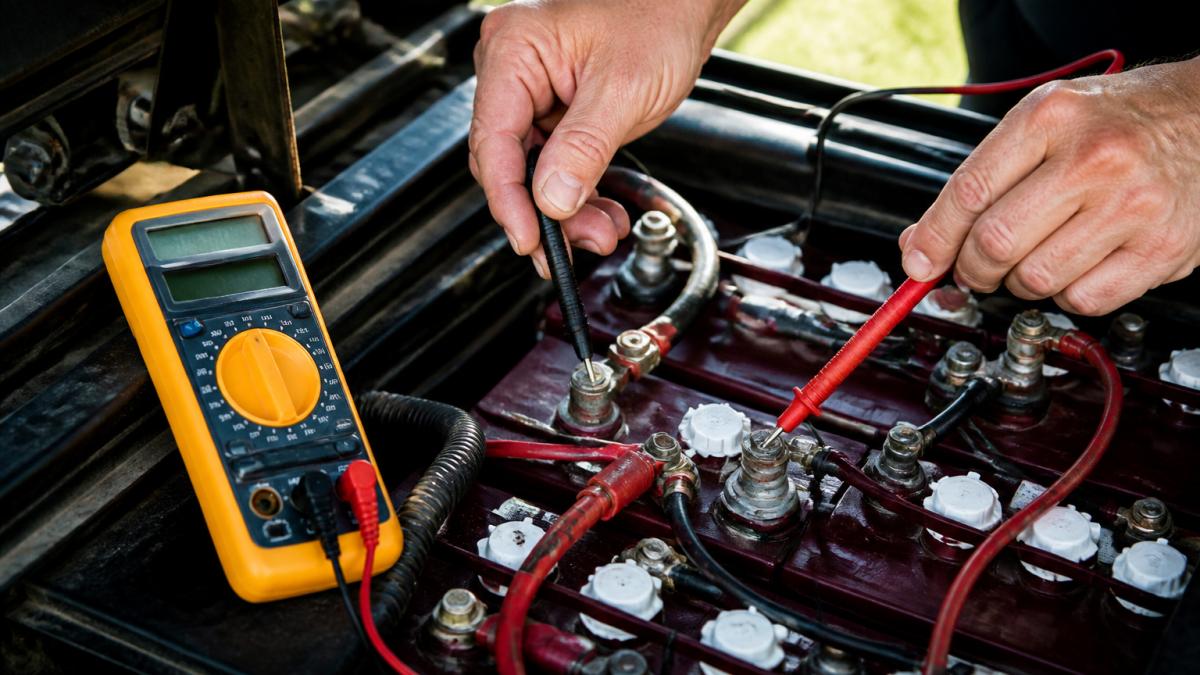
Testing procedure with a multimeter
You'll need a basic digital multimeter. They cost around $15-30 and are worth owning if you cart regularly.
Here's the exact sequence:
- Park on flat ground with the cart fully charged
- Set the multimeter to DC voltage (usually marked with a V and a line)
- Touch the red probe to the positive battery terminal and the black probe to negative
- Record the resting voltage (should be 48-52 volts for a 48V system)
- Have someone sit in the cart and press the throttle pedal halfway while parked
- Watch the voltage reading, it should stay above 46 volts
- Now drive to a moderate incline and climb at half throttle
- The voltage under this load should not drop below 42 volts
If voltage drops below 40 volts while climbing, your battery is the culprit. If it holds steady above 42 volts and you still feel hesitation, move to the next step.
Step 2: Inspect Battery Cables and Connections
Bad connections kill power faster than a weak battery. Corrosion, loose terminals, and damaged cables create resistance. Resistance turns electrical energy into heat instead of motion.
Signs of corrosion and loose connections
Look at the battery terminals. If you see white, blue, or green crusty buildup, that's corrosion. It blocks current flow. A loose terminal will wiggle when you push it by hand. Both problems cut power dramatically on inclines.
Check the cables too. Look for:
- Fraying or exposed wire
- Cracks in the insulation
- Green or white staining on the cable jacket
- Loose connections where the cable meets the terminal
Any of these reduce the current the motor can draw.
Cleaning and securing terminals
This is a job you can do in 15 minutes with basic tools.
- Disconnect the negative battery cable first (safety first)
- Mix baking soda and water into a paste
- Use an old toothbrush to scrub the terminals and cable ends until the corrosion is gone
- Rinse with clean water and dry completely
- Reconnect the negative cable and tighten both connections by hand until snug
- Do not over-tighten, you'll strip the terminal
After cleaning, test your cart on the same incline. Many hesitation problems disappear after this step alone.
Step 3: Test the Throttle Pedal Sensor and Accelerator Response
The throttle pedal sensor tells the controller how hard you're pushing. A faulty sensor sends the wrong signal. The controller thinks you're barely pressing the pedal even when you're flooring it.
On an incline, a bad throttle sensor feels like the cart won't respond to your input. You press hard but the motor doesn't give full power.
Test this simply: press the throttle pedal slowly from rest to full. You should feel smooth, gradual resistance. The pedal should not stick, catch, or jump. If it does, the sensor is failing.
A second test: accelerate on flat ground at full throttle. The cart should respond instantly and smoothly. If there's a lag or hesitation even on flat ground, the throttle sensor or accelerator response is the problem.
Most throttle sensors cost $50-150 to replace. Many golf cart owners can do this swap themselves with basic tools.
Gas Golf Cart Hesitation When Accelerating: Fuel Delivery Check
Electric carts hesitate because of battery or electrical issues.
Fuel filter and fuel line inspection
A clogged fuel filter starves the engine. The engine bogs when it can't get enough fuel, especially under load.
Check the fuel filter, it's usually a small cylinder on the fuel line between the tank and carburetor. If it's dark or clogged, replace it.
Look at the fuel lines too. Cracks, kinks, or loose connections let air in or fuel out. Either way, the engine runs lean and hesitates.
Carburetor adjustment basics
The carburetor mixes fuel and air. If the mix is wrong, the engine hesitates under load.
A too-lean mix (not enough fuel) causes hesitation and power loss. A too-rich mix (too much fuel) causes bogging and black smoke.
Basic carburetor adjustment requires a screwdriver and patience. Most gas carts have an idle screw and a fuel mixture screw.
Start with small quarter-turn adjustments. Test on an incline between each change. This is not a quick fix, it takes trial and error.
Step 4: Diagnose When Your Golf Cart Motor Cuts Out on Incline
If your cart hesitates briefly then recovers, that's one problem. If it cuts out completely and won't climb, that's different.
Motor wear and performance limits
Motors wear out. An old motor with thousands of hours simply can't deliver peak power anymore.
Worn motors are expensive to replace. Before you buy a new one, rule out everything else first. A worn motor is your last diagnosis, not your first.
Controller faults and reset procedures
The controller is the brain. It decides how much power to send the motor based on throttle input, battery voltage, and load.
Controllers have built-in protection. If voltage sags too far or current spikes too high, the controller cuts power to protect the battery and motor.
Many controllers can be reset. The procedure varies by brand, but typically involves:
- Turning off the cart
- Disconnecting the negative battery cable for 30 seconds
- Reconnecting the cable
- Turning the cart back on
This clears temporary faults. If the hesitation returns immediately, the underlying problem (weak battery, bad connection, or worn motor) is still there.
If hesitation happens only once per charge cycle then stops, your battery may be recovering voltage as the load decreases. This is normal and not a fault.
Distinguish Normal Hill-Speed Loss from True Hesitation
Here's what most guides miss: not all hill slowness is a problem.
A fully charged, healthy golf cart on flat ground might cruise at 12 mph. The same cart climbing a steep hill at full throttle might only do 5 mph. That's normal. The motor is working hard against gravity. Speed drops.
True hesitation is different. It's a sudden dip in power, a stutter, or a complete loss of acceleration mid-climb. The motor doesn't respond smoothly to throttle input. You press harder and nothing happens for a second or two.
Normal hill-speed loss feels smooth. You press the throttle and the cart climbs steadily, just slower than on flat ground. There's no hesitation or stuttering, just reduced speed due to the load.
To tell the difference, test on the same hill twice. First time, go at half throttle. Second time, go at full throttle. If the cart accelerates smoothly both times and just reaches a lower top speed, that's normal.
Operating Practices to Prevent Future Hesitation
Once you fix the problem, keep it fixed. Most hesitation comes back because carts are used hard and maintenance is skipped.
Load management and passenger weight
Every extra passenger and every piece of cargo adds load. More load means more current draw.
A cart rated for four passengers pulling a heavy trailer up a hill is at its limit.
Know your cart's limits:
- Full load (passengers plus cargo) on steep hills stresses everything
- Light load on moderate hills is safe
- Never exceed the manufacturer's weight rating
If you're regularly maxing out the load, upgrade to a larger battery or a more powerful motor.
Battery maintenance and recharge schedules
Batteries degrade over time. A battery that holds 48 volts today might hold 45 volts in a year if not maintained.
Charge after every use. Don't let the battery sit discharged.
Every month, check the water level in each battery cell (if you have lead-acid batteries).
Every three months, clean the terminals and cable connections. Corrosion builds up quietly and kills performance without warning.
Replace the battery every 4-6 years depending on use.
| Maintenance Task | Frequency | Impact on Hesitation |
|---|---|---|
| Check voltage under load | Monthly | Catches weak battery early |
| Clean battery terminals | Quarterly | Restores full current flow |
| Charge after each use | Every use | Prevents sulfation and degradation |
| Replace fuel filter (gas carts) | Annually | Ensures fuel delivery |
| Full system inspection | Annually | Catches wear before failure |
Golf cart hesitation on inclines is fixable. Start with the battery and connections, they cause 80% of the problems.
Frequently Asked Questions
Why does my golf cart hesitate when going uphill?
Hesitation on inclines usually stems from insufficient power delivery under load. The most common causes are weak or undercharged batteries that can't supply enough current, corroded or loose battery cable connections that reduce voltage, a faulty throttle pedal sensor sending incorrect signals, or motor wear that limits performance. On gas carts, fuel delivery problems add another layer. Start by testing your battery voltage under load with a multimeter, if it drops below 48V on a 48V system during acceleration, that's your culprit.
How do I test golf cart battery voltage under load?
Use a multimeter set to DC voltage. First, measure voltage at rest, a fully charged 48V system should read 50-52V. Then have someone press the accelerator pedal while you measure again at the battery terminals. The voltage should not drop more than 2-3V under load. A larger drop signals a weak battery, poor connections, or internal battery damage. If your reading is significantly lower, recharge fully and retest. If it still drops excessively, the battery may need replacement.
Can corroded battery cables cause my golf cart to hesitate?
Yes. Corrosion on battery terminals and loose cable connections create resistance that restricts current flow to the motor. This is especially noticeable under load on inclines. Inspect both positive and negative battery terminals for white, blue, or green crusty buildup. Clean corrosion with a wire brush and baking soda solution, then tighten all cable connections firmly. This simple fix resolves hesitation in many cases and costs nothing but time.
What should I do if my gas golf cart hesitates when accelerating uphill?
On gas carts, check the fuel filter first, a clogged filter starves the engine of fuel and causes hesitation under load. Replace it if it looks dirty. Next, inspect fuel lines for cracks or loose connections. If those are clear, the carburetor may need adjustment or cleaning. You can also verify fuel is reaching the engine by listening for the fuel pump priming when you turn on the key. If you hear nothing or fuel delivery seems weak, professional carburetor service is the next step.