 how-to
Why Golf Cart Repairs Take Long: Causes and Timelines
Table of Contents
- Why Golf Cart Repairs Take Long: The Real Reasons Behind the Wait
- How Long Does Golf Cart Repair Take? Typical Timelines by Job Type
- Golf Cart Diagnostic Time: Why Finding the Problem Takes Half the Battle
- Golf Cart Parts Availability and Why It Delays Your Repair
- Shop Workload and Seasonal Demand: When Everyone Needs Service at Once
- How to Speed Up Golf Cart Repairs: What Owners Do
- Conclusion
- Frequently Asked Questions
Last Updated: October 7, 2026
Why Golf Cart Repairs Take Long: The Real Reasons Behind the Wait
Golf cart repairs take long because the delay usually happens before a wrench ever touches your cart. Diagnosis, parts ordering, and shop workload eat most of the calendar time.
Here is what most owners get wrong. They assume the repair clock starts when the mechanic starts working. It actually starts the moment you drop the cart off.
The Diagnostic Phase Nobody Warns You About
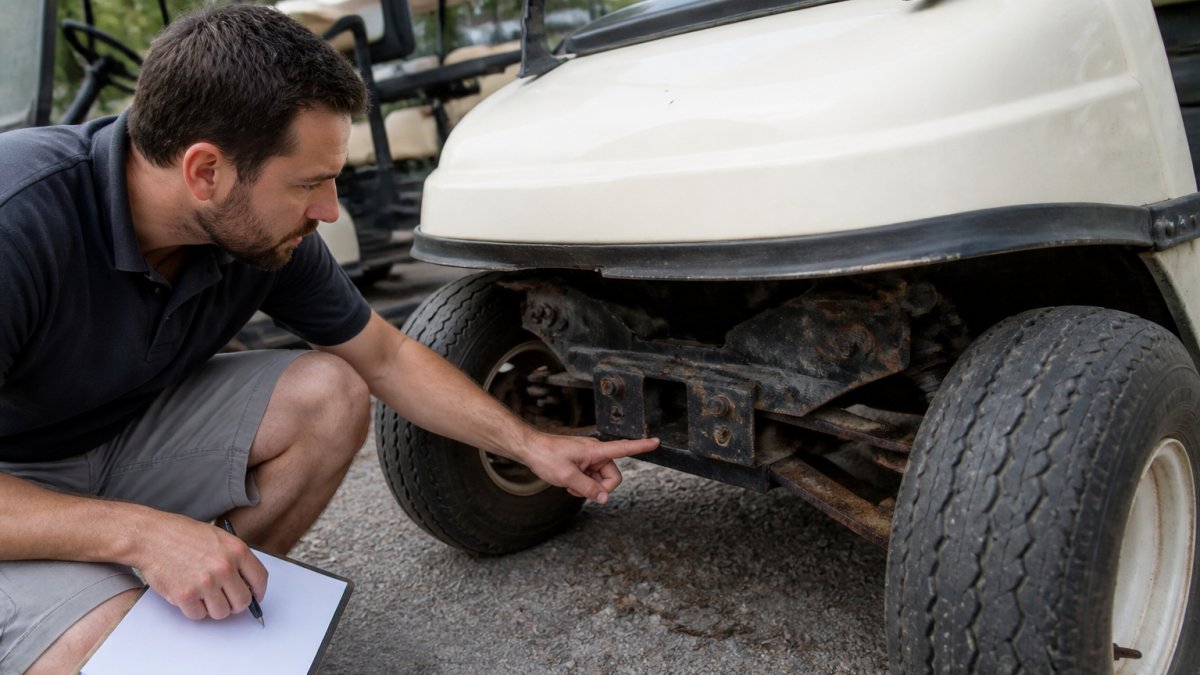
Diagnosis is the first hidden delay. A cart that won't move, won't start, or clicks when you press the pedal can have several possible causes.
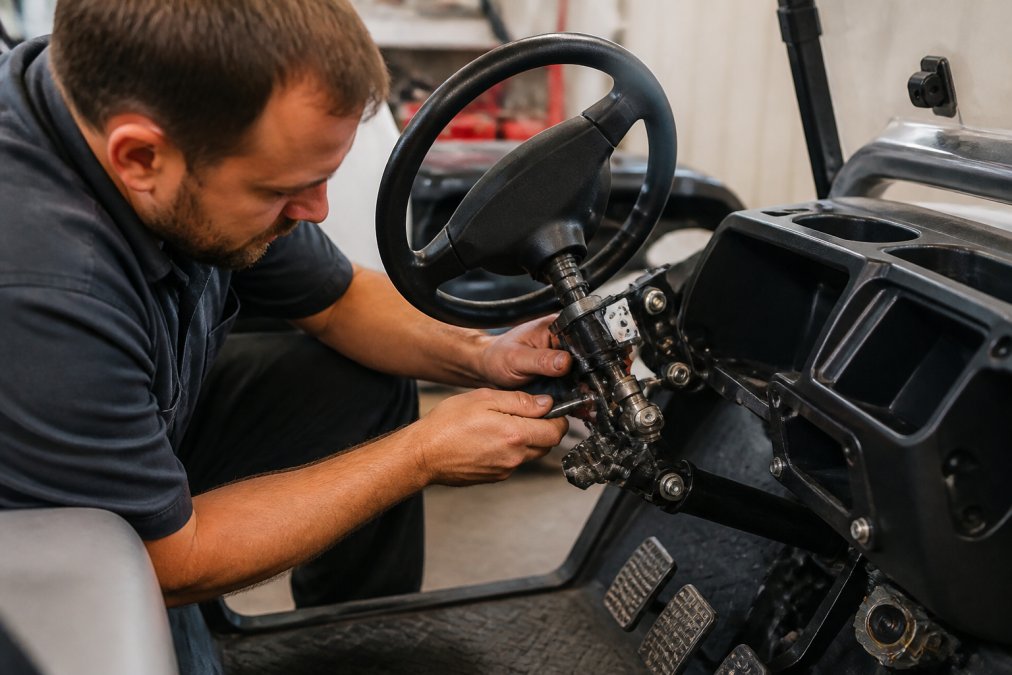
A technician has to rule these out one at a time. That means testing the battery under load, checking the charger, tracing wiring under the seat, and inspecting the electrical system.
On a simple issue, this phase can wrap up in under an hour.
Parts Ordering: The Silent Timeline Killer
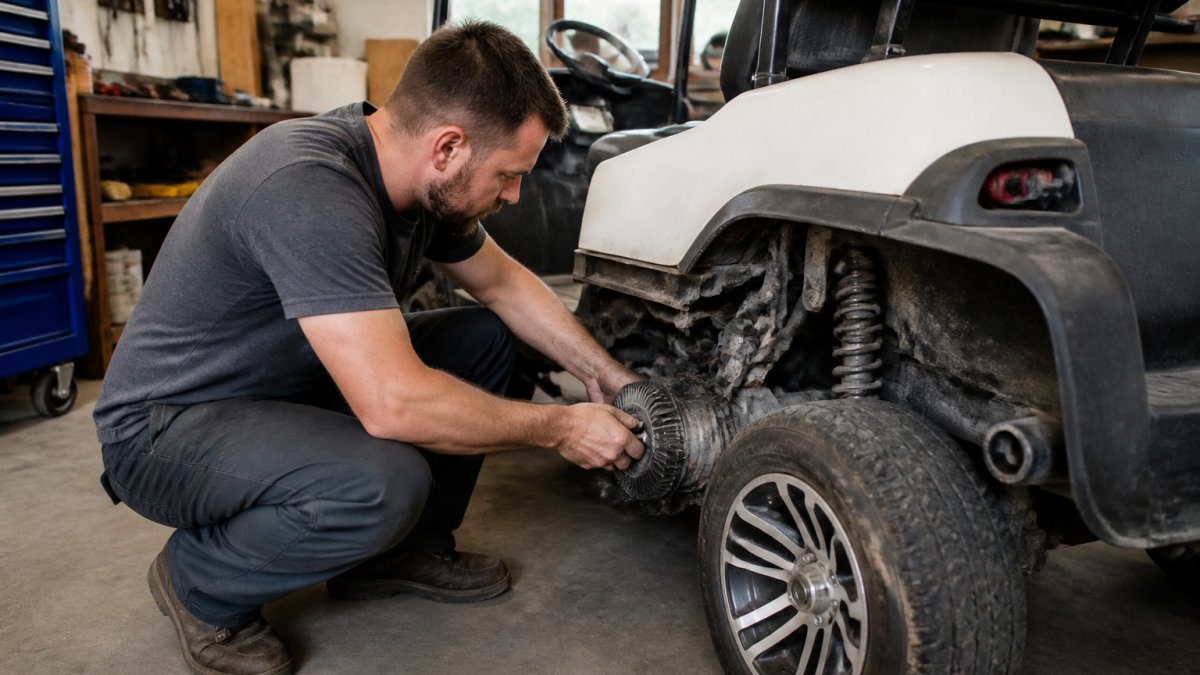
Parts availability is where weeks disappear. Many dealerships don't keep every component in stock. A motor, a controller, or a specific wiring harness may need to be ordered.
If the part is in a regional warehouse, it may arrive in a few days. If it's on backorder, you could be waiting much longer.
This is why golf cart parts availability matters more than most owners realize.
How Long Does Golf Cart Repair Take? Typical Timelines by Job Type
How long does golf cart repair take? It depends on the job. A tire change or a fuse replacement can be done the same day. A battery replacement is usually quick. But electrical failures, motor work, and carburetor cleaning can take days or weeks, mostly because of diagnosis and parts.
Here is a realistic breakdown by job type:
| Repair Type | Typical Timeline | Main Delay Factor |
|---|---|---|
| Tire change or windshield replace | Same day | Bay availability |
| Fuse or charger fuse swap | Same day to 1 day | Diagnosis time |
| Battery maintenance or replacement | 1-2 days | Battery stock |
| Faulty wiring connection repair | 2-5 days | Tracing the fault |
| Electrical system failure | 3-10 days | Diagnosis plus parts |
| Motor or engine work | 1-3 weeks | Parts ordering |
| Carburetor cleaning, fuel system | 1-2 weeks | Shop queue plus parts |
Quick Jobs vs. Multi-Week Repairs
Quick jobs share one trait: the problem is obvious and the part is on the shelf. A tire change, a windshield replacement with adhesive, or a fuse swap rarely needs ordering.
Multi-week repairs share the opposite traits. The fault is hidden, the part is scarce, or the shop is backed up. When all three stack up, a cart that "just needs a look" can sit for a month.
Golf Cart Diagnostic Time: Why Finding the Problem Takes Half the Battle
Golf cart diagnostic time is the single biggest variable in any repair. Finding the problem often takes longer than fixing it.
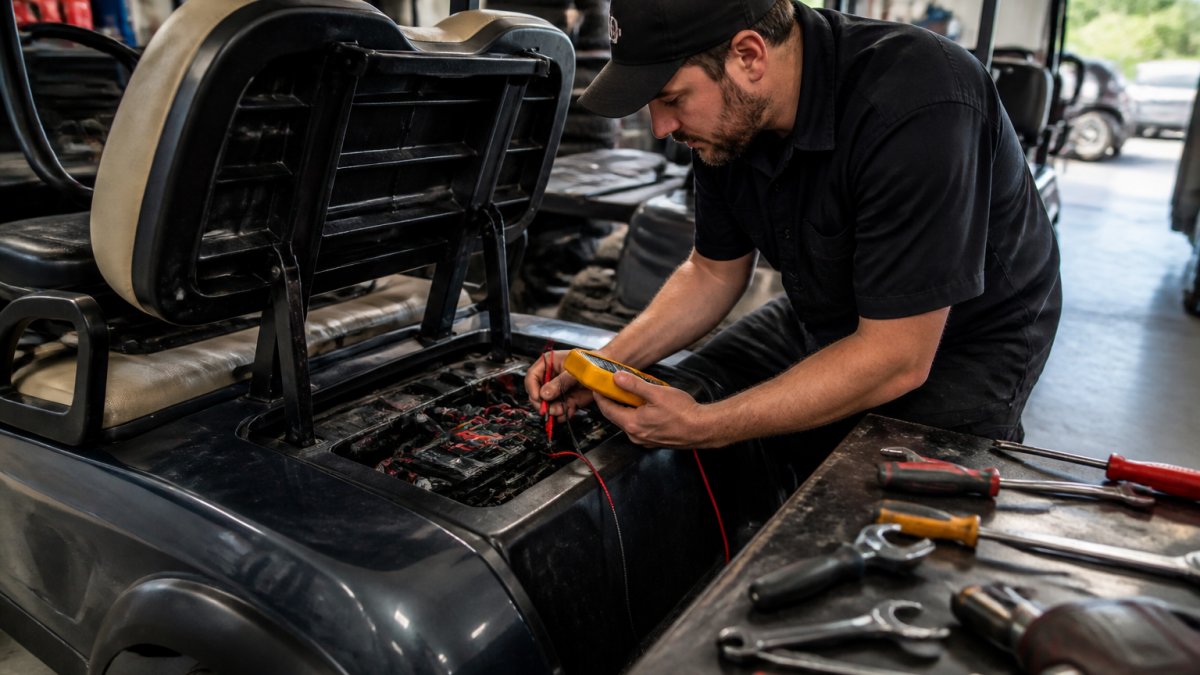
This is also where approval delays creep in. Many shops won't start work until you approve an estimate. If you're hard to reach, the cart waits. A quick callback can save days.
Intermittent Problems and Electrical Gremlins
Intermittent problems are the worst offenders. A cart that runs hot one day and stops the next is hard to pin down. The fault has to appear while the technician is watching.
Electrical gremlins fall in the same bucket. A loose wiring connection, a corroded terminal, or a failing controller can cause symptoms that come and go. Chasing these takes patience and repeated testing.
Golf Cart Parts Availability and Why It Delays Your Repair
Golf cart parts availability decides how fast any repair finishes. Even a simple job stalls if the part isn't there. This is the delay owners notice least and feel most.
Backorder Patterns by Brand and Component
Some components go on backorder more often than others. Motors, controllers, and brand-specific electrical parts top the list. Common items like tires, fuses, and batteries are usually easier to source.
If you own a less common brand, expect longer waits. A part that fits one model may not fit another, and shops can't stock everything.
Shop Workload and Seasonal Demand: When Everyone Needs Service at Once
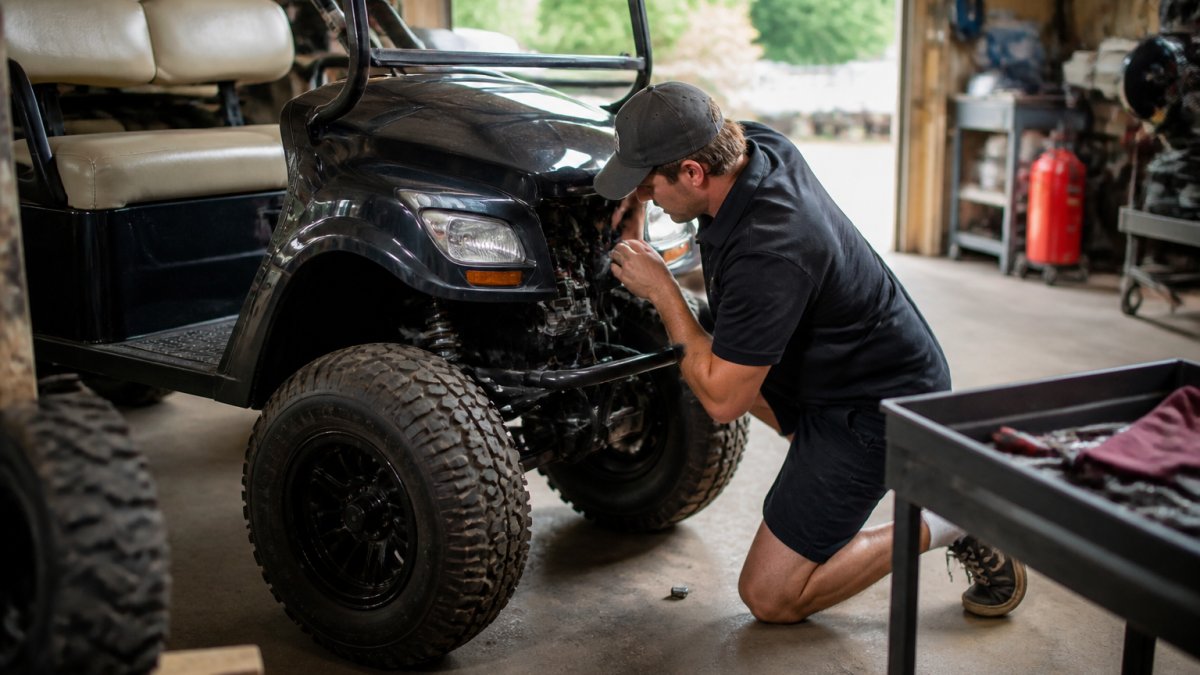
Shop workload is the delay owners understand least, because it has nothing to do with their cart. A repair shop has a fixed number of bays and technicians.
Here is the mechanism. Most shops schedule two clocks, not one. The first is appointment time, when you drop the cart off. The second is hands-on time, when a technician actually touches it.
Peak Season vs. Off-Season Turnaround
Demand for golf cart service follows a predictable curve in most markets. The busiest stretch runs from early spring through the start of summer, when seasonal owners prep carts for use and rental fleets get serviced before peak bookings.
The same job that takes three days in January can take two to three weeks in May. The labor is identical. The difference is queue depth.
Appointment Availability Is Not Repair Time
When you call for service, the first date a shop offers is appointment availability, the soonest it can accept your cart. That is not the same as repair time. A shop with a two-week appointment backlog and a two-day repair has a sixteen-day total turnaround, even though the actual work is short.
Ask two separate questions when you book:
- When can I drop the cart off?
- Once it is in the bay, how many working days until it is done?
Those two numbers together give you a realistic expectation. A single "about two weeks" answer usually hides which clock is running.
How Fleet and Rental Accounts Affect Your Spot
Commercial accounts, rental fleets, resorts, and course operators, often hold standing service agreements. Shops frequently reserve bay capacity for these accounts because the volume is predictable and recurring.
If you are a retail owner, ask whether the shop services fleets and how that affects scheduling. Some shops batch fleet work on specific days, which leaves other days more open for individual carts.
How to Speed Up Golf Cart Repairs: What Owners Do
You cannot fix the cart, but you can remove most of the non-labor delays that stretch a repair. The goal is to give the shop everything it needs on day one so nothing bounces back to you for a question, an approval, or a missing detail.
The Pre-Drop-Off Checklist
Before you hand over the keys, gather these items. Shops that receive them up front consistently move jobs faster because diagnosis starts immediately instead of waiting on a callback.
- Cart make, model, and year. Parts fitment depends on it. A part that fits one model year may not fit the next.
- Serial number or VIN plate location. Most carts carry it under the seat or on the frame near the motor. A photo works.
- Battery type and age. Flooded lead-acid, AGM, or lithium changes the diagnostic path entirely. Note the install date if you know it.
- Charger make and model. Charging faults are a common root cause of "won't move" complaints.
- A written symptom description. Include when it happens, how often, and whether it changes with temperature, load, or terrain.
- Maintenance history. Recent battery watering, tire changes, or electrical work narrows the suspect list.
- Your best contact method and hours. Approval delays are self-inflicted when a shop cannot reach you.
Describe Symptoms, Not Diagnoses
Owners often arrive with a guess: "I think it's the controller." That guess can send a technician down the wrong path. Describe what the cart does instead.
- "Clicks once when I press the pedal, then nothing."
- "Runs fine cold, cuts out after ten minutes."
- "Loses speed going uphill but recovers on flat ground."
- "Charger shows green but the cart only goes a mile."
Each of those points to a different test sequence. Specific symptoms save diagnostic hours.
Confirm Parts Before You Commit
The single biggest avoidable delay is authorizing a repair before the shop confirms the part is in stock or has a firm arrival date. Ask for the part number and the expected delivery date in writing. If the part is on backorder, you can decide whether to wait or explore an aftermarket equivalent, but only if you know before the cart is torn down.
Approve Estimates Quickly
Many shops will not order parts or start billable work until you approve the estimate. If you are unreachable for two days, the cart loses two days. Give the shop a mobile number, an email, and permission to text. Ask what the approval threshold is, some shops will proceed on small items without a callback, others will not.
Ask for a Written Timeline and Status Cadence
Request a simple written plan: diagnosis window, parts lead time, and estimated completion. Then agree on how often you will get updates, every other day is reasonable for a multi-week job. A shop that tracks its jobs can tell you exactly where your cart stands. A vague "we're working on it" usually means the job is not being tracked.
Keep Up With Maintenance to Avoid the Big Jobs
The repairs that take longest are the ones that started small. Watering batteries on schedule, keeping terminals clean and tight, and replacing worn tires before they fail prevent the electrical and drivetrain failures that require parts ordering. Preventive maintenance does not just save money, it keeps you out of the queue for the repairs that take weeks.
Conclusion
Long repair waits rarely come down to slow hands. They come down to diagnosis, parts, and shop demand, three things you can plan around. Understanding where the time goes is the first step to getting your cart back sooner.
We specialize in new sales of EPIC, Star EV, and Greyson golf carts, plus service, rentals, and parts.
Frequently Asked Questions
Are golf carts hard to repair?
Golf carts are mechanically simpler than cars, but that does not make every repair quick. Electrical faults, intermittent clicking sounds, and battery issues often require systematic testing rather than a single fix. A faulty wiring connection under the seat can take time to trace because the symptom may only appear under certain conditions. The repair itself is often straightforward once the cause is confirmed, but the diagnostic phase is where most of the labor goes.
What causes delays in golf cart repairs?
The biggest delays come from three places: diagnostic time for intermittent electrical problems, parts availability when a specific component is backordered, and shop workload during peak season. A cart that will not move in forward or reverse might need a new motor, a controller, or just a fuse replacement, and you cannot know which until testing is done. If the needed part is not in stock, the repair stalls until it arrives.
Can waiting for golf cart parts delay a repair?
Yes, and it is one of the most common reasons a repair stretches past the initial estimate. Golf cart parts availability varies by brand and component. Common items like fuses, chargers, and wiring connections are usually stocked, but motors, controllers, and brand-specific electrical components may need to be ordered. If a part is on backorder, the repair cannot proceed until it arrives, regardless of how quickly the diagnosis was completed.
How can I find out when my golf cart will be ready?
Ask the shop for two things upfront: an estimated diagnostic completion date and a separate estimate for the repair itself once the diagnosis is done. A reliable shop will call you after diagnosis with a clear explanation of what failed and what it costs to fix. If parts need ordering, ask for the expected arrival window. Following up once a week is reasonable, but daily calls slow down the workflow for everyone.