 ultimate-guide
Golf Cart Maintenance Costs 2026: A Complete Breakdown
Table of Contents
- What Golf Cart Maintenance Costs Actually Look Like
- Annual Golf Cart Service Checklist and Associated Costs
- Golf Cart Battery Replacement Cost 2026
- Electric vs. Gas Cart Maintenance: Cost Comparison Over Time
- How to Fix Golf Cart Steering Issues and Related Repair Costs
- Seasonal Maintenance and Storage Costs by Climate
- DIY vs. Professional Service: Where to Save and Where to Spend
- Frequently Asked Questions
Last Updated: October 11, 2026
What Golf Cart Maintenance Costs Actually Look Like
Golf cart ownership comes with hidden costs most buyers don't anticipate. Beyond the purchase price, you're looking at routine maintenance, seasonal care, battery replacements, and potential repairs that can add up quickly. Understanding these expenses upfront helps you budget properly and avoid financial surprises.
Common golf cart maintenance costs vary significantly based on whether you own an electric or gas model, how often you use it, and your local climate. Many owners spend between a few hundred to several thousand dollars annually on service and repairs. The key is knowing where those costs concentrate and how to manage them strategically.
This breakdown covers the specific expenses you'll encounter throughout 2026, from routine tire rotations to battery replacements, so you can plan your annual golf cart maintenance budget with confidence.
Annual Golf Cart Service Checklist and Associated Costs
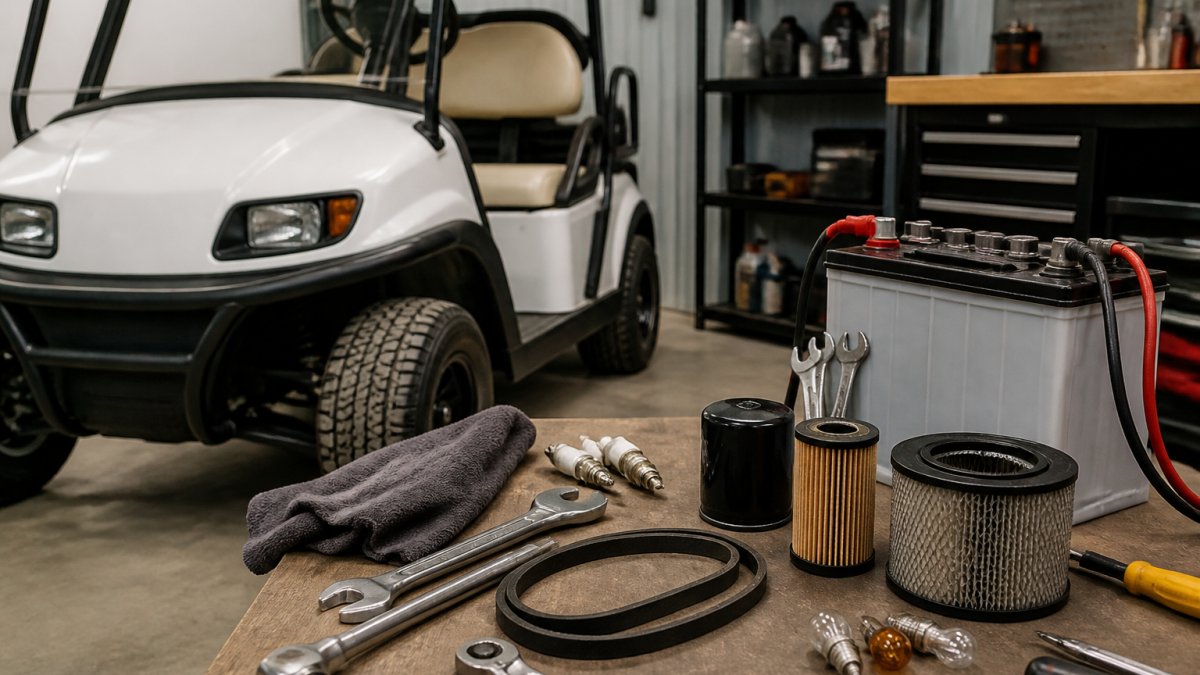
Your golf cart requires regular preventive maintenance to stay reliable.
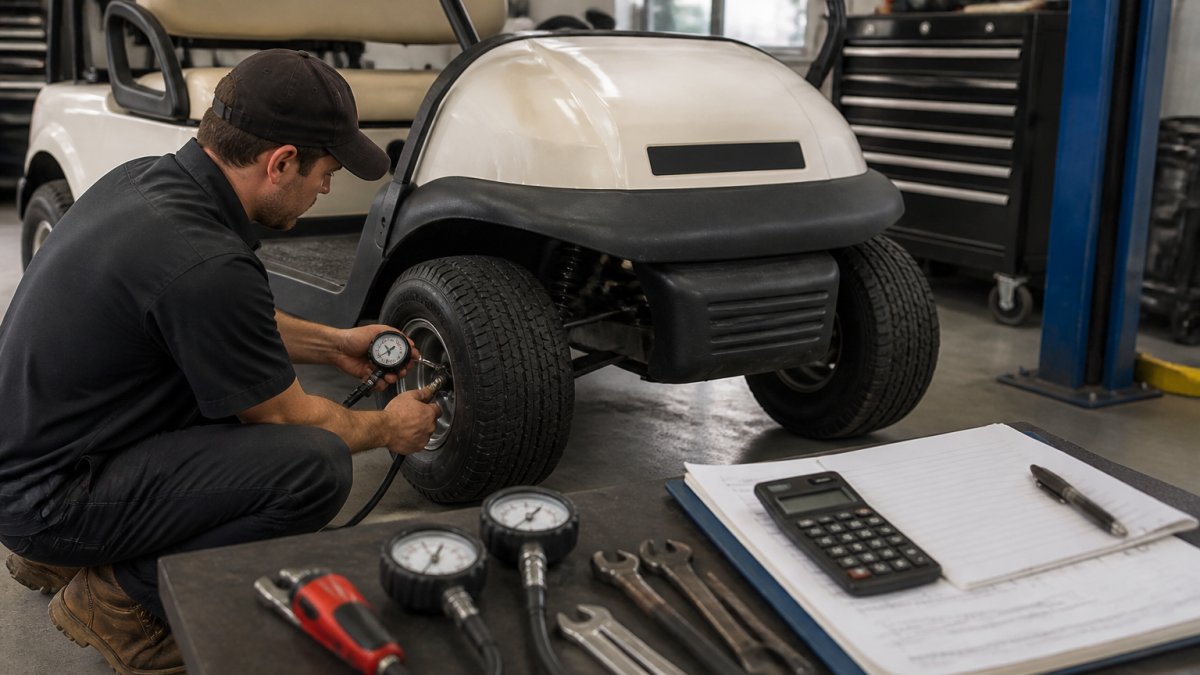
Most owners benefit from scheduling service in spring and fall to prepare for heavy use seasons. Spring maintenance ensures your cart is ready for summer outings, while fall service prepares it for winter storage.
Unlike new-car maintenance, golf cart service costs are highly transparent because most repairs are straightforward and labor rates are lower than automotive shops. A typical annual maintenance budget breaks down as follows:
| Maintenance Task | Frequency | Estimated Cost | Notes |
|---|---|---|---|
| Battery check and watering | Monthly (DIY) | $0-$50/year | Water distilled water only; DIY saves cost |
| Tire pressure and rotation | Quarterly | $40-$120/year | DIY with basic gauge, or $15-$30 per service |
| Brake inspection and pad replacement | Twice yearly | $80-$250/year | Pads $30-$80; labor $50-$150 if professional |
| Electrical system test and diagnostics | Annually | $50-$150 | Identifies corrosion, loose connections, charger issues |
| Lubrication of joints and steering | Annually | $30-$80 | Prevents rust and steering wear; often bundled |
| Oil and filter change (gas carts only) | 2-3 times yearly | $60-$150/year | $20-$50 per service; electric carts skip this |
| Full service inspection | Annually | $75-$200 | Comprehensive check; often includes above tasks |
| Estimated Annual Total (Electric) | , | $275-$650 | Assumes DIY battery watering, professional spring/fall service |
| Estimated Annual Total (Gas) | , | $350-$800 | Includes oil changes and engine diagnostics |
These ranges assume moderate use (2-3 times per week) and proper storage. Heavy-use carts (daily or commercial) may incur 30-50% higher costs due to accelerated wear on brakes, tires, and batteries.
Many owners reduce costs by handling battery watering, tire pressure checks, and basic cleaning themselves. A tire pressure gauge costs $10-$20, and distilled water for batteries runs $2-$5 per gallon.
Professional service appointments at established golf cart dealers typically cost $75-$150 per hour, with most routine inspections running $150-$300 per visit.
Golf Cart Battery Replacement Cost 2026
The battery is your golf cart's most expensive component to replace. Lead-acid batteries, which power most gas and electric carts, typically last 4-6 years with proper maintenance. Replacement becomes necessary when you notice reduced range, slower acceleration, or difficulty holding a charge.
Golf cart battery replacement cost depends on whether you have a 4-battery, 6-battery, or 8-battery system. Larger carts with more batteries cost proportionally more to replace. Professional installation is strongly recommended, as improper battery connection can damage your electrical system permanently.
Battery care directly impacts replacement timing. Watering lead-acid batteries monthly, keeping terminals clean, and avoiding deep discharges extend their lifespan significantly. Many owners who maintain batteries properly push them toward the 6-year mark rather than replacing at 4 years.
Electric vs. Gas Cart Maintenance: Cost Comparison Over Time
Electric and gas carts have fundamentally different maintenance profiles and cost structures. Electric carts eliminate fuel costs and engine maintenance but require battery care and charger upkeep.
Annual Maintenance Cost Breakdown:
| Expense Category | Electric Cart | Gas Cart |
|---|---|---|
| Battery watering and care | $30-$80 | N/A |
| Charger maintenance and repairs | $0-$100 | N/A |
| Oil and filter changes | N/A | $60-$150 |
| Spark plug and air filter | N/A | $40-$100 |
| Fuel (assuming 2-3 uses/week) | N/A | $150-$400 |
| Tire maintenance | $40-$120 | $40-$120 |
| Brake inspection and service | $80-$250 | $80-$250 |
| Electrical diagnostics | $50-$150 | $30-$80 |
| Seasonal storage prep | $0-$50 | $30-$100 |
| Annual Total | $200-$750 | $430-$1,200 |
Fuel cost is the largest variable. A gas cart used 2-3 times per week consumes roughly 200-300 gallons annually, depending on engine size and terrain.
Five-Year Total Cost of Ownership (Maintenance Only):
| Year | Electric Cart | Gas Cart | Cumulative Difference |
|---|---|---|---|
| Year 1 | $200-$750 | $430-$1,200 | Gas costs $230-$450 more |
| Year 2 | $200-$750 | $430-$1,200 | Gas costs $460-$900 more |
| Year 3 | $200-$750 | $430-$1,200 | Gas costs $690-$1,350 more |
| Year 4 | $200-$750 | $430-$1,200 | Gas costs $920-$1,800 more |
| Year 5 (with battery replacement) | $3,500-$5,500 | $430-$1,200 | Electric now costs $2,500-$4,800 more |
Battery Replacement: The Inflection Point
Battery replacement is the critical cost driver that shifts the equation.
Lithium-ion batteries, increasingly common in newer electric carts, cost $3,000-$8,000 installed but last 8-10 years and require minimal maintenance. The higher upfront cost is offset by longer lifespan and zero watering or equalization needs.
If you replace a lead-acid battery set at year 5, your total electric cart maintenance cost jumps to $3,500-$5,500 over five years. Over the same period, a gas cart accumulates $2,150-$6,000 in fuel and maintenance. The crossover point depends on fuel prices, usage frequency, and battery longevity:
- Light use (1-2 times/week): Electric carts win by $1,000-$2,500 over five years, even with battery replacement.
- Moderate use (2-3 times/week): Electric carts win by $500-$1,500 over five years.
- Heavy use (4+ times/week or commercial): Gas carts may cost slightly less if batteries fail early, but electric still wins if batteries last 5+ years.
Maintenance Complexity and Reliability
Electric carts have fewer moving parts and simpler systems. Battery watering is the primary monthly task; electrical diagnostics are straightforward. Gas carts require seasonal fuel system cleaning, spark plug replacement, air filter changes, and occasional carburetor work.
Electric carts are more reliable in cold climates because they have no engine to struggle with freezing temperatures. Gas carts in northern regions incur additional winterization costs ($50-$150) and may need professional storage preparation.
How to Fix Golf Cart Steering Issues and Related Repair Costs
Steering problems range from minor adjustments to major component replacement. Common issues include loose steering wheels, worn tie rods, damaged steering gears, and electrical steering assist failures in newer models. Identifying the problem early prevents more expensive damage.
Minor steering issues like loose wheels or worn bushings can often be fixed with simple adjustments or inexpensive part replacement. Major problems like steering gear replacement or tie rod damage require professional service and more substantial investment. Many steering issues develop gradually, so catching them during routine maintenance saves money.
Professional diagnostic testing pinpoints the exact problem before work begins. This prevents unnecessary repairs and ensures you're only paying for what actually needs fixing. Regular steering inspections during annual service catch wear early, when repairs cost less.
Seasonal Maintenance and Storage Costs by Climate
Your local climate dramatically impacts maintenance frequency and costs. Hot, humid climates accelerate battery corrosion and require more frequent watering. Cold climates demand winter storage preparation and potential freeze-related repairs. Coastal areas deal with salt corrosion on electrical components.
Spring preparation in warm climates focuses on battery refresh and brake inspection after winter storage. Fall maintenance prepares your cart for reduced winter use or storage. In cold climates, winterization becomes critical, draining fuel systems, protecting batteries from freezing, and ensuring proper storage conditions.
Seasonal storage costs vary by location. Climate-controlled storage facilities protect your cart from extreme temperatures and moisture damage but add monthly expenses. Outdoor storage requires protective covers and more frequent maintenance to prevent weather-related deterioration.
DIY vs. Professional Service: Where to Save and Where to Spend
Basic maintenance tasks like battery watering, tire pressure checks, and cleaning can be handled by owners with minimal tools. These tasks prevent expensive problems and cost almost nothing to perform yourself. Many owners develop simple monthly routines that take 15-30 minutes.
More complex repairs like brake work, electrical diagnostics, and steering repairs require professional expertise and specialized equipment. Attempting these yourself risks damaging components and creating safety hazards. Professional service ensures proper diagnosis and correct repair the first time.
The sweet spot is handling preventive maintenance yourself while trusting professionals with diagnostic and repair work. This approach keeps your cart in top condition while avoiding costly mistakes. Professional technicians can often identify developing problems during service that you might miss.
Golf cart maintenance budgeting requires understanding your specific ownership situation. Whether you own an electric or gas cart, how much you use it, and your local climate all influence annual expenses. Contact us for a customized maintenance plan tailored to your cart and driving habits, so you can enjoy your golf cart without unexpected financial surprises.
Frequently Asked Questions
What is the standard annual maintenance cost for a golf cart?
Annual golf cart maintenance costs depend on cart type, usage frequency, and age. Routine maintenance includes tire rotation, brake inspection, battery checks, and fluid changes. Electric carts typically cost less annually than gas models because they have no engine oil, spark plugs, or fuel filters. Budget for both scheduled preventive maintenance and unexpected repairs. Keeping detailed maintenance records helps track spending patterns and can preserve resale value.
How much does it cost to replace a set of golf cart batteries in 2026?
Golf cart battery replacement cost varies by battery type and cart model. Lead-acid batteries, the most common type, require replacement every 4-6 years depending on care and usage. Professional installation adds labor costs beyond the battery price itself. Lithium battery upgrades cost more upfront but last longer and require less maintenance. For current pricing on battery replacement, contact your local golf cart service provider or dealership for a quote based on your specific cart model.
How often should I service my golf cart to avoid expensive repairs?
Follow your cart manufacturer's recommended service intervals, typically annually or every 100-150 operating hours, whichever comes first. Regular preventive maintenance catches small issues before they become costly repairs. Key tasks include battery checks, tire pressure and rotation, brake inspection, electrical system testing, and cleaning. Seasonal maintenance before storage periods prevents corrosion and battery drain. Prompt repairs of minor issues like steering hesitation or brake noise prevent cascading damage that requires extensive work.
What are the most common maintenance tasks for electric vs. gas golf carts?
Electric carts require battery care, charger maintenance, tire service, and brake inspection. Gas carts need engine oil changes, spark plug replacement, fuel filter service, air filter cleaning, and engine tune-ups. Both types need tire pressure checks, tire rotation, brake pads inspection, and steering system maintenance. Electric carts have lower annual service costs because they skip engine-related tasks. Gas carts incur fuel costs and more frequent engine maintenance, making total ownership expenses higher over time despite potentially lower upfront purchase prices.
Does regular maintenance significantly increase the resale value of a golf cart?
Yes. A well-maintained cart with complete service records commands higher resale value than a neglected one. Buyers check maintenance history to assess reliability and remaining lifespan of major components like batteries and engines. Regular maintenance prevents rust, frame damage, and electrical problems that reduce value substantially. Documented preventive care demonstrates responsible ownership and reduces buyer concerns about hidden damage or premature wear. Keeping receipts and a maintenance log protects your investment and makes selling easier.
What unexpected golf cart maintenance costs should I budget for?
Beyond routine service, budget for potential repairs to the electrical system, steering components, brake replacement, tire damage from debris, and weather-related issues. Rust and corrosion from storage or high-humidity climates can require frame repair or protective coating. Battery failure before expected lifespan may occur with improper charging or extreme temperatures. Suspension wear, seat damage, and windshield replacement add to costs. Keeping a maintenance reserve of 10-15% of your annual budget helps cover surprises without financial strain.