 how-to
Troubleshoot Golf Cart Hesitation on Inclines
Table of Contents
- Why Your Golf Cart Hesitates on Hills (and What's Normal)
- A Safe, Ordered Diagnostic Workflow Before You Touch Anything
- Golf Cart Battery Troubleshooting: Voltage Drop Under Load
- Cables, Connections, and Corrosion: The Cheap Fix First
- Golf Cart Throttle Sensor Problems and Accelerator Input
- When a Gas Golf Cart Loses Power Under Load
- Motor Wear, Controller Limits, and What It Costs to Fix
- Common Mistakes to Avoid and When to Call a Tech
- Frequently Asked Questions
Last Updated: October 18, 2026
Why Your Golf Cart Hesitates on Hills (and What's Normal)
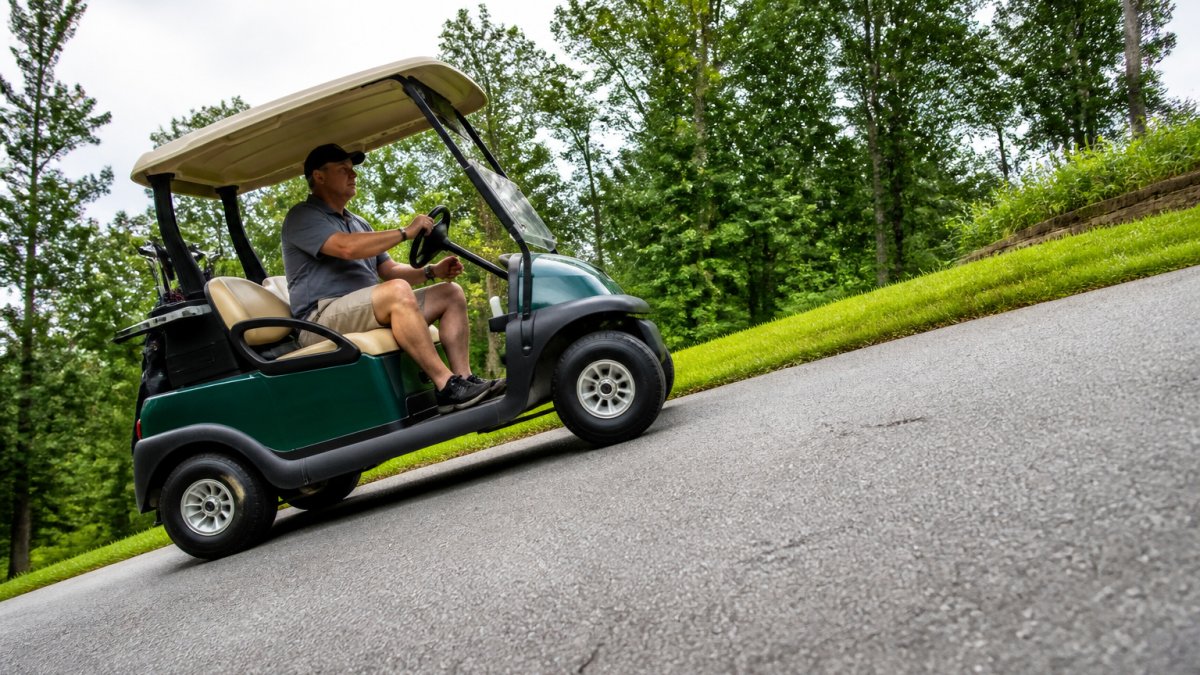
A golf cart hesitation on a hill does not always mean the cart is broken. Some speed loss is physics.
At Amplify Your Ride, we see this question constantly. The fix is usually simpler than owners fear.
Hesitation is a brief loss of power or a stutter when you press the pedal, especially under load. It is different from a steady, predictable drop in speed.
Hesitation vs. Normal Hill-Speed Loss
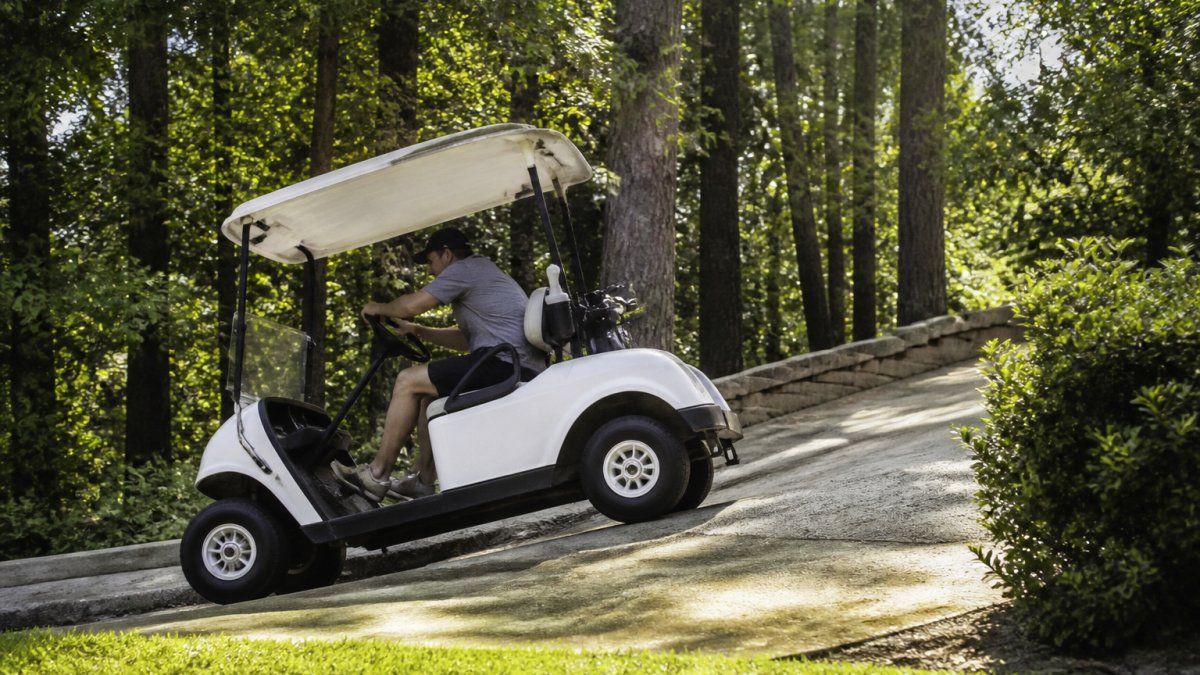
Normal hill-speed loss is smooth. The cart slows as the incline steepens, then recovers on flat ground. No stutter, no cutout.
Hesitation feels different:
- A jerk or pause when you press the pedal
- Power that cuts in and out on the climb
- Bogging down that gets worse as the hill gets steeper
If your cart does any of the last three, keep reading.
A Safe, Ordered Diagnostic Workflow Before You Touch Anything
Most owners start by replacing the part they suspect. That is backward. A hesitation on an incline can come from the battery pack, a cable, the throttle input, the motor, the controller, or, on a gas cart, the fuel system. Testing in a fixed order isolates the cause before you buy anything, and it keeps you from applying electric-cart advice to a gas cart or fuel-system advice to a battery cart.
Step 1: Confirm the Symptom and the Powertrain
Before any tool comes out, answer two questions:
- Is it hesitation or normal hill-speed loss? A smooth slowdown that recovers on flat ground is physics. A stutter, cutout, or stall is a fault.
- Is the cart electric or gas? The two powertrains share almost no causes. Battery and voltage tests apply to electric carts. Fuel and air delivery tests apply to gas carts. Do not cross them.
Write down when the symptom appears: cold start, after warm-up, only with passengers, only on steep grades, only at low pedal input. That pattern narrows the list fast.
Step 2: Make the Cart Safe to Work On
- Park on flat ground and set the brake.
- Turn the key off and remove it.
- Move the tow/run switch to tow on electric carts so the controller is isolated.
- Disconnect the main negative cable before touching any connection.
- Wear safety glasses and insulated gloves, and remove metal jewelry.
Electric carts carry high current, and a short across a battery pack can weld tools and cause burns. Treat every cable as live until the main negative is disconnected.
Step 3: Inspect the Cheap, Common Causes First
Before any electrical test, do a visual pass:
- Tires: low pressure or mismatched sizes add rolling resistance and change effective gearing.
- Cables and terminals: look for white or green crust, frayed insulation, and loose nuts.
- Battery hold-downs and routing: a cable rubbing on a frame is a future failure.
Most hesitation complaints trace back to this step. Cleaning and tightening connections is the cheapest fix and often the whole problem.
Step 4: Isolate the System, One Test at a Time
Test in this order and stop when you find the fault:
- Battery voltage under load (electric). A pack that sags deeply on a climb is the prime suspect.
- Cables and connections (electric). Warm cables or crusty terminals point to resistance, not a failed battery.
- Throttle input (electric). A signal that jumps or goes flat as the pedal moves points to a failing sensor.
- Fuel and air delivery (gas). A clogged filter or weak pump starves the engine under demand.
- Motor and controller (electric) or ignition and carburetion (gas). These are the expensive suspects and should be tested last, after the cheap causes are ruled out.
Record each reading. A written log turns a guessing game into a process, and it gives a technician a head start if you hand the cart off.
Step 5: Know When to Stop and Call a Technician
Some symptoms are a clear signal to stop testing and hand off:
- Motor grinding or a burning smell. Internal motor damage can worsen quickly and is not a driveway repair.
- Controller fault codes or repeated cutouts after fixes. Controller diagnosis needs model-specific tools and procedures.
- Repeated failures after a correct repair. A recurring fault points to a root cause outside the part you replaced.
For those cases, a qualified service technician can diagnose the fault and get you back on the path. Our service team at Amplify Your Ride works on new and used carts, including EPIC, Star EV, and Greyson models.
Golf Cart Battery Troubleshooting: Voltage Drop Under Load
Battery problems cause most electric cart hesitation, and the reason is simple: a battery can read full voltage at rest and still collapse the moment the motor draws current on a hill. Resting voltage tells you state of charge. Under-load voltage tells you whether the pack can actually deliver the amps a climb demands.
Why a Full-Charge Reading Can Lie
A lead-acid battery produces voltage from a chemical reaction at the plates. As the battery ages, sulfation and plate wear reduce the surface area available for that reaction. At rest, with almost no current flowing, the battery can still show a normal reading.
This is why a cart that starts fine on flat ground and bogs halfway up a hill is a classic under-load symptom, not a mystery.
Setting Up a Load Test You Can Trust
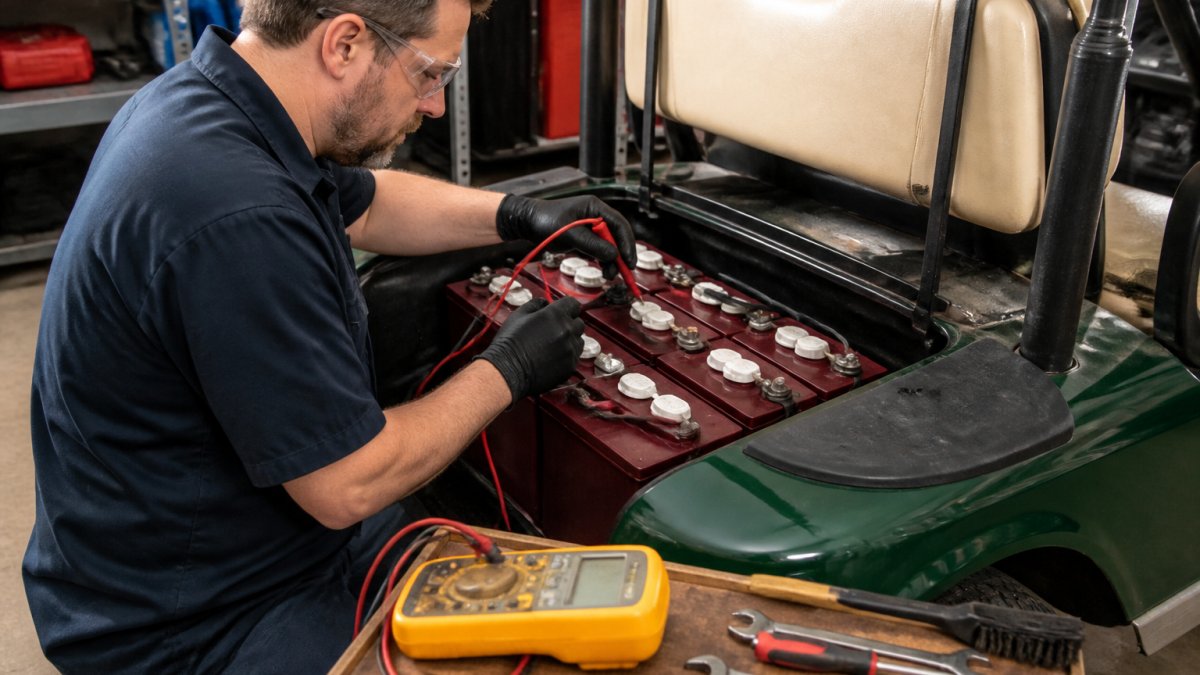
You do not need a shop-grade load bank to get useful information. A digital multimeter and a safe test route will do.
- Charge the pack fully and let it rest before testing. A surface charge right off the charger reads high and is not representative.
- Record resting voltage for the whole pack and, if you can reach them, for each battery individually. Write the numbers down.
- Connect the meter to the pack so you can watch it while the cart is moving, or have a helper hold it in a safe position. Route the leads so they cannot catch in wheels or the steering.
- Load the cart the way you actually use it. That means the same passengers and cargo, on a comparable slope, at the speed you normally climb.
- Watch the reading during the climb, not after. The lowest number you see under load is the one that matters.
Reading the Results
Interpretation matters more than the raw number, because pack voltage varies by cart and battery configuration. Use these patterns as a guide:
- Small, smooth dip under load that recovers on flat ground: normal behavior. The pack is delivering current and recharging as demand drops.
- Large, sudden sag on one battery while the others hold: that single battery is the weak link. In a series pack, one bad battery drags the whole pack down (Battery University).
- Whole pack sags evenly and deeply: the pack is aging or undercharged as a group. Check charger output and charge routine before replacing anything.
A common pattern technicians look for is a battery that reads close to its neighbors at rest but drops noticeably further under load. That battery is failing even though it passes a static check.
Weak Battery or Bad Connection?
These two causes feel identical from the driver's seat, and both show up as voltage drop under load. Separate them before spending money:
- Feel the cables after a short climb. A cable or terminal that is noticeably warm points to resistance at the connection, not a failing battery.
- Check each connection for tightness and crust. Corrosion adds resistance that mimics a weak battery.
- Compare individual battery readings under load. If one battery sags far more than the rest, suspect the battery. If all batteries sag together but the cart still hesitates, suspect the wiring between them.
Cables, Connections, and Corrosion: The Cheap Fix First
Check cables and connections before you spend money on parts. Corrosion and loose connections cause golf cart hesitation far more often than failed motors.
Look for:
- White or green crust on terminals
- Frayed or cracked cable insulation
- Loose nuts on battery posts
Clean terminals with a wire brush, tighten connections, and replace damaged cables. This is the cheapest fix and often the whole problem.
Golf Cart Throttle Sensor Problems and Accelerator Input
Throttle sensor problems show up as uneven pedal response. The cart may lurch, hesitate, or ignore the pedal entirely.
Signs of a bad throttle sensor:
- Dead spot at the start of pedal travel
- Jerky acceleration
- No response until the pedal is pressed hard
Test the sensor output with a multimeter if you can. On many carts, the signal should rise smoothly as you press the pedal. A jumpy or flat reading points to a failing sensor.
When a Gas Golf Cart Loses Power Under Load
A gas golf cart loses power under load for different reasons than an electric one. Fuel and air delivery top the list.
Check these first:
- Fuel filter: A clogged filter starves the engine on climbs.
- Fuel delivery: Weak pump pressure or a dirty carburetor causes bogging.
- Air filter: A dirty filter chokes the engine under demand.
If the engine sputters only on hills, fuel delivery is the prime suspect. Replace the filter and check the pump before touching the motor.
Motor Wear, Controller Limits, and What It Costs to Fix
Motor wear and controller limits are the expensive suspects. Rule out batteries, cables, and sensors first.
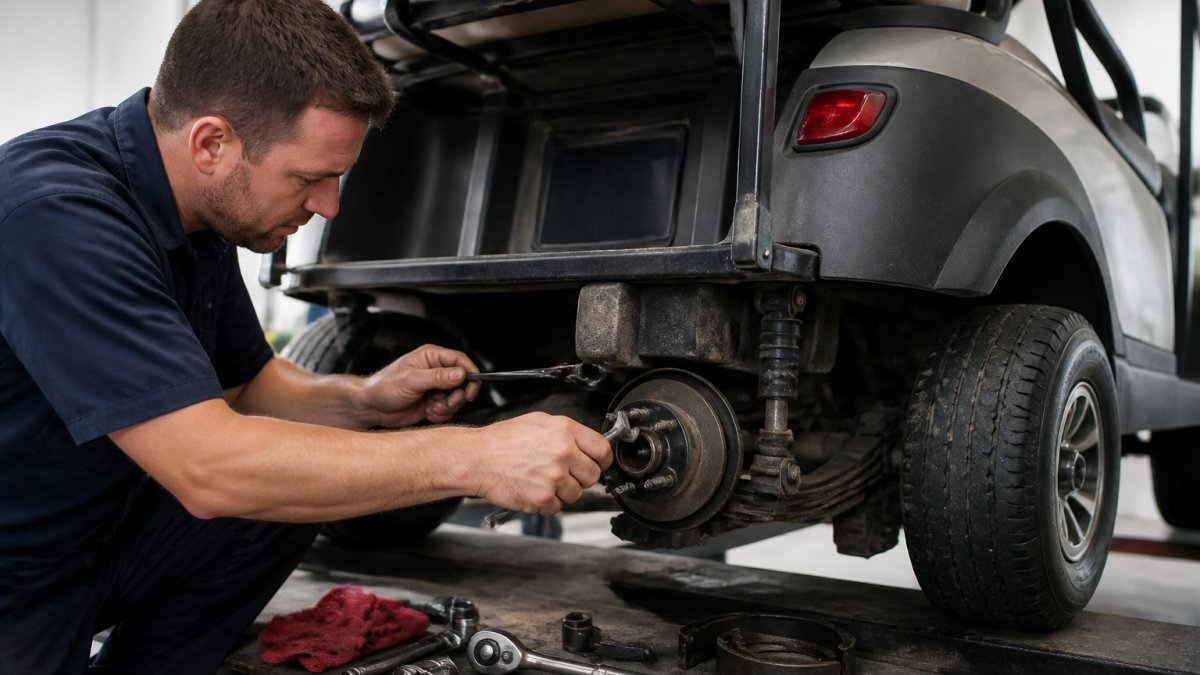
- Motor wear: Worn brushes or bearings cause weak, uneven power.
- Controller limits: A failing controller may cut power under load or throw fault codes.
Repair difficulty varies. Cables and sensors are DIY-friendly. Motor and controller work usually needs a tech. Pricing depends on the cart model and parts, so ask for a quote before committing.
| Symptom | Likely Cause | DIY or Pro |
|---|---|---|
| Stutter at pedal press | Throttle sensor | DIY-friendly |
| Power cut on climbs | Weak battery under load | Test, then replace |
| Crusty terminals | Corrosion | DIY |
| Gas cart bogs on hills | Fuel filter or delivery | DIY to pro |
| Uneven power, grinding | Motor wear | Pro |
| Fault codes, cutouts | Controller | Pro |
Common Mistakes to Avoid and When to Call a Tech
The biggest mistake is replacing parts before testing. Owners often swap a battery or controller and still have the same hesitation.
Other common errors:
- Skipping the load test
- Ignoring corrosion because it "looks fine"
- Mixing old and new batteries in one pack
Call a tech when you see motor grinding, controller fault codes, or repeated failures after fixes. Our service team at Amplify Your Ride can diagnose the fault and get you back on the path. We sell and service new and used carts, including EPIC, Star EV, and Greyson models.
Frequently Asked Questions
Can weak golf cart batteries cause hesitation on hills?
Yes. A battery pack that reads fine at rest can sag badly under the load of a climb, which shows up as hesitation, sluggish acceleration, or a brief motor cutout. Test each battery with a multimeter while the cart is under load on an incline, not just sitting still. Look for voltage that drops well below the pack's nominal rating and does not recover quickly. One weak battery in a series pack drags down the whole system, so replace matched sets rather than a single unit.
Why does my electric golf cart go slow going uphill?
Some slowdown on a grade is normal physics: the motor works harder to move the same weight up an incline, especially with passengers or cargo aboard. The problem is hesitation, bogging down, or a motor cutout that feels like the cart is fighting itself. Run through golf cart battery troubleshooting first, then inspect cable connections for corrosion and loose terminals, and check the throttle sensor output. If those pass, the motor or controller may be limiting current.
How do you check golf cart battery connections?
Turn the cart off and disconnect the main negative cable before touching anything. Inspect each terminal for white or green crust, frayed cable ends, and loose nuts. Wiggle cables gently; movement means a bad connection. Clean corroded terminals with a baking soda and water paste, rinse, dry, and reconnect tightly. Replace damaged cables rather than patching them. A loose or corroded connection adds resistance that shows up as hesitation exactly when the cart demands more current on a hill.
When should a golf cart that hesitates uphill be serviced?
Book service when the hesitation appears suddenly, repeats consistently on the same grade, or comes with a burning smell, clicking, or a motor cutout. Also call a tech if you have already cleaned connections and charged the pack and the problem remains, or if you are not comfortable testing live voltage. A shop can load-test the pack, read controller fault codes, and check motor brush wear. Catching it early usually means a cheaper fix than waiting for a motor or controller failure.
Hesitation on inclines is a solvable problem, not a reason to replace your cart. Work through the steps in order, and most faults surface fast. When a repair is beyond a driveway fix, bring it to Amplify Your Ride. We handle diagnostics, service, and parts for every cart we sell, and we will tell you straight what needs fixing. Get started with Amplify Your Ride and get your cart climbing smoothly again.