 How-to
How to Register a New Golf Cart Step by Step
Last Updated: November 5, 2026
Quick Summary
To learn how to register a new golf cart, first confirm whether your cart is classified as a golf cart or a low-speed vehicle, then gather your manufacturer's certificate of origin, bill of sale, photo ID, VIN, and proof of insurance. Complete your state's current application, pay the title, registration, and decal fees, and attach the decal where instructed.
- A golf cart usually tops out at 20 mph or less, while a low-speed vehicle runs 20 to 25 mph with full road safety gear.
- The VIN is a 17-digit code usually stamped on the frame or printed on a plate under the seat or near the motor.
- Most states that regulate golf carts issue a permit decal rather than a full license plate.
- Mail-in applications commonly take two to six weeks depending on the state and season.
- A valid decal means the cart is registered but does not authorize driving on every road.
Table of Contents
- Golf Cart Registration Requirements: What You Need Before You Apply
- Golf Cart Title and VIN Requirements
- Golf Cart Permit Decal and Registration Application
- Golf Cart Registration Fees and Payment
- Step-by-Step: How to Register a New Golf Cart
- Common Mistakes That Delay Golf Cart Registration
- Get Your New Cart Registered with Amplify Your Ride
- Frequently Asked Questions
Golf Cart Registration Requirements: What You Need Before You Apply
Buyers often need help with this paperwork, and the rules vary by state. The rules vary by state, but the document list barely changes.
Here is the short version. You will need proof of ownership, a manufacturer's certificate of origin, a VIN, proof of insurance, and a completed application.
The stakes are simple. An unregistered cart on a public road can get you cited, and some states will not issue a tag without liability coverage already active.
Golf Cart vs. Low-Speed Vehicle: Which Classification Applies
The first decision is not paperwork. It is classification, and it decides everything that follows.
A golf cart is a small motorized vehicle built mainly for golf courses and planned communities, usually capped at 20 mph or less.
That difference matters. Many states register LSVs like cars and handle golf carts under a separate permit system.
Use this decision path before you fill out anything:
- Cart tops out under 20 mph and lacks road safety gear? Treat it as a golf cart.
- Cart came from the factory with lights, signals, belts, and a 17-digit VIN? It is likely an LSV.
- Not sure? Check the manufacturer's certificate of origin. It states the vehicle type.
- Still not sure? Ask your state DMV before you mail anything.
If you plan to drive on public roads, read our guide on how to drive a golf cart on public roads legally before you start the registration process. It covers the road-use rules that apply after your paperwork clears.
Golf Cart Title and VIN Requirements
A title proves who owns the cart. A VIN proves which cart it is. Most states want both.
The VIN is a 17-digit code, usually stamped on the frame or printed on a plate under the seat or near the motor. The manufacturer's certificate of origin, sometimes called a manufacturer's statement of origin, is the factory document that transfers ownership from builder to dealer to you.
Bring these to the counter:
- Manufacturer's certificate of origin, signed over to you
- Bill of sale showing the purchase date and buyer name
- Photo ID matching the name on the application
- Payment for title and registration fees
A common mistake is signing the certificate of origin in the wrong place. Dealers see this constantly. Sign only where the buyer signature line appears, and use the same name as your driver's license.
What to Do When Your Cart Has No VIN
Some used carts, especially older models, arrive with no VIN at all. That does not automatically kill the registration, but it does add steps.
Start by checking the frame near the motor and under the front cowl. Many carts have a stamped number that owners never notice.
Your state DMV may then issue an assigned VIN after an inspection. Expect to bring the cart in person and pay a fee for the inspection and the new plate. Do not buy a cart with no paperwork unless the seller can prove ownership another way.
Golf Cart Permit Decal and Registration Application
Most states that regulate golf carts issue a permit decal rather than a full license plate. The decal goes on the cart, and it signals that the vehicle passed the state's requirements.
The application itself is short. You will typically provide:
- Your name, address, and driver's license number
- The cart's make, model, year, and VIN
- Proof of insurance
- The certificate of origin or title
- A signature confirming the cart meets equipment rules
Many states accept mail-in applications, and some now offer online submission. Check your state DMV site for the current form number, because forms get revised and old versions get rejected.
Golf Cart Registration Fees and Payment
Fees are the part of registration that varies most by state, and the part where guessing costs you a returned packet.
The four fee buckets to budget for:
- Title fee. Charged when the state issues a certificate of title for the cart. Some states charge this once at purchase; others fold it into the initial registration.
- Registration or permit fee. The recurring charge for the decal or plate. This is usually the smallest line item and the one that renews.
- Decal or plate charge. Sometimes bundled with registration, sometimes billed separately, especially when a replacement decal is needed.
- Inspection or assigned-VIN fee. Only applies if your cart has no VIN or your state requires a physical inspection before issuing a permit.
How to get the real number for your state:
- Open your state DMV or motor vehicle agency site and search the exact form number for golf cart or LSV registration.
- Look for a fee schedule PDF linked from that form page, most agencies publish one.
- Call the local office and ask for the total for a new registration, including title and decal, so you get one number instead of four.
- Ask whether the fee is flat or based on cart value, model year, or vehicle weight. A few states tier the registration fee.
Payment mechanics that trip people up:
- Many state offices accept cards in person but require a check or money order for mail-in applications. Confirm before you seal the envelope.
- Online portals often take cards but add a convenience fee, and some do not accept debit cards at all.
- Never mail a personal check for an amount you guessed. If the fee is wrong, the packet comes back and you lose the processing window.
Renewal cycles: Most states renew golf cart permits annually, though some run two- or three-year cycles.
Watch out: a few states charge a late renewal penalty that exceeds the original registration fee, so a lapsed decal can cost more to fix than to keep current.
If your state publishes a fee schedule that changes annually, treat the number on the form as the source of truth and the number on a blog as a starting point only.
Step-by-Step: How to Register a New Golf Cart
Here is the process in order, with the submission and follow-up detail most guides skip.
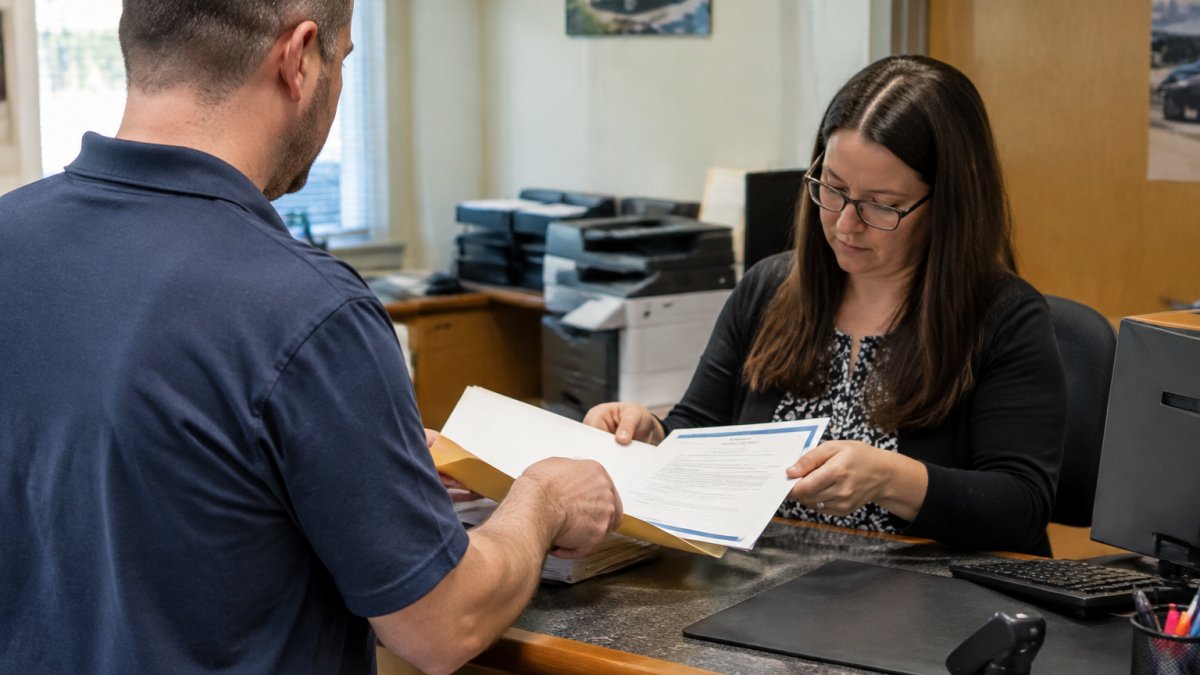
- Confirm your cart's classification. Check the certificate of origin for "golf cart" or "low-speed vehicle." This single line decides which form, which fee, and which equipment rules apply.
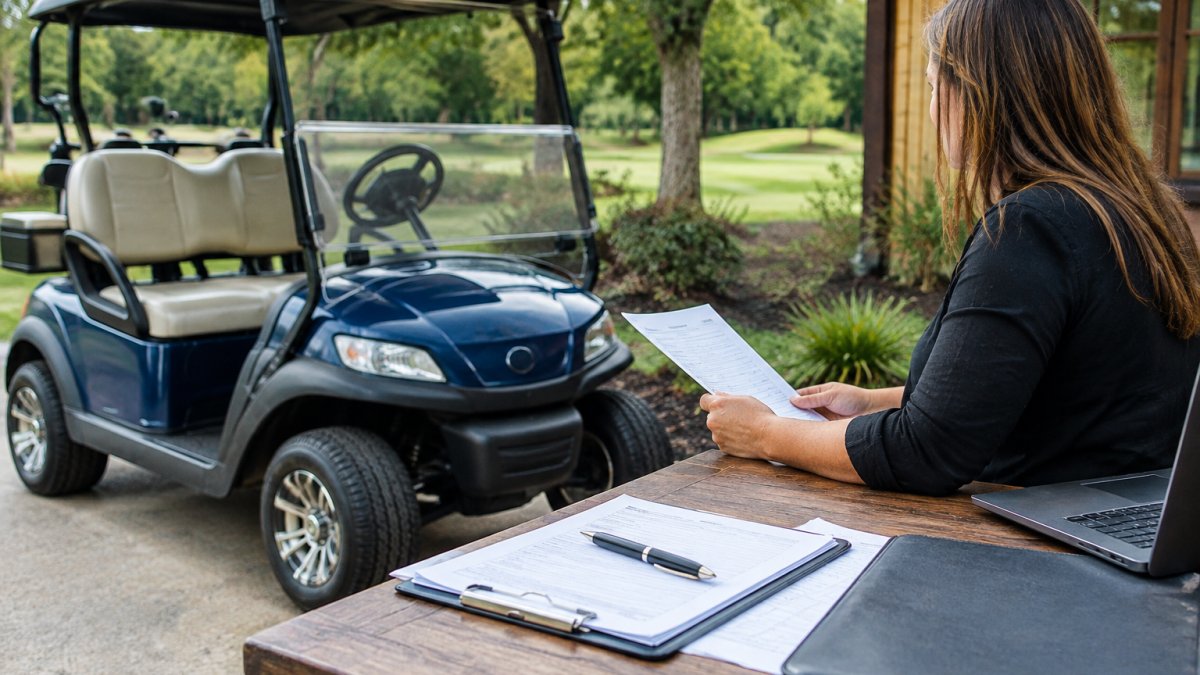
- Collect your documents. Certificate of origin, bill of sale, photo ID, and proof of insurance. Make a photocopy of each for your records before you hand anything over.
- Verify the VIN. Locate the 17-digit number and confirm it matches your paperwork. If it does not match, stop and resolve it with the dealer before applying.
- Buy liability insurance. Get the policy active before you apply, and bring proof. Some states will not accept an application without an active policy number.
- Complete the application. Use the current form from your state DMV, not an old copy. Form numbers change, and clerks reject superseded versions.
- Choose your submission method. In-person offices usually process same-day and let you fix errors on the spot. Mail-in is slower but avoids a trip. Online portals exist in some states but often require an existing title or prior registration.
- Pay and keep the receipt. The receipt is your proof of submission if the decal is delayed.
- Attach your decal or plate. Place it exactly where the state instructs, usually rear-facing and visible from behind.
- Renew on schedule. Mark the renewal date so your cart stays legal.
Processing times and follow-up:
- In-person: often same-day, but expect a wait if the office is busy.
- Mail-in: commonly two to six weeks depending on the state and season.
- Online: varies widely; some states issue a printable temporary permit while the decal ships.
If you have not heard back within the window your state publishes, call the office with your receipt number rather than resubmitting.
If your application is rejected: Most rejections trace to a missing signature, an expired insurance card, a name mismatch, or an outdated form.
After the decal arrives: registration is not a road-use permit. This is the step most guides leave out.
Watch out: operating a registered cart on a road where local rules prohibit it can still get you cited, even with a valid decal on the back.
Common Mistakes That Delay Golf Cart Registration
The same errors show up again and again. Each one is easy to prevent.
- Wrong classification. Registering an LSV as a golf cart, or the reverse, voids the application.
- Unsigned certificate of origin. The dealer or buyer missed a signature line.
- Lapsed insurance. Coverage must be active on the application date.
- Mismatched names. The name on the ID, bill of sale, and application must match.
- No VIN research. Buyers skip the frame check and discover the number is missing at the counter.
- Outdated forms. State DMVs revise forms, and old versions get rejected.
A common mistake is assuming the dealer handles everything. Some do, some do not. Ask before you leave the lot.
Get Your New Cart Registered with Amplify Your Ride
Registration is a paperwork problem, not a cart problem. Get the classification right, gather the documents, and the rest moves quickly.
Amplify Your Ride sells new EPIC, Star EV, and Greyson golf carts, plus used models, and offers service, parts, and rentals.
If you are a Serenbe property owner working through registration, our Serenbe golf cart guide for property owners covers the local details. The dealership also rents a Horseless Carriage for weddings, special events, sightseeing, and photos.
Get started with Amplify Your Ride and drive off with the right cart and the right paperwork in hand.
Frequently Asked Questions
Do you have to register a new golf cart?
It depends on where and how you plan to drive it. If you only use the cart on private property, registration is usually not required. To drive on public roads, you generally need to register it as a low-speed vehicle or meet your state's golf cart rules. Many states require a permit decal, proof of insurance, and a VIN. Check your state DMV's golf cart registration requirements before you buy to avoid surprises.
What documents do you need to register a new golf cart?
Most states ask for a completed registration application, a manufacturer's certificate of origin or statement of origin, a bill of sale as proof of ownership, your driver's license, and proof of insurance. You also need the 17-digit VIN from the cart. Some states require a vehicle inspection. Keep copies of everything and confirm the exact list with your local DMV office, because golf cart registration requirements vary by state.
How much does it cost to register a golf cart?
Golf cart registration fees vary widely by state and are usually a combination of a title fee, registration fee, and sometimes an inspection or plate fee. Because rates change and depend on your state, confirm the current amount with your local DMV before you apply. Budget for insurance as a separate cost, since liability coverage is often required for street-legal use.
Can you register a golf cart online?
Some states allow you to start or complete a golf cart registration application online, but many still require you to mail in or drop off paperwork at a DMV office. Online options typically cover the application and fee payment, while a VIN inspection or decal pickup may still need an in-person visit. Check your state DMV site to see whether online submission is available for golf carts.
The registration process rewards preparation more than speed. Confirm your cart's classification, gather every document, and verify the VIN before you submit anything. Amplify Your Ride can help you match the right new or used cart to your needs, with sales, service, parts, and rentals all in one place. Get started with Amplify Your Ride and put your new cart on the road with confidence.