 ultimate-guide
Golf Carts for Serenbe Property Owners: 2026 Guide
Table of Contents
- What Serenbe Property Owners Need to Know About Golf Carts
- Electric vs. Gas Golf Carts: Which Fits Community Paths and Terrain
- Golf Cart Maintenance Tips for Year-Round Reliability
- Golf Cart Insurance Requirements in Georgia for Property Owners
- Golf Cart Rental for Special Events and Visiting Guests
- Buying New or Used: What to Check Before You Purchase
- Charging Setup, Custom Upgrades, and HOA Compliance
- Frequently Asked Questions
Last Updated: September 28, 2026
What Serenbe Property Owners Need to Know About Golf Carts
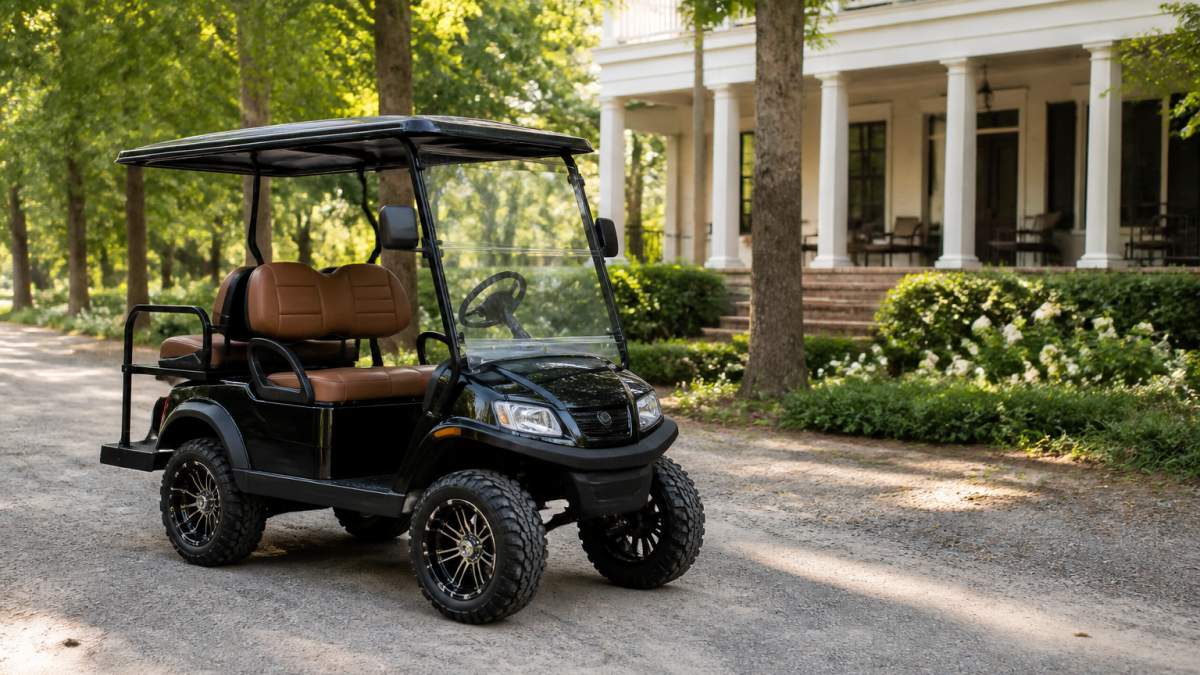
Golf carts for Serenbe property owners are the primary way many residents move between the village center, the trails, and their homes, and golf carts for Serenbe property owners raise the same questions every week. At Amplify Your Ride, we work with Chattahoochee Hills owners, and the same questions come up: what the community allows, what insurance is required, and what maintenance costs.
Electric vs. Gas Golf Carts: Which Fits Community Paths and Terrain
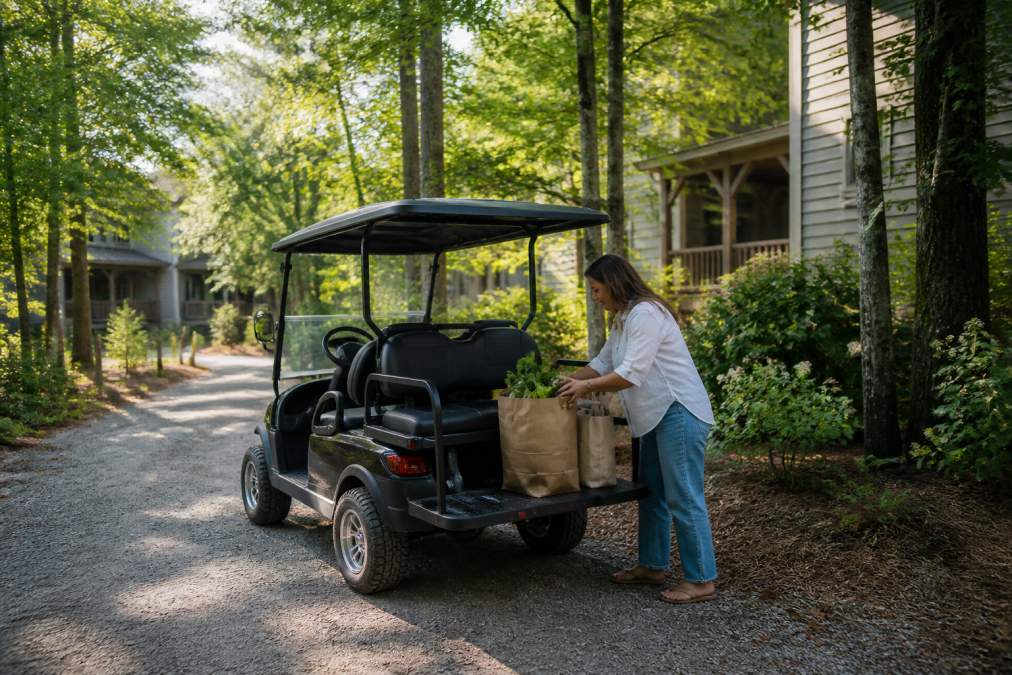
Electric golf carts are the better fit for most community path use, thanks to noise, emissions, and where you can legally park them. Gas carts still make sense in specific situations, but fewer than most buyers expect.
The trade-offs break down cleanly:
| Factor | Electric | Gas |
|---|---|---|
| Noise | Near silent | Audible from a distance |
| Indoor/path parking | Generally permitted | Often restricted |
| Refueling | Plug in at home | Gas station trips |
| Routine upkeep | Battery care, fewer moving parts | Oil, filters, spark plugs |
| Range per "fill" | Limited by battery | Longer between refills |
Golf Cart Maintenance Tips for Year-Round Reliability
Golf cart maintenance tips matter more when the cart is your second car, not a weekend toy. A cart that dies mid-week leaves you stranded, and the fix is almost always cheaper when you catch it early.
Start with the battery, because it causes most breakdowns:
- Check water levels monthly on lead-acid packs, and top off with distilled water only
- Clean terminals every few months; corrosion quietly kills charging efficiency
- Store the cart charged, never fully drained, especially through winter
- Watch for a charger that runs unusually long, a sign of a weakening pack
Golf Cart Insurance Requirements in Georgia for Property Owners
Golf cart insurance requirements in Georgia depend on where you drive, not just where you store the cart. On private property and most community paths, coverage is often optional. On public roads, it usually isn't. The gap most owners fall into is assuming one policy covers both.
- Golf cart, a vehicle designed and manufactured primarily for off-road or path use, generally not titled or registered for public-road operation.
- Low-speed vehicle (LSV), a four-wheeled vehicle built to federal motor vehicle safety standards, capable of speeds between 20 and 25 mph, and typically titled and registered like a car.
- Personal transportation vehicle (PTV), a category some states and insurers use for carts that are street-legal but not full LSVs.
What each coverage line actually pays for
The useful question is which coverage responds to which loss:
- Liability, pays for injuries or property damage you cause to someone else. This is the coverage that matters most on shared paths, because a cart striking a pedestrian or another cart is a liability event, not a collision claim on your auto policy.
- Collision, pays to repair or replace your cart after a crash with another object or vehicle, regardless of fault.
- Comprehensive, pays for theft, fire, vandalism, and storm damage. Carts are easy to steal and often parked outdoors, so this line does more work than owners expect.
- Medical payments / PIP, covers injuries to you and your passengers, which matters because carts have minimal crash protection.
- Uninsured/underinsured motorist, responds when the other driver has no coverage or too little, a real scenario on public roads shared with carts.
The homeowners policy question
Owners often assume their homeowners policy extends to the cart. Sometimes it does, often with limits: policies frequently treat a golf cart as a vehicle and exclude it from personal liability, or cover it only on the residence premises. The moment you drive onto a community path or public road, that coverage may not follow.
A coverage checklist for owners
- Confirm whether your cart is classified as a golf cart, LSV, or PTV
- Ask whether your homeowners policy extends to the cart on community paths, and under what limits
- Add liability coverage if anyone outside your household will drive it
- Add comprehensive coverage if the cart is stored outdoors or is high-value
- Document the cart's value, including receipts for custom upgrades, for theft and damage claims
- Re-check coverage after any major modification, since upgrades change replacement value
- Keep proof of insurance in the cart if it is street legal
Where the gap actually bites
The gap most owners discover too late is between "on my property" and "on the path", two different coverage situations, and the transition is where claims get denied. If your cart is street legal and registered, carry liability at minimum. If it is path-only, confirm in writing that your homeowners or standalone policy responds to a liability event on a shared path.
Golf Cart Rental for Special Events and Visiting Guests
Golf cart rental for special events solves a specific problem: guests who want to explore without owning a cart. Weddings, family visits, and community gatherings create short-term demand that buying doesn't make sense for.
- Is delivery and pickup included in the quoted rate?
- What's the passenger capacity of each cart?
- Are there mileage or time limits?
- What happens if a cart breaks down mid-event?
- Is a deposit required, and when is it refunded?
Buying New or Used: What to Check Before You Purchase
Buying used can save real money, but only with a proper inspection. Frame rust and flood damage turn a bargain into a money pit, and both are easy to miss in a quick look.
Use this inspection checklist before you commit:
- Inspect the frame underneath for rust, especially near welds and battery trays
- Check for water lines or mud in the battery compartment, signs of flood exposure
- Test the battery pack under load, not just at rest
- Look at tire wear for uneven patterns that signal alignment or suspension issues
- Confirm the charger works and completes a full cycle
- Ask for service records and warranty coverage details
- Verify the cart's history rather than trusting a listing photo
Charging Setup, Custom Upgrades, and HOA Compliance
Charging setup and HOA compliance are where new owners get surprised, and both are easier to handle before you buy than after. HOA guidelines and property owner requirements often govern where a cart can be parked, charged, and stored. Here are the charging installation mechanics most guides skip, plus a compliance workflow to run before you spend a dollar.
Residential charging installation: what it actually takes
A standard 120-volt household outlet can charge many carts, but the details decide whether it works safely and reliably:
- Dedicated circuit. A cart charger pulls a steady load for hours. Sharing a circuit with other outlets invites tripped breakers and, worse, overheated wiring. A dedicated 15- or 20-amp circuit is the baseline; some higher-output chargers call for a 240-volt circuit.
- GFCI protection. Because charging happens outdoors or in a garage, ground-fault protection is standard practice and often required by local electrical code. A GFCI breaker or outlet protects against shock in wet conditions.
- Weather-protected location. The charger and outlet need cover from rain and snow. A weatherproof outlet box or an enclosed charging station keeps water out of the connection.
- Cord management. An extension cord run across a driveway is the most common shortcut and the most common failure point. A permanently mounted charging station near the parking spot eliminates the trip hazard and the voltage drop that comes with long, undersized cords.
- Ventilation. Lead-acid batteries vent hydrogen gas during charging. Charging in an enclosed, unventilated space is a real safety issue. Lithium-ion packs vent far less, but the space should still have airflow.
Permits and approvals
Electrical work of this kind typically requires a permit and an inspection by your local building department, and the work usually needs to be done by a licensed electrician. Beyond the electrical permit, your community may require architectural or design review approval before you install a charging station, a post, or a dedicated outlet visible from the street. The safe sequence is: check community rules first, then pull the electrical permit, then install.
HOA compliance checklist for new owners
Run this before you buy or install anything:
- Get a copy of the current community rules on carts, parking, and charging
- Confirm where carts may be parked overnight under residential parking rules
- Confirm whether charging equipment needs architectural or design review approval before installation
- Verify any accessory installation does not violate community standards
- Confirm the cart meets any safety features the community requires, such as lights, reflectors, or a slow-moving vehicle emblem
- Confirm whether the cart must be registered or titled if it will be street legal
- Keep documentation of your cart, its registration, and any approvals in one file
Custom upgrades and where they cross the line
Custom upgrades are where owners have the most fun and the most risk. Lifted suspensions, upgraded wheels, and lighting packages can change how a cart handles and whether it still complies with community rules. Off-road capability upgrades are popular for utility use but can push a cart outside what's permitted on shared paths. A lift kit raises the center of gravity, changing stability on turns; upgraded lighting can improve visibility but may exceed brightness limits some communities set for path use.
Frequently Asked Questions
What maintenance is required for residential golf carts?
Residential golf carts need regular battery checks, tire pressure monitoring, and brake inspections. Electric models require watering lead-acid batteries or checking lithium-ion charge cycles, while gas carts need oil changes and spark plug replacements. Schedule preventative service at least once a year to catch small issues before they become expensive repairs. Keeping a simple maintenance log helps you track what was done and when.
Is a golf cart street legal in Georgia?
Georgia allows golf carts on certain public roads if they meet specific requirements, including headlights, taillights, turn signals, brakes, and a horn. Local ordinances determine where you can drive, and some communities require registration and insurance. Check with Chattahoochee Hills and any HOA guidelines before driving on public streets. Many community paths have their own rules separate from state law.
Can property owners rent golf carts for visiting guests?
Yes, property owners can rent golf carts for visiting guests, and many local dealerships offer short-term rentals with upfront pricing. Rentals work well for family visits, weddings, and community events. Confirm the rental includes insurance coverage and check whether the rental company delivers to your location. Ask about mileage limits and return procedures so there are no surprise fees.
How do I choose between electric and gas golf carts for local terrain?
Electric golf carts suit flat community paths and short daily trips, with lower noise and no fuel costs. Gas models handle hills and longer distances better, which matters if your property sits on uneven terrain. Consider charging infrastructure at your home: electric carts need a dedicated outlet or charging station. Lithium-ion batteries cost more upfront but last longer and require less maintenance than lead-acid.