 ultimate-guide
Is a Used Golf Cart Worth It? A 2026 Buyer's Guide
Table of Contents
- Used vs New Golf Carts: Pros and Cons
- Used Golf Cart Price Guide: What to Expect in 2026
- Gas vs Electric Golf Cart Pros and Cons
- Golf Cart Maintenance Checklist for Used Carts
- Total Cost of Ownership: The Real Numbers
- VIN and Serial Number Decoding: What They Reveal
- Safety and Legal Compliance by State
- Is a Used Golf Cart Worth It? The Verdict
- Frequently Asked Questions
Last Updated: September 27, 2026
Used vs New Golf Carts: Pros and Cons
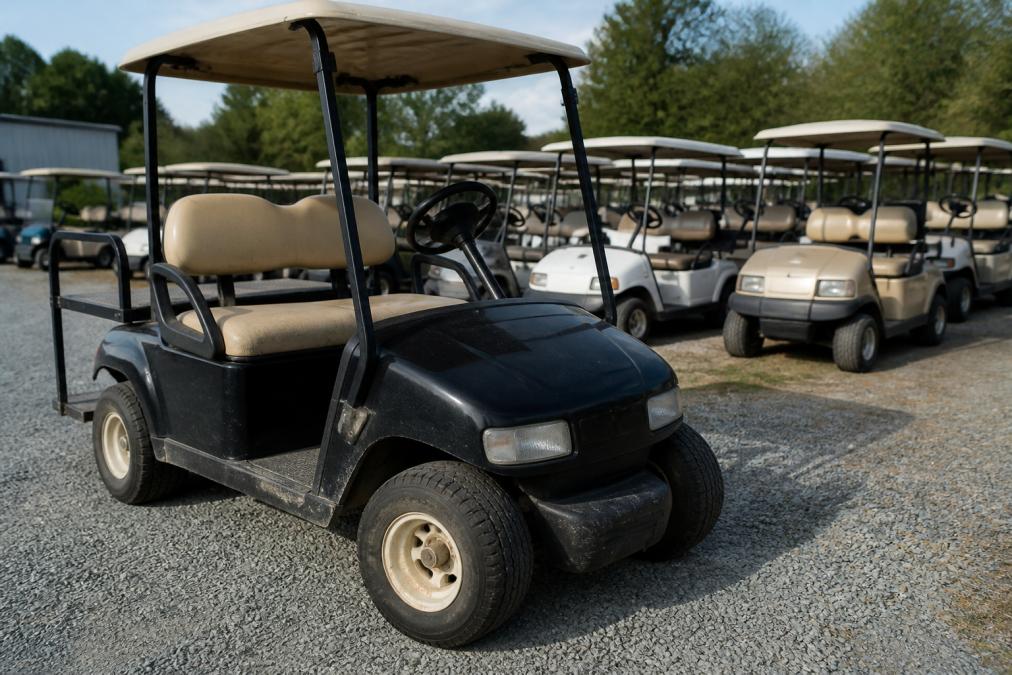
Whether a used golf cart is worth it depends almost entirely on your budget, your mechanical comfort level, and how you plan to use the cart day to day. A pre-owned cart can deliver the same practical transportation for a fraction of the cost of new, but only if you buy carefully. This guide from Amplify Your Ride walks through pricing, powertrain choices, inspection steps, and the ownership costs most buyers never calculate until something breaks.
The core trade-off is simple. New carts come with factory warranties, the latest lithium battery technology, and zero unknown history. Used carts come with depreciation already absorbed by someone else, which is exactly why they cost less.
- New: Full warranty, latest features, predictable maintenance, highest upfront cost
- Used: Lower purchase price, immediate depreciation already absorbed, unknown wear history
- Refurbished: Dealer-inspected and reconditioned, middle ground on price and risk
What most buyers miss is that a well-maintained used cart from a reputable dealer often outlasts a neglected new one. Maintenance history matters more than model year.
Used Golf Cart Price Guide: What to Expect in 2026
Pricing for used golf carts varies widely based on age, powertrain, battery condition, and included accessories. Rather than quoting fixed numbers, understand the factors that push a cart toward the higher or lower end of any range.
| Factor | Raises Price | Lowers Price |
|---|---|---|
| Battery condition | New lithium-ion pack | Failing lead-acid set |
| Model year | Recent model year | 10+ years old |
| Powertrain | Gas-powered, low hours | High-hour electric motor |
| Accessories | Aftermarket accessories included | Bare bones |
| Documentation | Full maintenance history | No records |
For current pricing on specific carts in our inventory, check directly with a dealer, since condition and configuration drive the final number more than any published guide can. A cart with a fresh battery pack and clean frame commands more than an identical model with corroded terminals and frame rust.
Gas vs Electric Golf Cart Pros and Cons
Gas and electric carts suit different owners, and the right choice comes down to terrain, range, and how much maintenance you want to handle.
Electric carts run on lead-acid or lithium-ion battery packs. They are quieter, produce no exhaust, and cost less per mile to operate. The trade-off is battery life, which degrades over time and eventually requires replacement. Lithium-ion packs last longer than lead-acid but cost more upfront.
Gas-powered carts offer longer range between refueling and better performance on hills. They require more routine maintenance: oil changes, spark plugs, and engine service. They are also louder and produce emissions.
- Choose electric for flat neighborhoods, short daily trips, and lower operating costs
- Choose gas for long distances, hilly terrain, and heavy towing
- Consider lithium-ion if you want longer battery life and faster charging
Golf Cart Maintenance Checklist for Used Carts
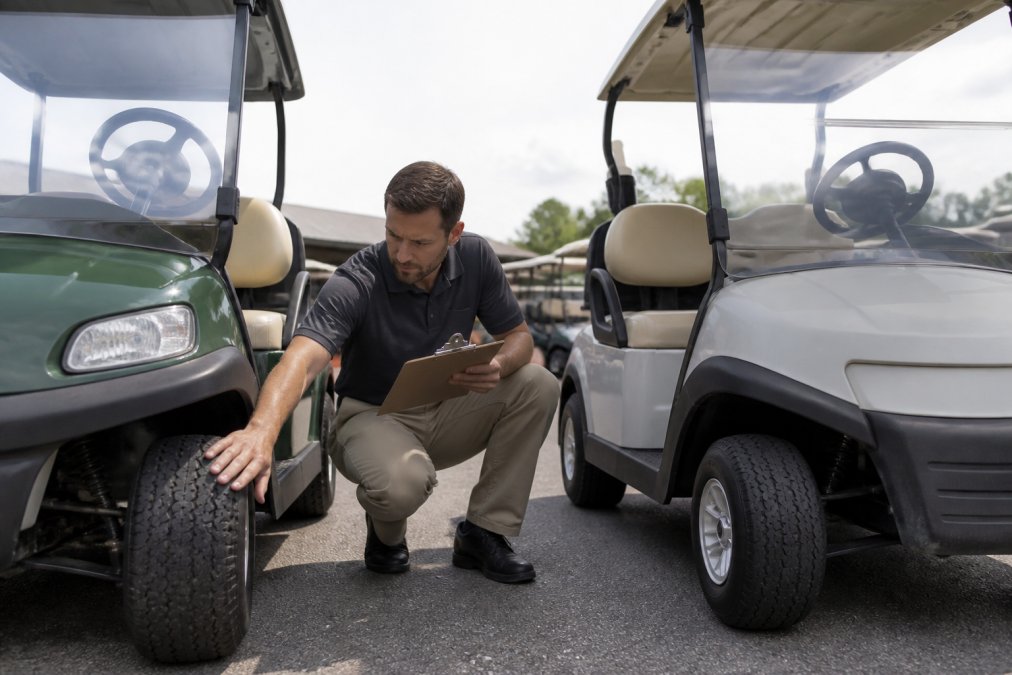
A used cart's reliability depends on what the previous owner did, or did not do. Use this checklist before you buy.
- Check battery voltage and age of the pack
- Inspect tires and tread for uneven wear
- Look for frame rust, especially underneath and near welds
- Test steering linkage for play or stiffness
- Check brake performance on a slope
- Examine suspension components for leaks or damage
- Verify the charger works and matches the pack voltage
- Confirm the powertrain runs smoothly with no hesitation
- Review maintenance history and any warranty remaining
Total Cost of Ownership: The Real Numbers
Purchase price is the smallest number in most used golf cart deals.
Upfront costs
- Purchase price (negotiated, not asking)
- Sales tax and title or registration fees, if your state requires them
- Immediate repairs the inspection revealed (brakes, tires, charger, controller)
- Accessories you know you will add (mirrors, lights, seat belts, hitch)
Recurring annual costs
- Insurance, many homeowners policies exclude golf carts driven on public roads, so a standalone policy or rider is often required
- Registration or permit fees, if the cart is street-legal in your area
- Electricity or fuel
- Routine maintenance: tire rotation and replacement, brake service, lubrication, and, on gas carts, oil, filters, and spark plugs
- Storage or charging infrastructure, if you do not already have it
Lumpy costs to budget for, not ignore
- Battery replacement. This is the single largest line item on most used electric carts. Lead-acid packs typically need replacement every four to six years; lithium-ion packs generally last longer but cost more when they do fail. Get the pack's manufacture date before you buy so you can place the replacement in year two instead of year five.
- Motor, controller, or charger failure. These are not annual costs, but on a 10-year-old cart they are likely somewhere in your ownership window.
- Frame or suspension repair if rust was missed at inspection.
A simple worked pattern
IRS guidance on whether a golf cart qualifies as a deductible business vehicle
VIN and Serial Number Decoding: What They Reveal
Where to find the number
Location varies by manufacturer, but the common spots are:
- Under the seat, on the frame rail or a plate riveted to the chassis
- On the driver-side frame near the rear wheel well
- Inside the battery compartment on many electric models
- On the steering column or dash plate on some LSVs
What the digits usually tell you
Why this matters at the negotiating table
- Year verification. Sellers routinely misstate model year, sometimes innocently, sometimes not. A cart sold as a 2020 that decodes to 2016 is worth meaningfully less, and the battery age usually confirms which story is true.
- Theft check. A serial number that returns no record, or that belongs to a different model, is a strong signal the cart is stolen or rebuilt from mismatched parts. Ask the seller for the number before you drive out to see the cart, and verify it independently.
- LSV vs. standard cart. If the seller claims the cart is street-legal, the VIN should appear on a state title or registration. A cart with no title and no VIN is almost certainly not a registered LSV, regardless of what equipment it has.
- Recalls and parts fitment. Knowing the exact model year lets you check for open recalls and order the correct parts instead of guessing.
A quick pre-purchase script
Safety and Legal Compliance by State
Street-legal status depends on where you drive. Many states require specific equipment for a cart to qualify as a Low-Speed Vehicle (LSV), including headlights, turn signals, seat belts, and a windshield. Requirements vary by state and by local ordinance, so confirm the rules that apply to your area before assuming a cart is road-legal.
Is a Used Golf Cart Worth It? The Verdict
For most buyers, a used golf cart is worth it when the battery, frame, and documentation check out. The savings over new are real, and a dealer-inspected cart removes much of the risk that comes with private party sales.
Frequently Asked Questions
What is a fair price for a used golf cart?
Fair pricing depends on age, brand, battery condition, and included accessories. A 3-5 year old electric cart with good batteries typically costs less than a new one, while gas models and refurbished carts sit in different ranges. Always compare multiple listings and factor in battery replacement costs if the cart is over four years old. For a specific quote on used inventory, contact Amplify Your Ride directly.
What is the typical lifespan of a used golf cart?
A well-maintained golf cart can last 10-15 years or more. The frame, suspension, and steering components often outlast the powertrain. Battery life is the biggest variable: lead-acid batteries typically need replacement every 4-6 years, while lithium-ion packs can last 8-10 years. Regular maintenance and proper charging habits extend lifespan significantly.
What should I inspect before buying a used golf cart?
Check the frame for rust, especially around welds and the battery tray. Test the brakes, steering linkage, and suspension for looseness or noise. Inspect tires and tread depth. Ask for the maintenance history and verify the serial number. On electric carts, test the charger and check battery voltage under load. On gas models, listen for engine hesitation and check for oil leaks.
Are gas or electric golf carts better for resale value?
Electric carts generally hold resale value better in most markets because they have fewer moving parts, lower maintenance costs, and are preferred for quiet neighborhood use. Gas carts appeal to buyers who need longer range or operate in areas without charging access. Condition, brand reputation, and battery health matter more than fuel type when determining resale value.
Buying used means balancing price against risk, and the difference between a great deal and a money pit comes down to inspection and documentation. Amplify Your Ride offers new and used golf cart sales, professional service and repair, parts, and rentals, including a Horseless Carriage for weddings and special events. Get started with Amplify Your Ride and find a cart that fits your budget and your daily route.