 Ultimate guide
Golf Cart Maintenance Checklist for Owners: 2026 Guide
Last Updated: October 23, 2026
Quick Summary
A golf cart maintenance checklist works in three tiers: a 10-minute weekly walkaround for tire pressure, battery water, and lights, a monthly service session for terminals, brakes, and wiring, and a seasonal or annual deep check. Adjust intervals for heat, salt, hills, and daily use.
- Check tire pressure weekly and record the reading, not just a visual look.
- Never check or top up battery water while the cart is on the charger; unplug first.
- Flooded lead-acid cells need distilled water only, never tap water.
- Lithium packs need the charger designed for the pack, not a generic unit.
- Run a 60-second pre-ride walkaround before every drive to catch breakdowns early.
Table of Contents
- Why a Golf Cart Maintenance Checklist Saves You Money
- Your Golf Cart Maintenance Schedule: Weekly, Monthly, and Annual
- Golf Cart Battery Maintenance: Lead-Acid vs. Lithium
- The Golf Cart Pre-Ride Inspection Checklist
- Electric Golf Cart Maintenance: What's Different
- Tires, Brakes, Steering, and Suspension Checks
- Common Golf Cart Problems and What They Signal
- Conclusion
- Frequently Asked Questions
Why a Golf Cart Maintenance Checklist Saves You Money
A golf cart maintenance checklist for owners is a written schedule of inspections and service tasks that keeps a cart safe, reliable, and cheap to run. Ten minutes a week prevents most of it.
The logic is simple. Small problems on a cart compound fast. A dry battery cell overcharges and swells. A soft tire wears unevenly and takes the steering with it.
Below, we'll show you exactly how to build a schedule you'll actually follow, what to check on each pass, and how battery type changes everything.
Your Golf Cart Maintenance Schedule: Weekly, Monthly, and Annual
A golf cart maintenance schedule works best in three tiers: a quick weekly walkaround, a monthly service session, and a seasonal or annual deep check. Most owners who stay on top of their carts never do anything heroic, they just never skip the small stuff. The schedule below is written so you can print it, tape it inside the storage compartment, and check boxes as you go.
Weekly Checks (10 Minutes)
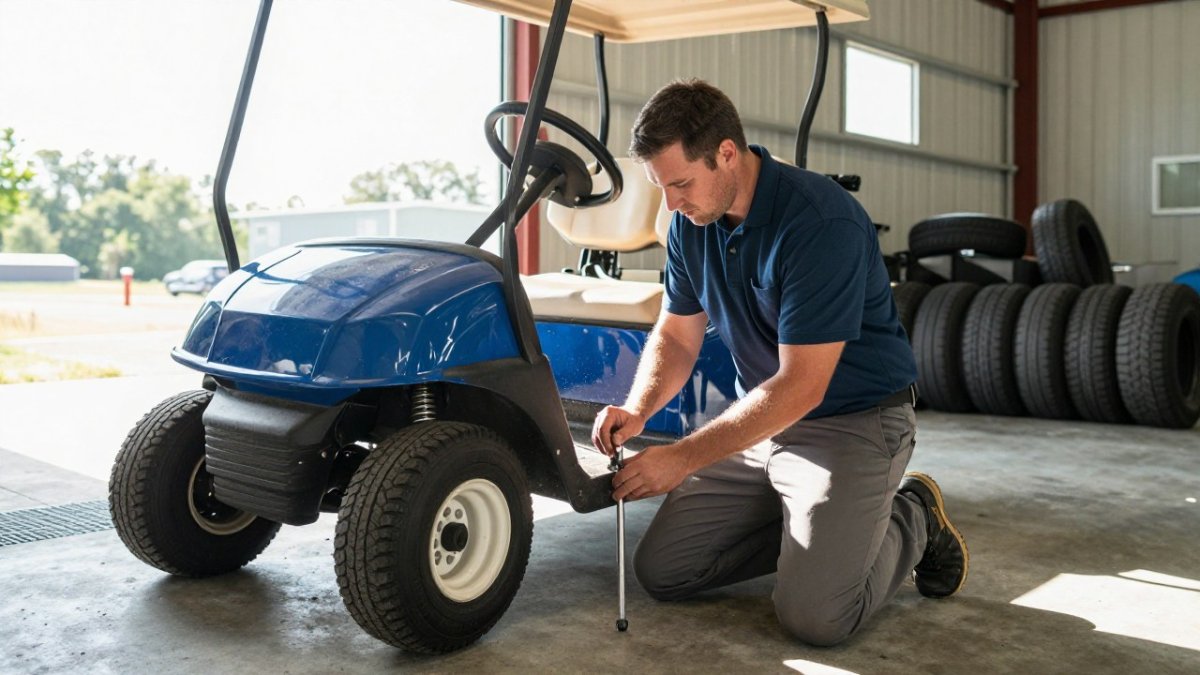
- Tire pressure on all four tires, set to the pressure on the sidewall or the manufacturer's placard. Record the reading, not just "looks fine."
- Battery water level on flooded lead-acid cells, topped up with distilled water after charging and after the pack has settled.
- Visual scan for corrosion on battery terminals and cables, plus any white or green crust at the posts.
- Lights, brake lights, and horn.
- Listen for new noises or a soft brake pedal on a short test roll.
Monthly Service Tasks
- Clean and inspect battery terminals, then apply a corrosion inhibitor.
- Check tire tread depth with a gauge and look for sidewall cracking. Replace any tire showing cords or cracks, regardless of tread.
- Test the brakes on a gentle slope at low speed and note pedal travel.
- Inspect wiring for chafing, especially where cables pass through the frame and near the charger receptacle.
- Lubricate moving parts: pedal linkages, steering components, and hinges.
- Wipe down the battery tops and keep the compartment dry.
Seasonal and Annual Service
- Full brake inspection, including adjustment and pad or shoe condition.
- Steering and suspension check for play, worn bushings, and bent components.
- Charger and charging system test, including the plug, cord, and receptacle.
- Battery load test and capacity check.
- Frame and undercarriage inspection for rust, especially if the cart sees coastal air or road salt.
- Full fastener torque check, including lug nuts.
| Interval | Time Needed | Core Tasks | Pass Criteria |
|---|---|---|---|
| Weekly | 10 minutes | Tire pressure, water level, lights, visual scan | All tires at placard pressure; plates covered; no new corrosion |
| Monthly | 30-45 minutes | Terminal cleaning, brake test, wiring, lubrication | No grinding; pedal firm; no chafed wire; terminals bright and coated |
| Seasonal | 1-2 hours | Brake inspection, suspension, charger test | Brakes stop straight; no steering play; charger completes a cycle |
| Annual | Half day or shop visit | Load test, torque check, full undercarriage inspection | Pack holds rated capacity; fasteners at spec; no structural rust |
Adjust the Schedule to How You Actually Use the Cart
A single generic interval is a starting point, not a rule. Adjust it for conditions:
- Heat and humidity: Check water more often in summer, since flooded cells lose water faster, and inspect terminals for corrosion monthly rather than quarterly.
- Coastal air or road salt: Rinse the undercarriage and inspect for rust more frequently; salt accelerates frame and fastener corrosion.
- Hills and rough paths: Shorten the brake and suspension interval, because pads, shoes, and bushings wear faster under load.
- Frequent use (daily or commercial): Move monthly tasks to every two weeks and keep a written log so you can spot trends.
- Seasonal storage: Before storing, charge fully, clean and dry the battery compartment, and follow the storage steps for your battery chemistry.
Golf Cart Battery Maintenance: Lead-Acid vs. Lithium
Golf cart battery maintenance splits into two completely different routines depending on chemistry. Flooded lead-acid batteries need water, cleaning, and equalizing. Lithium packs need almost none of that but demand correct charging habits and temperature awareness. Treating them the same is where most battery damage starts, so match the routine to the pack that's actually in your cart.
Flooded Lead-Acid Care
Lead-acid care comes down to discipline:
- Check water level after every charge and top up with distilled water only. Never use tap water, the minerals shorten cell life.
- Keep plates covered. Never let them go dry, that's how cells die.
- Clean terminals monthly and keep them coated with a corrosion inhibitor.
- Equalize on the schedule your manufacturer specifies, not on a guess.
- Store fully charged, never flat, and recharge before storage rather than after.
- Check specific gravity with a hydrometer if you want to catch a weak cell before it drags the pack down.
Lithium Pack Care
Lithium care is less hands-on but less forgiving of mistakes:
- Use the charger designed for the pack, not a generic unit. The wrong charger can overcharge or fail to balance cells.
- Avoid charging a cold pack immediately after winter storage; let it reach a normal temperature first.
- Don't leave a lithium pack at zero charge for long periods.
- Keep the terminals clean and dry, and inspect the pack casing for swelling or damage.
- Follow the manufacturer's storage voltage guidance rather than treating it like a lead-acid pack.
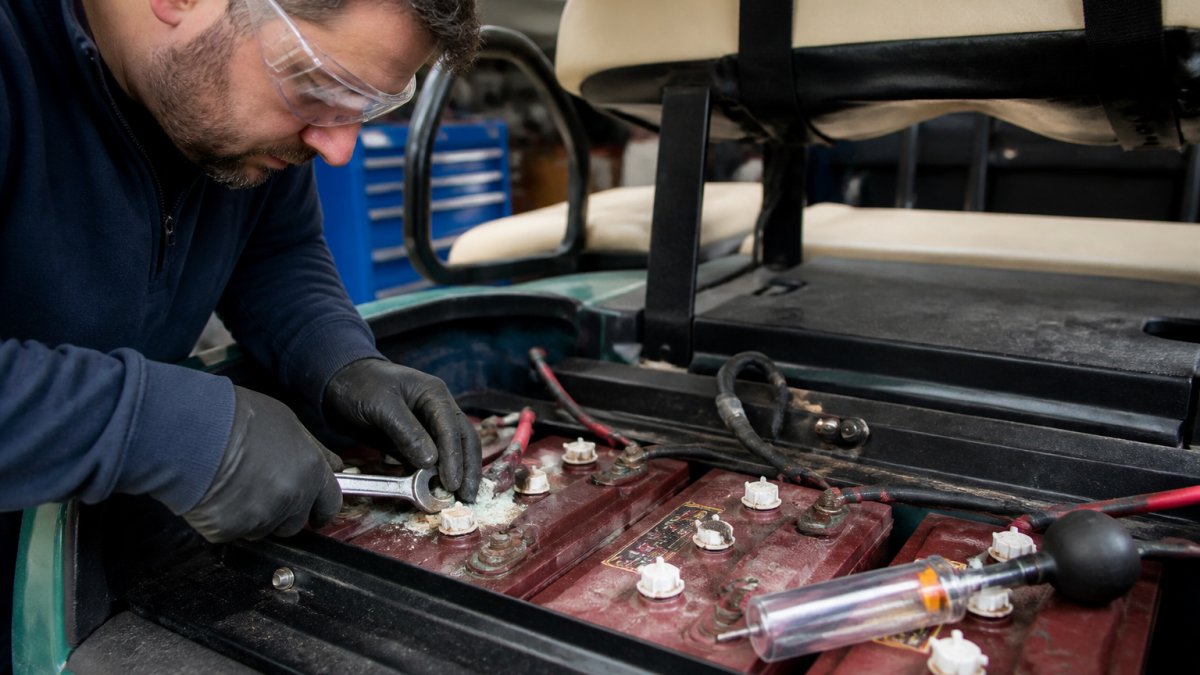
Safety Before You Touch Either Battery
Battery work is the part of cart maintenance most likely to hurt you, so build these habits:
- Park on a level surface, set the brake, and remove the key before opening the compartment.
- Disconnect power where the manufacturer's procedure calls for it, and never work on a live pack with metal tools that can bridge terminals.
- Wear safety glasses and gloves; lead-acid acid and lithium pack energy both deserve respect.
- Never check or top up battery water while the cart is on the charger. Unplug first, every time.
- Recognize the tasks that require a technician: pack replacement, controller work, and any repair involving a swollen or damaged lithium pack.
The Golf Cart Pre-Ride Inspection Checklist
A golf cart pre-ride inspection checklist is a 60-second walkaround before you drive, and it catches the problems that cause breakdowns mid-trip. Run it every time you take the cart out, especially after it's sat for a while.
- Walk the cart and look for anything obviously wrong: flat tire, dangling wire, fluid spot
- Check tire pressure by eye and by gauge if anything looks soft
- Test the brakes before you leave the driveway
- Confirm lights and horn work
- Check the charge level on your gauge
- Look at the battery compartment for corrosion or a smell
- Sit down and listen for anything new before you pull away
Electric Golf Cart Maintenance: What's Different
Electric golf cart maintenance skips oil changes and spark plugs but adds a battery and charging system you have to understand. The electric cart's service life lives or dies on how well you treat the pack and the charger.
Key differences from a gas-powered cart:
- No engine oil, filters, or spark plugs to change
- Battery pack and charger become the primary service items
- Wiring and connections carry all the load, so chafing and corrosion matter more
- Regenerative braking systems, where fitted, need their own check
- Motor brushes and controllers on older carts need periodic inspection
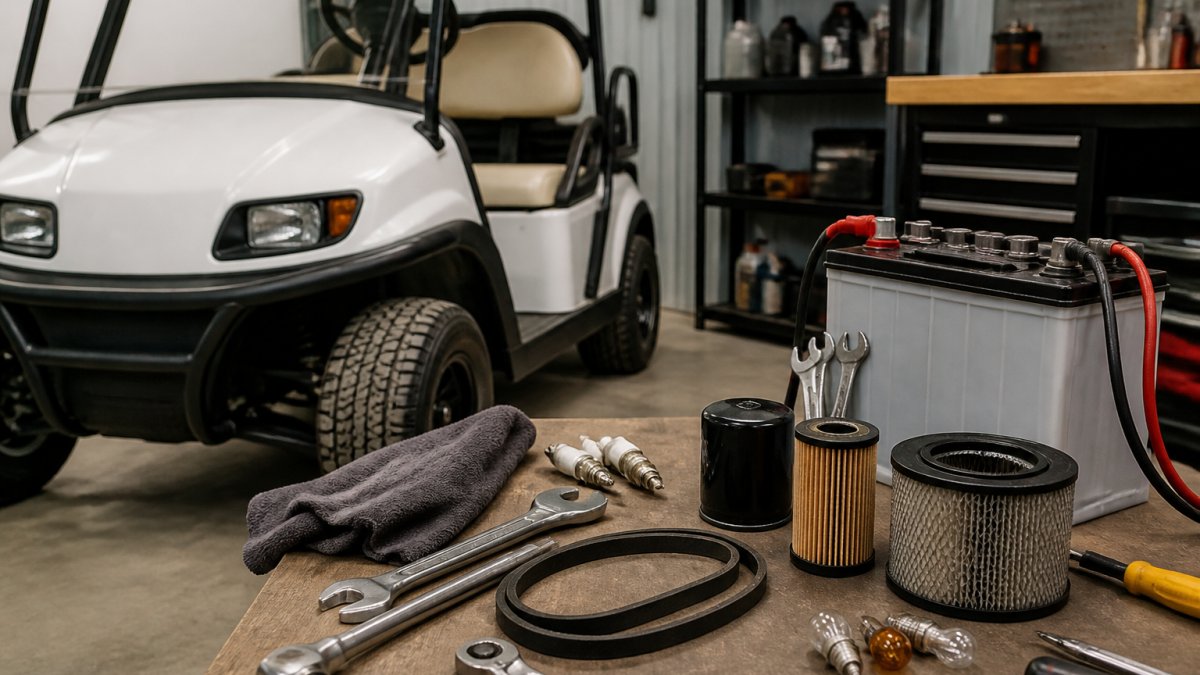
For gas-powered carts, add oil changes, air filters, and belt inspection to the schedule. The rest of the checklist, tires, brakes, steering, lights, applies to both.
Tires, Brakes, Steering, and Suspension Checks
Tire pressure and tire condition drive everything else on a cart.
Brake inspection should happen monthly at low speed and seasonally in full. Test on a gentle slope, listen for grinding, and check pedal travel.
Steering and suspension checks catch the slow failures.
The electrical system deserves a monthly look too: wiring, connections, lights, and the charger. Corroded connections cause voltage drop, weak performance, and heat that can start a fire.
Common Golf Cart Problems and What They Signal
Most cart problems announce themselves before they strand you. Here's what the symptoms usually mean:
| Symptom | Likely Cause | Action |
|---|---|---|
| Slow acceleration or reduced range | Weak or aging battery pack | Load test the pack |
| Corroded terminals | Poor cleaning routine or overwatering | Clean, coat, check water habits |
| Uneven tire wear | Wrong pressure or alignment issue | Set pressure, check steering |
| Grinding when braking | Worn brake shoes or debris | Full brake inspection |
| Wandering steering | Worn bushings or tie rod play | Suspension and steering check |
| Lights dimming under load | Corroded wiring or failing connections | Electrical inspection |
If you're not comfortable diagnosing a symptom yourself, stop before you make it worse.
Conclusion
The challenge with cart ownership isn't knowing what to check, it's building a routine you'll keep. Start with the weekly ten-minute pass, add a monthly session, and book a seasonal inspection so the heavy items get done right. Amplify Your Ride supports owners with new and used cart sales, parts, service, and rentals, and our team can walk you through the schedule that fits your cart and how you use it. Get started with Amplify Your Ride and keep your cart running reliably for years.
Frequently Asked Questions
What maintenance does a golf cart need?
A golf cart needs regular checks on its battery, tires, brakes, steering, and electrical system. Weekly tasks include checking tire pressure and looking for leaks. Monthly, inspect battery terminals for corrosion and test lights. Annually, have a professional inspect the brakes and suspension. Following a golf cart maintenance checklist helps you catch small issues before they become expensive repairs.
How often should you service a golf cart?
Most manufacturers recommend a professional service every 100 to 200 hours of use or once a year, whichever comes first. If you drive daily, schedule a checkup every six months. Your golf cart maintenance schedule should also include weekly owner checks like tire pressure and battery water levels. Regular service intervals keep your cart reliable and can extend its lifespan.
How do you maintain golf cart batteries?
For lead-acid batteries, check water levels monthly and top off with distilled water after charging. Clean terminals with a baking soda solution to prevent corrosion. For lithium batteries, avoid full discharges and keep the charge between 20% and 80% for daily use. Always use the manufacturer's charger. Proper golf cart battery maintenance can add years to your battery's life.
What should be included in a golf cart pre-ride inspection checklist?
Before each ride, check tire pressure and tread, test brakes and steering, verify lights and signals, and look for fluid leaks. Make sure the battery is charged and terminals are clean. A quick walk-around for loose parts or damage takes two minutes. This pre-ride inspection checklist helps you spot problems early and ride safely.
What maintenance does an electric golf cart need?
Electric golf cart maintenance focuses on the battery, charging system, and electrical connections. Check water levels in lead-acid batteries monthly, clean terminals, and inspect wiring for fraying. Tire pressure and brake checks are also important. Unlike gas carts, you don't need oil changes, but you should still follow a regular service schedule for the motor and controller.