 Ultimate guide
Used Golf Cart Buying Guide 2026: What to Know
Table of Contents
- Why a Used Golf Cart Makes Sense in 2026
- Types of Used Golf Carts and What They Cost
- Used Golf Cart Prices: What Drives the Number
- The Used Golf Cart Inspection Checklist
- How to Run a Golf Cart Battery Test
- Questions to Ask When Buying a Used Golf Cart
- Negotiating a Used Golf Cart Price Without Getting Burned
- Conclusion
- Frequently Asked Questions
Last Updated: October 21, 2026
Why a Used Golf Cart Makes Sense in 2026
A used golf cart buying guide in 2026 starts with one honest question: do you need new, or do you need reliable? For most buyers around Chattahoochee Hills, a well-inspected used cart delivers the same daily transportation for a fraction of the outlay. At Amplify Your Ride, we've walked buyers through both paths.
The math is straightforward. Depreciation hits new carts hardest in the first couple of years. A used cart that has already absorbed that drop puts your money into batteries, tires, and service instead of a showroom premium.
Here's what most guides get wrong: they treat "used" as one category. It isn't. A two-year-old cart from a maintained fleet and a ten-year-old cart from a barn are both "used," and they are not the same purchase.
Types of Used Golf Carts and What They Cost
Used carts split into two families: gas and electric, with electric further divided by battery type (lead-acid versus lithium). Each fits a different routine, and the right choice depends on how you'll actually use the cart, not on what's cheapest on the lot.
Gas vs. Electric: Which Fits Your Routine
Gas carts suit longer, hillier routes and buyers who don't want to think about charging. Electric carts run quieter, need less routine engine maintenance, and fit short daily trips around a community. If your cart lives on a charger overnight and covers local errands, electric is the simpler ownership experience. If you cover distance or tow, gas earns its place.
Brands That Hold Up and Hold Value
Brand reputation matters more in the used market than the new one, because you're buying someone else's maintenance decisions. Established names with strong parts availability and dealer support are easier to service and hold resale value better. We sell new EPIC, Star EV, and Greyson carts.
Pricing varies widely by type, age, battery condition, and brand. We don't publish blanket figures because two carts of the same year can sit thousands apart once battery health and frame condition are factored in. Ask any seller for a full breakdown before you compare.
Used Golf Cart Prices: What Drives the Number
Used golf cart prices are set by five things: battery age and type, overall condition, brand and parts availability, accessories, and service history. A cart with fresh batteries and a clean frame is worth more than a newer cart with a tired pack. Buyers who understand this negotiate from knowledge instead of guesswork.
Battery condition is the single biggest lever. A lead-acid pack near the end of its life is a near-term expense, while a healthy lithium pack carries real value. Frame rust and flood history are the second lever, and they're harder to spot. Accessories like enclosures, lights, and upgraded wheels add value only when they're in good working order.
The Used Golf Cart Inspection Checklist
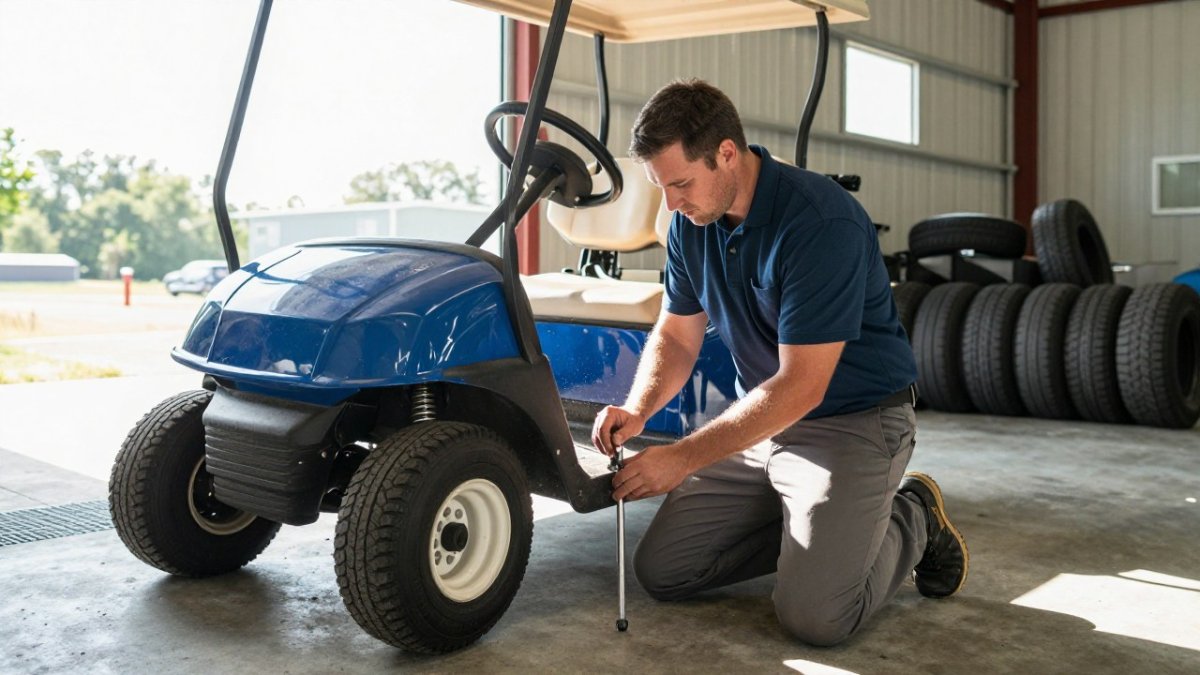
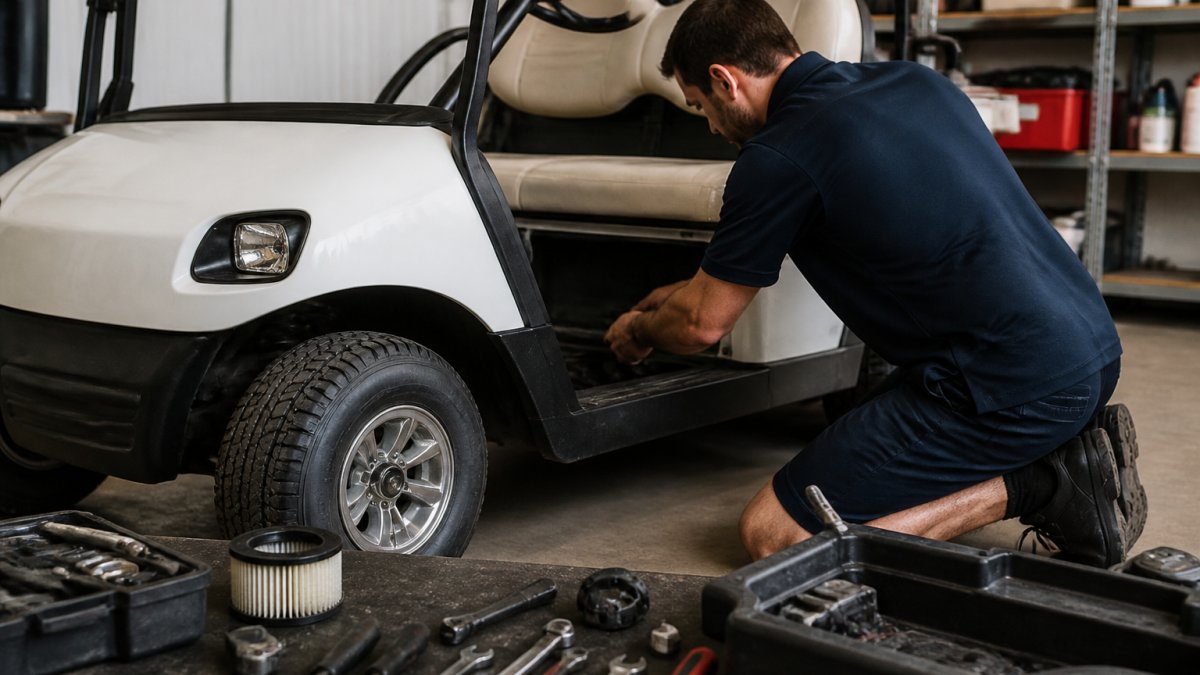
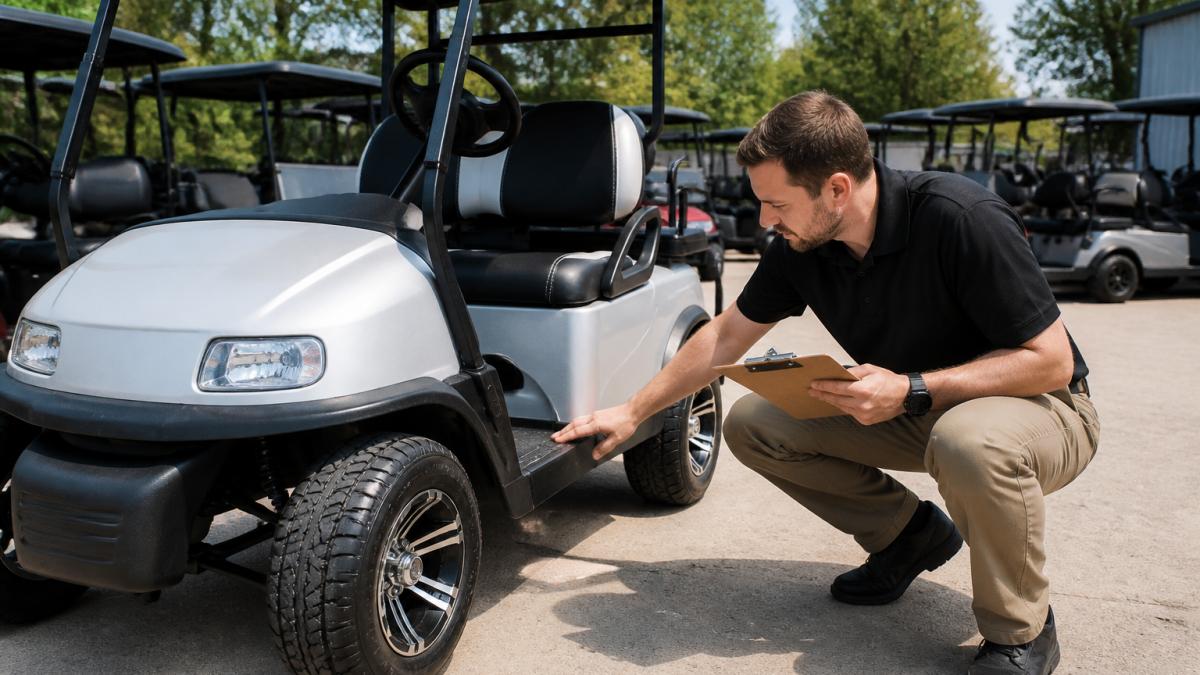
A used golf cart inspection checklist is a structured walk-around that checks frame integrity, battery health, tires, brakes, steering, and electrical function before money changes hands. Bring a flashlight, a tire gauge, and a notebook, and inspect in daylight. Skip this step and you inherit every problem the last owner hid.
Frame, Rust, and Flood Damage
Start underneath. Look for rust along the frame rails, bubbling paint, and corrosion around welds. Flood damage shows as silt in crevices, fogged lights, and musty smells under the seats. A rusted or flood-damaged frame is a walk-away, no matter how good the body looks.
Tires, Brakes, and Steering
Check tire tread and sidewall cracks, then test the brakes on a slight incline. Turn the wheel fully both ways and listen for grinding or play. Worn steering components are a safety issue and a repair bill, so price them into your offer.
How to Run a Golf Cart Battery Test
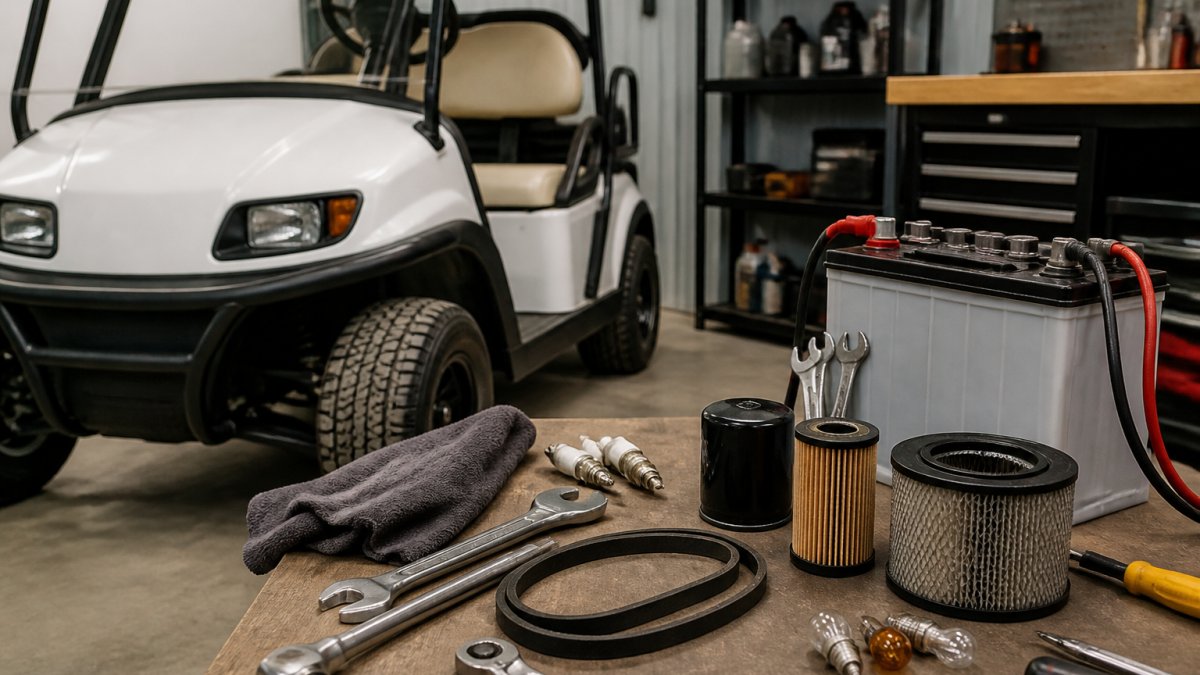
A golf cart battery test is a load test that reveals real capacity, not just surface voltage. A fully charged pack can read correct voltage and still fail under load. Test each battery individually, check for swelling or corrosion, and confirm the charger cycles properly. For lithium packs, ask for the battery management system readout showing charge cycles and health.
If you can't test it yourself, have a technician do it before purchase. This is the one step that separates a good used cart from an expensive mistake.
Questions to Ask When Buying a Used Golf Cart
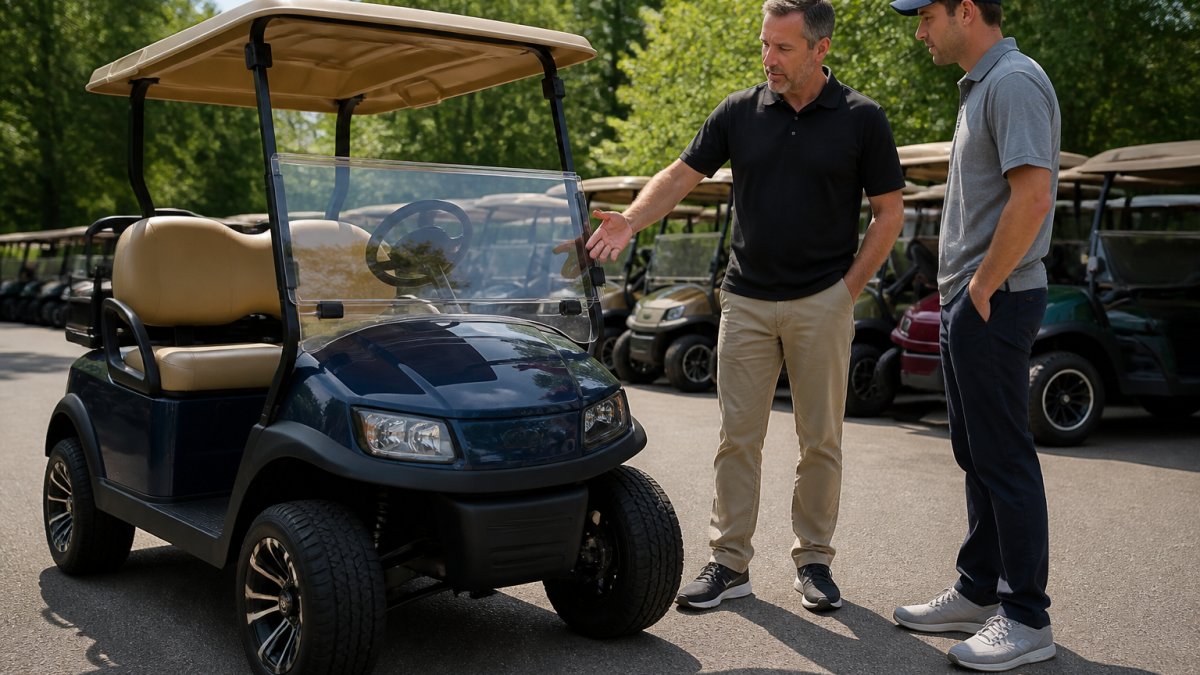
Ask about battery age and type, service records, prior use (fleet, personal, or rental), frame or flood history, and whether the charger is included. Ask why the cart is being sold and whether any accessories were added aftermarket. Honest sellers answer these without hesitation. Vague answers are your signal to slow down.
Negotiating a Used Golf Cart Price Without Getting Burned
Negotiate from inspection findings, not from sticker shock. Quote specific issues you found, like a battery pack near replacement or worn tires, and let those justify your offer. Keep the deal contingent on a battery test and a clean frame. Walk away from pressure tactics; there's always another cart.
Conclusion
The challenge with buying used isn't finding a cart, it's knowing which one is sound. Amplify Your Ride offers new and used golf cart sales, full service and repair, rentals, and parts. Get started with Amplify Your Ride and buy a used cart you can actually trust.
Frequently Asked Questions
What should I check when buying a used golf cart?
Start with the frame for rust or cracks, then check the battery pack age and voltage, tires for uneven wear, brakes, steering play, and lights. Ask for service records and confirm the cart's year by the serial number. A used golf cart inspection checklist should also cover the charger, controller, and any signs of flood damage under the seat and in the battery compartment. If you cannot test it under load on a slope or with passengers, walk away.
How much should I pay for a used golf cart?
Used golf cart prices depend on age, brand, battery condition, and accessories. A cart with a fresh battery pack and clean frame commands more than one needing replacements. Ask whether the price includes a charger and any warranty. Because pricing varies by condition and local supply, request a current quote from the dealer rather than relying on a generic number. Compare the total cost of ownership, not just the sticker price.
How do I know if a used golf cart battery is good?
A proper golf cart battery test uses a hydrometer to check specific gravity and a load tester to see how the pack holds voltage under demand. Check the date codes on the batteries; lead-acid packs typically last four to six years with good care. If the cart has been sitting unused, the pack may be sulfated even if it shows a charge. Ask the seller to run the cart under load for several minutes and watch for a voltage drop.
What questions should I ask when buying a used golf cart?
Ask for the serial number and model year, the age of the battery pack, whether it has been in an accident or flood, and what service records exist. Find out if the charger is included, whether there is any warranty, and why the previous owner sold it. Questions to ask when buying a used golf cart should also cover motor and controller history, tire age, and whether the cart has been modified. Honest sellers will answer without hesitation.
Is it better to buy a new or used golf cart?
A used cart costs less upfront and can be a solid value if the frame and battery pack are sound. New carts come with a warranty, the latest features, and no unknown history. For short-term or budget-focused use around a community, a used cart often makes sense. For daily reliance and long-term ownership, compare the total cost of a used cart plus likely repairs against a new cart with warranty coverage.
How can I tell what year a used golf cart is?
Locate the serial number plate, usually under the seat or on the frame near the rear wheel, and decode it using the manufacturer's chart. The first digits often indicate the model year. Ask the seller for the title or registration if your area requires one. If the serial number is missing or scratched off, treat that as a red flag and walk away, since it may indicate a stolen or rebuilt cart.