
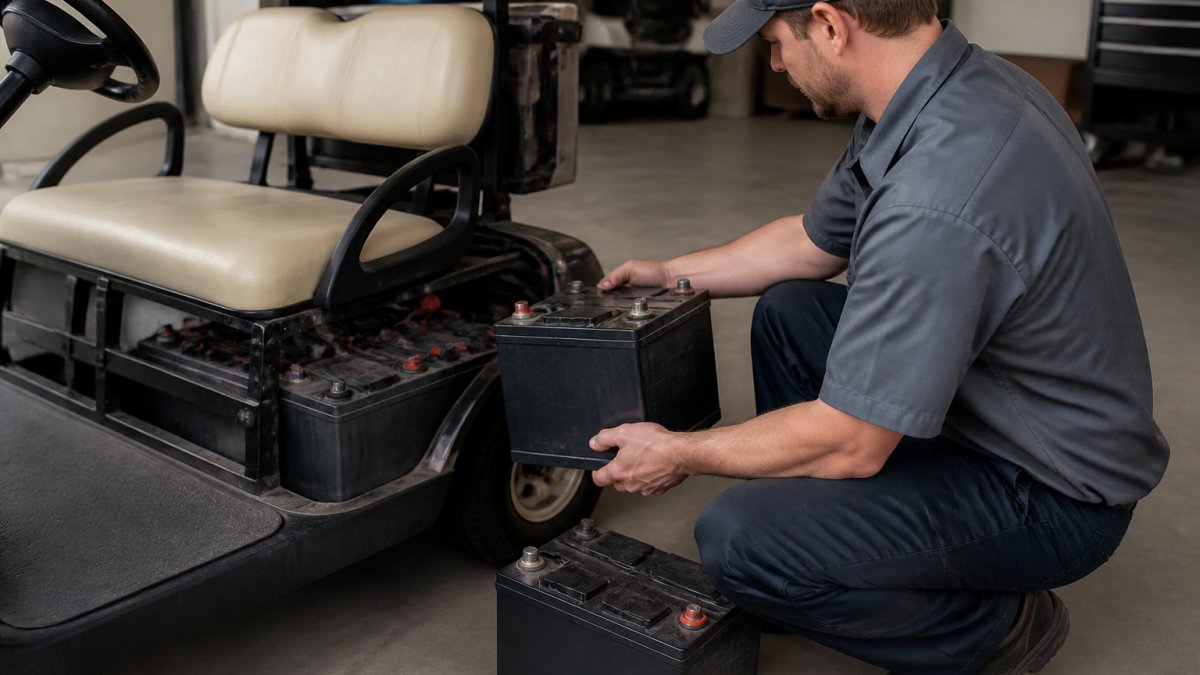
 How-to
Golf Cart Battery Replacement Cost Breakdown (2026)
Table of Contents
- Golf Cart Battery Replacement Cost Breakdown: What Drives the Price
- Golf Cart Battery Prices by Type and Voltage
- Golf Cart Lithium Battery Conversion Cost: What Changes
- Installation Labor and Professional Service Fees
- How to Test Golf Cart Batteries Before You Spend a Dollar
- Golf Cart Battery Lifespan and Replacement-Cycle Costs
- Recycling, Disposal Fees, and Compatibility Checks
- Frequently Asked Questions
Last Updated: October 19, 2026
Golf Cart Battery Replacement Cost Breakdown: What Drives the Price
A golf cart battery replacement cost breakdown starts with one honest truth: the number on the invoice is decided before you ever call a shop.
This guide breaks down every line item in a golf cart battery replacement cost breakdown so you can budget with your eyes open instead of guessing at the counter.
Here's what most guides get wrong: they quote a single "average" figure and move on.
The Four Cost Factors That Decide Your Bill
Every quote you receive comes down to four variables, and knowing them lets you compare apples to apples. The U.S. Environmental Protection Agency's guidance on lead-acid battery management is worth reading before you dispose of an old pack, since handling rules affect what a shop charges you.
- Battery chemistry: Flooded lead-acid costs least upfront. Lithium-ion costs more but lasts longer and needs no watering.
- Voltage and cell count: A 36-volt system uses fewer batteries than a 48-volt system, so the per-unit price multiplies differently.
- Labor: Professional installation is billed by the hour or as a flat job rate, and cable and tray work adds time.
Golf Cart Battery Prices by Type and Voltage
Golf cart battery prices swing widely by chemistry and configuration, so treat any single number with suspicion. The useful move is to price the whole set, not the individual cell, and to see each line item separately. Below is how a transparent quote is built, with typical U.S. market ranges owners report for common configurations. Treat these as budgeting ranges, not quotes, brand, warranty, and current market rates move them.
What a Full-Set Quote Actually Contains
A complete replacement bill is rarely just batteries. A transparent quote itemizes:
- Battery count × unit price, the largest line, driven by chemistry and voltage
- Cables and connectors, often replaced with the pack because old cables corrode
- Battery tray cleanup or replacement, rusted trays add labor and parts
Ask for each of these as a separate line. A quote that bundles them hides where the money goes.
Typical Ranges by Chemistry
- Flooded lead-acid: the lowest upfront cost per set. A 48-volt pack built from 6-volt cells (eight units) is the budget benchmark; 8-volt (six units) and 12-volt (four units) sets cost more per unit but reduce wiring.
- AGM: sits between flooded and lithium on upfront price, with no watering and less maintenance.
- Lithium-ion: the highest upfront line, but the quote usually bundles a lithium-compatible charger and mounting hardware, which is why the total looks steeper than a straight swap.
6-Volt, 8-Volt, and 12-Volt Configurations
The cell you choose changes how many you buy and how the labor adds up. A 48-volt pack built from 6-volt batteries needs eight units. The same 48 volts built from 8-volt batteries needs six. Built from 12-volt batteries, it needs four. Fewer, larger batteries usually cost more per unit but reduce wiring and connections, and fewer connections means less labor time.
36-Volt vs 48-Volt Battery Sets
A 36-volt set generally costs less than a 48-volt set because it uses fewer batteries. The trade-off is range and runtime: 48-volt systems typically deliver more power and longer runs between charges. If you drive hilly terrain or make long daily trips, the higher-voltage pack usually pays for itself in usable range.
| Configuration | Batteries Needed (48V) | Relative Upfront Cost | Relative Labor | Best For |
|---|---|---|---|---|
| 6-volt cells | 8 units | Lowest per unit | Highest (most connections) | Budget builds, easy replacement |
| 8-volt cells | 6 units | Mid-range | Moderate | Balanced range and cost |
| 12-volt cells | 4 units | Highest per unit | Lowest (fewest connections) | Fewer connections, less wiring |
| Lithium pack | 1 pack | Highest upfront | Lowest | Long life, no watering |
Build Your Own Itemized Estimate
Use this structure to sanity-check any quote. Fill in your own numbers from a local shop or online retailer:
- Battery count × unit price = battery subtotal
- Cables and connectors = parts subtotal
- Tray cleanup or replacement = parts subtotal
- Labor (flat or hourly) = labor subtotal
- Disposal or core fee × battery count = disposal subtotal
- Charger (if lithium) = charger subtotal
- Sales tax on taxable lines = tax
- Total = sum of all lines
Run the same structure for a 36-volt and a 48-volt set and the difference becomes obvious: the higher-voltage pack costs more in batteries but may save labor if it uses fewer, larger cells. That is the comparison a single "average" figure can never show you.
Golf Cart Lithium Battery Conversion Cost: What Changes
Golf cart lithium battery conversion cost runs higher upfront than a lead-acid swap, and that gap is the single biggest reason owners hesitate. A conversion isn't just a battery purchase.
What most guides miss is the charger. Your existing lead-acid charger will not properly charge a lithium pack, so a conversion kit usually bundles a matching charger. That line item is why a lithium quote looks steeper than a straight replacement.
The payoff comes in lifespan and maintenance. Lithium packs generally last through more charge cycles and skip the watering routine entirely. For owners who plan to keep a cart for years, the long-term cost often closes the gap.
Installation Labor and Professional Service Fees
Installation labor is where quotes diverge most, because shops price it differently. Others charge hourly shop labor. Professional installation also covers the work you don't see: cleaning the battery tray, inspecting cables and connectors, and torquing terminals correctly.
A common mistake is buying batteries online and assuming the swap is a quick drop-in. Old cables often corrode and need replacing, and a rusted tray adds cleanup time.
- Flat-rate labor: predictable, quoted per battery or per job
- Hourly shop labor: varies with cart condition and cable work
- Parts and labor combined: confirm what's included before approving
DIY replacement saves the labor line but carries real risk. Lead-acid batteries are heavy, and incorrect terminal torque or reversed polarity can damage a controller. If you're unsure, professional installation is the safer call.
How to Test Golf Cart Batteries Before You Spend a Dollar
Test your pack before you replace it, because a weak charger or a single bad cell can mimic a dead set. A handheld multimeter and a load test tell you whether you need one battery or eight.
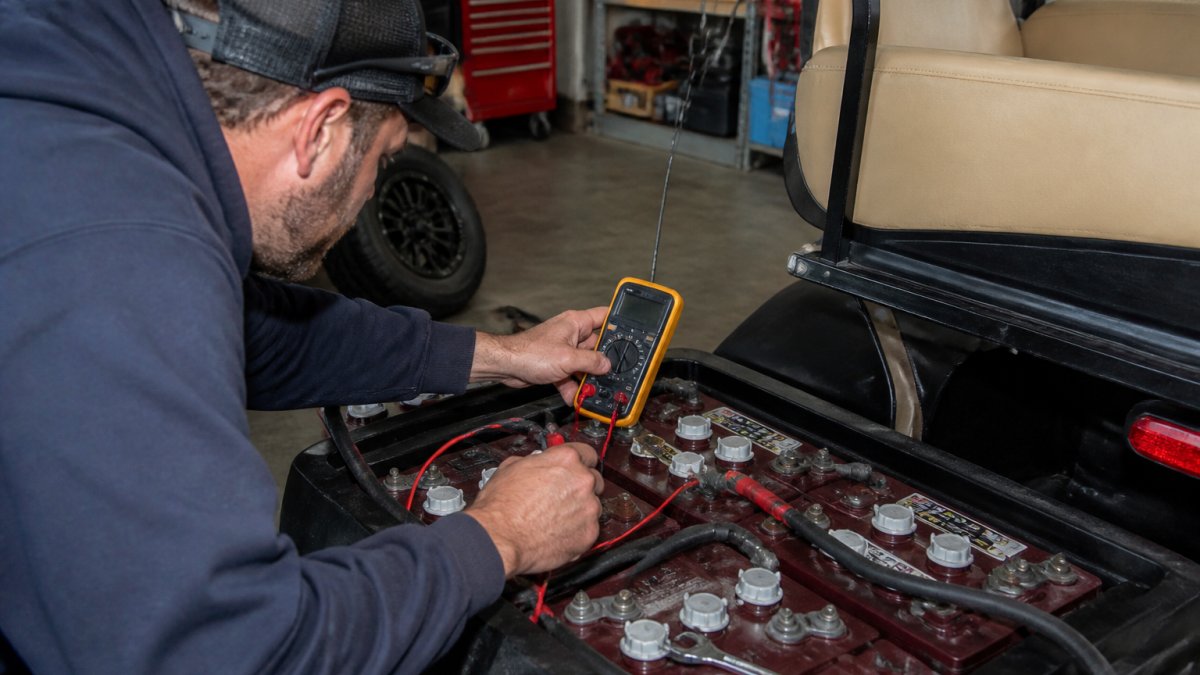
Here is how we would do it:
- Charge the pack fully, then let it rest before testing.
- Measure total pack voltage with a multimeter and compare it to the rated voltage.
- Test each battery individually to find a low outlier.
- Check specific gravity on flooded cells if you have a hydrometer.
- Inspect terminals and cables for corrosion or loose connections.
If one battery reads far below the rest, replacing that unit may buy you time. If the whole pack is tired, a full set is the honest answer.
Golf Cart Battery Lifespan and Replacement-Cycle Costs
Golf cart battery lifespan depends on chemistry and care, and it drives your replacement-cycle cost more than any single purchase price. Flooded lead-acid packs typically need replacement sooner than lithium, especially with heavy use and poor charging habits.
To estimate long-term cost, divide the pack price by the years you expect it to last. A cheaper pack replaced more often can cost more over a decade than a pricier pack that lasts longer.
- Water flooded cells regularly and keep terminals clean
- Avoid leaving any pack discharged for long periods
- Store carts charged, not empty, during off-season
Recycling, Disposal Fees, and Compatibility Checks
Recycling and disposal fees are the line item owners forget, and compatibility checks are the step they skip. Both affect the final bill and whether the new pack works at all. This section covers the fee mechanics and a compatibility checklist you can run before you buy, a step most pricing guides leave out.
How Disposal and Core Fees Work
Lead-acid batteries are regulated for disposal, so shops charge a recycling or core fee to handle them properly. The U.S. Environmental Protection Agency's guidance on lead-acid battery management explains why handling rules exist and why a shop cannot simply toss an old pack.
- Core charge: a refundable deposit added when you buy a new lead-acid battery without returning an old one. Return the old battery and the core charge is credited back.
- Recycling fee: a per-battery charge for handling and processing the old pack. It is usually non-refundable and appears as its own line on the invoice.
- Take-back options: some retailers accept old lead-acid batteries for recycling even if you did not buy there. Ask before you pay a shop to haul them away.
Ask upfront whether the disposal fee is included in your quote or added at pickup. A quote that omits it is incomplete.
Compatibility Checks Before You Buy
A replacement pack that does not fit or does not match your charger turns a budget line into a return. Run these checks before you order:
- Voltage: the new pack must match your cart's rated system voltage (36V, 48V, or otherwise). Mixing voltages damages the controller.
- Dimensions: measure the battery tray and compare to the new pack's footprint and height. Larger cells may not fit the same tray.
- Terminal layout: confirm terminal position and post type match your cables, or plan to replace cables.
To keep your quote transparent, ask for an itemized breakdown covering batteries, charger, labor, cables, disposal, and any controller work. That single request separates a clear quote from a surprise, and it confirms the new pack is compatible before you spend a dollar.
Frequently Asked Questions
How much does it cost to replace golf cart batteries?
The total depends on battery type, voltage, and who does the install. A lead-acid set costs less up front than a lithium pack, but you'll replace it more often. Labor, cables, and disposal fees add to the parts price. Ask for an itemized quote that separates batteries, installation, and old-battery recycling so you can compare offers fairly. Prices vary by region and dealer, so get a written quote before committing.
How many batteries does a golf cart need?
It depends on the system voltage and the battery size. A 36-volt cart typically runs six 6-volt batteries. A 48-volt cart often uses six 8-volt batteries or four 12-volt batteries. Count the batteries in your current pack and match the voltage and amp-hour rating before buying replacements. Mixing sizes or ages shortens the life of the whole set, so replace the full pack when one unit fails.
Can you replace just one golf cart battery?
You can, but it usually backfires. A new battery paired with older ones in the same series gets overcharged and undercharged, which drags down the whole pack. If your batteries are within a year of each other, a single replacement may work. If the set is older, replace all of them together. Test each battery with a multimeter and a load tester first so you know whether one unit is failing or the whole pack is worn.
How long do golf cart batteries last?
Lead-acid batteries typically last three to five years with regular watering and proper charging. Lithium packs often run longer, sometimes eight to ten years, depending on depth of discharge and how the cart is stored. Lifespan drops fast if you leave batteries discharged, skip watering, or charge with an incompatible charger. Track your replacement dates and test capacity each year so you're not surprised by a sudden failure.
Replacing a golf cart battery pack is a real expense, and guessing at the number is how budgets get blown. Amplify Your Ride helps owners in the Chattahoochee Hills area sort out battery type, voltage, and installation before a single dollar is spent. We sell new carts from EPIC, Star EV, and Greyson, and our service team handles maintenance, repair, and parts so your pack is sized right the first time. Get started with Amplify Your Ride and turn a confusing quote into a clear, itemized plan.