 blog
blog
Golf Cars of Woodstock vs Prime Carts: 2026 Guide
Table of Contents
- Golf Cars of Woodstock vs Prime Carts: Which Dealer Fits Your Ride?
- Side-by-Side Comparison: Inventory, Services, and Ownership Costs
- Golf Cars of Woodstock Reviews: What Local Buyers Say
- Prime Golf Carts Inventory: New, Used, and Custom Builds
- Golf Cart Repair and Service: Turnaround Times and Parts Availability
- New vs. Used Golf Carts: Which Makes Sense for Your Budget?
- Warranty, Returns, and After-Sale Support at Both Dealers
- Local Buyer's Recommendation: Who Should Choose Which Dealer?
- Frequently Asked Questions
Last Updated: October 17, 2026
Golf Cars of Woodstock vs Prime Carts: Which Dealer Fits Your Ride?
Shopping for a golf cart means you will quickly run into several names. This guide from Amplify Your Ride compares dealerships on inventory, service, and ownership costs, so you can see how golf carts stack up before you buy.
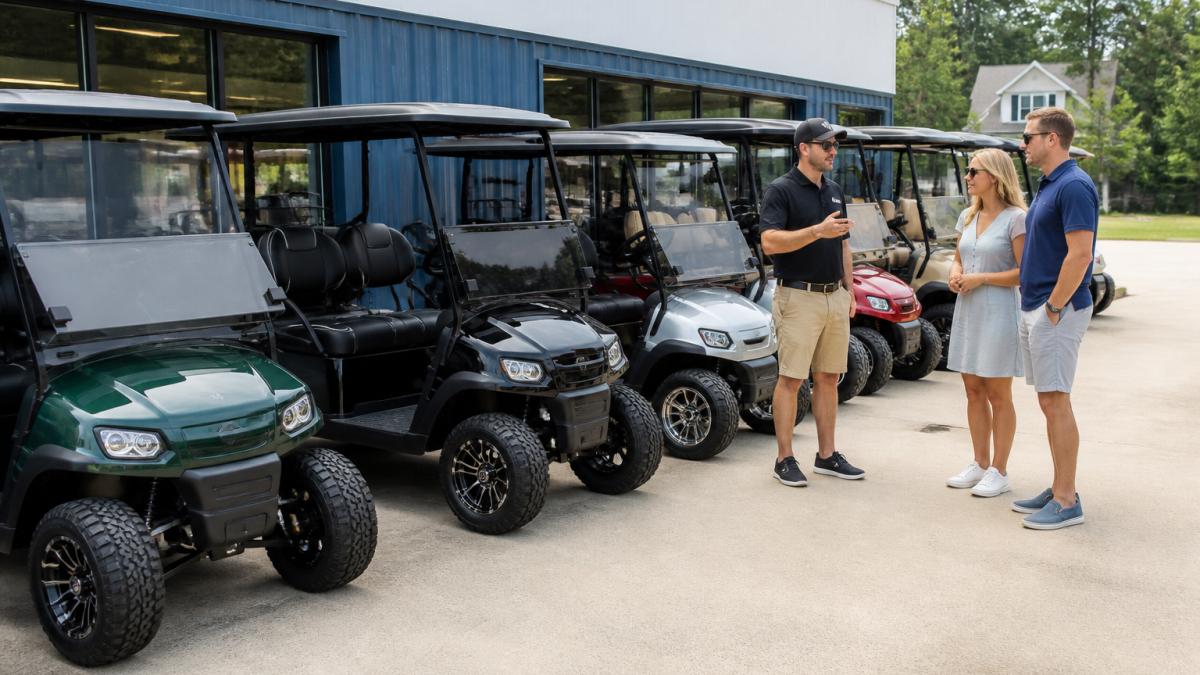
The short version: some dealerships lean traditional, with a broad mix of new and used inventory, while others attract buyers who want a specific build or brand.
What most buyers get wrong is treating this like a brand loyalty question. As the U.S. Federal Trade Commission's guidance on buying and warranties makes clear, warranty terms and return policies vary widely by seller, and those details matter more than the logo on the showroom wall.
Below, we cover inventory, service turnaround, new versus used math, and after-sale support, then recommend a dealer for your situation.
Side-by-Side Comparison: Inventory, Services, and Ownership Costs
Most dealers cover the basics: new carts, used carts, and service. The differences show up in depth and specialization.
Some dealerships carry a wider spread of new and used inventory, which helps if you want to compare models in person. Others appeal to buyers chasing a specific model, custom build, or narrower brand focus.
Quick Comparison Table
| Factor | Golf Cars of Woodstock | Prime Carts |
|---|---|---|
| Inventory mix | Broad new and used selection | Focused, often custom or specific models |
| Best for | Comparing several carts in one visit | Buyers who know exactly what they want |
| Service and repair | General service and tune-ups | Service tied to the brands they carry |
| Custom builds | Limited, depends on stock | A stronger emphasis on build-to-order |
| Pricing transparency | Varies by unit and condition | Varies by build and options |
One honest limitation: published pricing is rarely posted online by many dealers. Ask for a written quote covering the cart, delivery, and any accessories before you commit.
Golf Cars of Woodstock Reviews: What Local Buyers Say
Most top-ranking pages for this query quote one happy customer or skip reviews entirely. That is a problem, because review patterns are the closest thing to a test drive of the dealership itself. Here is how to read reviews like a careful buyer, and what to check at dealerships.
What the review pattern usually shows
Across public review platforms, local golf cart dealers in this market tend to draw reviews in three clusters:
- Sales experience, mentions of staff who know the inventory, walk buyers through model differences, and do not pressure a same-day decision.
- Service and repair, mentions of turnaround time, whether the shop called with an estimate before starting work, and whether the cart came back fixed the first time.
- Delivery and setup, mentions of whether the cart arrived charged, programmed, and ready to drive, or whether the buyer had to bring it back for adjustments.
Sales reviews tend to skew positive and service reviews mixed, not unique to either dealer, just a reflection of running a busy shop in peak season. The useful signal is not the star average but whether the owner responded to negative reviews and what they said.
How to compare review quality between the two dealers
Do not compare star counts between a small local dealer and a larger regional operation. Compare like with like:
- Filter to the last 12 months. A five-star review from three years ago says nothing about the shop that exists today. Ownership, staff, and parts suppliers change.
- Read the two- and three-star reviews first. Five-star reviews are usually about the sales floor. Mid-tier reviews are usually about the ownership experience, which is what you are actually buying.
- Count mentions of the same problem. One complaint about a delayed part is noise. Four complaints about the same delayed part is a pattern.
- Check whether the dealer replies. A reply that offers a specific fix (a callback, a loaner, a parts order) is a better signal than a generic apology.
- Look for review dates clustered around a promotion. A burst of reviews in one month can reflect a sales push rather than a durable service record.
What to ask before you trust a review
Reviews tell you what happened to someone else, not what will happen to you. Before you buy, ask each dealer directly:
- What is your current turnaround for a routine tune-up, and for a warranty repair?
- Do you stock parts for the make I am buying, or order them per job?
- Who performs warranty work, your shop or a third party?
A dealer who answers those questions in writing is giving you more than any review page can.
Do not buy a used cart based on a review alone. A documented battery test and a frame inspection matter more than any star rating. Rust and flood damage are the two problems that turn a cheap cart into an expensive one.
The unique angle: verified review comparison
Most pages summarize each dealer separately and never put reviews side by side. When you do, the broader-inventory dealer usually wins on selection reviews, and the focused dealer wins on custom-build and specialty-service reviews. Neither wins on price transparency, since many do not post prices online. Press that gap when you call, ask for a written quote and warranty summary, and judge how fast and completely they answer.
Prime Golf Carts Inventory: New, Used, and Custom Builds
Some dealerships' inventory skews toward buyers who want something specific. If you have a model, color, or accessory package in mind, a focused dealer can often get closer than a high-volume lot.
That focus cuts both ways: a narrower inventory means fewer carts to compare on the spot.
For custom work, ask three questions before you order: what the lead time is, what happens if a part is delayed, and whether the deposit is refundable. Get the answers in writing.
Golf Cart Repair and Service: Turnaround Times and Parts Availability
Service is where dealerships separate most in day-to-day ownership. Turnaround depends less on brand and more on parts availability and shop workload.
Many owners report waiting weeks for routine service at busy shops in peak season.
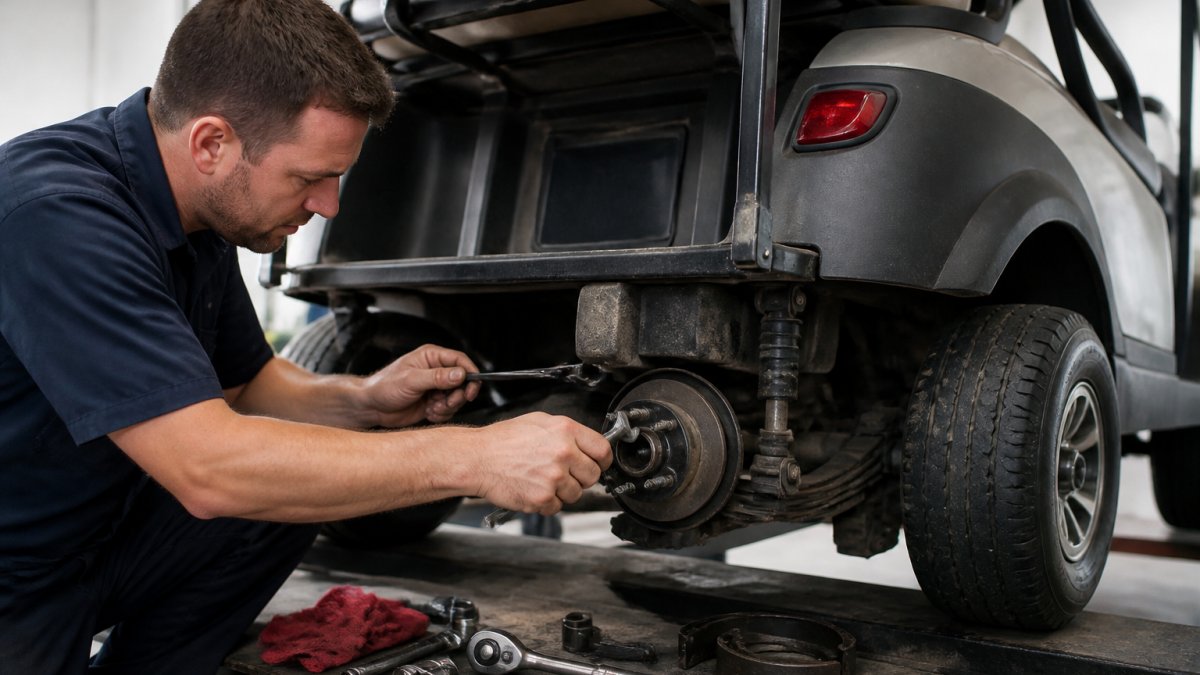
For golf cart repair and service, the practical checklist is simple:
- Confirm the shop stocks or can quickly source parts for your cart's make
- Ask for an estimate before work begins
- Ask whether they handle battery replacement in-house or outsource it
Battery replacement is the biggest recurring cost in cart ownership. Lead-acid packs are cheaper up front but need more maintenance; lithium costs more initially but lasts longer and holds charge better.
New vs. Used Golf Carts: Which Makes Sense for Your Budget?
Most pages answer this with a slogan: new for peace of mind, used for savings. True and useless. The real question is what each path costs over the years you own the cart, and how much risk you will carry to capture the savings. Here is the framework.
The four costs that actually decide it
Sticker price is the smallest part of the decision. The four costs that move the number are:
- Battery pack. The biggest recurring cost in cart ownership. A lead-acid pack is cheaper up front but needs watering, equalizing, and earlier replacement. A lithium pack costs more initially but lasts longer, holds charge better, and needs almost no maintenance. On a used cart, the pack's age and health can swing the deal's value more than the cart itself.
- Warranty coverage. A new cart usually carries a manufacturer warranty on the drivetrain and a separate term on the batteries. A used cart often comes with a limited or as-is policy. The difference in coverage is a real dollar value, not a marketing line.
- Service and parts. A cart whose make is widely serviced locally is cheaper to own than an orphan brand, even if the orphan is cheaper to buy. Ask each dealer whether they stock parts for the make, or order them per job.
- Delivery and setup. Ask whether delivery, programming, and accessory installation are included or billed separately. Bundled quotes hide where the cost sits.
A simple way to compare two carts
You do not need a spreadsheet, but you do need to normalize the two options. Write down, for each cart:
- Purchase price
- Battery type, age, and tested condition
- Remaining warranty, in writing
Then ask the dealer to put those five lines in the quote. A used cart only marginally cheaper than new, with an unknown battery and no warranty, rarely justifies the risk. A used cart with a recent lithium pack, a documented battery test, and a transferable warranty can be the better buy.
Financing and payment options
Golf cart financing is not standardized like auto financing. Some dealers offer in-house plans, some use a third-party lender, and some are cash-or-card only. Before comparing monthly payments, ask:
- What is the term, and is there a prepayment penalty?
- Is the rate fixed or variable?
- Is a down payment required, and how much?
A lower monthly payment on a longer term can cost more than a higher payment on a shorter one. Compare total cost, not the payment.
Which buyer should choose which
| Buyer type | Better fit | Why |
|---|---|---|
| First-time owner, wants peace of mind | New cart with full warranty | Removes battery and history risk |
| Budget-focused, willing to inspect | Used cart with documented battery test | Captures savings without guessing |
| Wants a specific build | Custom order through a focused dealer | Selection matters more than price |
| Needs a cart now | Whatever is in stock and ready | Availability beats optimization |
| Street-legal use | Cart with the required lighting, mirror, and registration package | Not every cart qualifies |
The cheapest cart on the lot is rarely the cheapest to own. Factor in battery condition, warranty coverage, delivery charges, and expected service before you compare sticker prices. Ask for a written quote with those lines broken out, and the comparison gets much easier.
Warranty, Returns, and After-Sale Support at Both Dealers
Warranty coverage is the detail buyers skip and later regret. New carts typically carry a manufacturer warranty; used carts often come with a limited or as-is policy.
Ask each dealer for the warranty in writing, including what it covers, how long it lasts, and who performs the work.
Returns are the other gap. Most golf cart sales are final, so treat the test drive as your return window.
For buyers weighing a cheaper out-of-area listing against a local dealer, remember that the FTC's guidance on used vehicle and warranty disclosures exists precisely because as-is sales shift risk to the buyer.
Local Buyer's Recommendation: Who Should Choose Which Dealer?
If you want to compare several carts in person and value a broad new and used selection, consider a dealer with diverse inventory.
For buyers in the Chattahoochee Hills and Serenbe area who want new EPIC, Star EV, or Greyson carts, plus service, rentals, and parts under one roof, Amplify Your Ride is worth a look.
The best move is to visit more than one dealer, drive the exact cart you are considering, and get every quote in writing.
Frequently Asked Questions
How do Golf Cars of Woodstock and Prime Carts compare on inventory?
Most dealers carry new and used carts, but their lineups differ. Some typically stock major brands like E-Z-GO and Club Car, while others may focus on specific lines or trade-ins. Availability changes weekly, so call ahead or check each dealer's website for current golf cart inventory, including four- and six-passenger models, street-legal builds, and electric or gas options.
Which golf cart dealer offers service and repairs?
Many golf cart dealers provide golf cart repair and service, but turnaround times and parts availability vary. Ask each dealer about their current wait for a tune-up, whether they stock common parts like batteries and brake components, and if they offer mobile service. For routine maintenance, scheduling ahead is key, especially during peak season when service bays fill up quickly.
Should I buy a new or used golf cart?
New carts come with full warranty coverage, the latest lithium battery technology, and zero prior wear, but they cost more upfront. Used carts cost less and can be a good value if you inspect the frame for rust, check battery age and health, and confirm service records. For many buyers, a certified pre-owned cart from a reputable dealer offers the best balance of price and reliability. Consider your budget, how long you plan to keep the cart, and whether you want the latest features.
What should I compare when buying a golf cart from a dealer?
Focus on total ownership cost, not just the sticker price. Compare battery type and replacement cost (lithium vs. lead-acid), warranty length and what it covers, availability of parts and service, and delivery or setup fees. Also check customer reviews for after-sale support and ask about financing options. A cheaper cart upfront can cost more over time if service is slow or parts are hard to find. Test drive both new and used options to feel the difference.
Comparing Woodstock golf carts gets easier once you stop shopping on price alone and start weighing service, warranty, and battery condition together. Amplify Your Ride serves the Chattahoochee Hills and Serenbe area with new EPIC, Star EV, and Greyson carts, plus used inventory, parts, repairs, and event rentals. Get started with Amplify Your Ride and find a cart that fits how you actually ride.