 comparison
New vs Used Golf Cart Value: 2026 Comparison Guide
Table of Contents
- New vs Used Golf Cart Value: The Core Trade-Off
- New vs Used Golf Cart Prices: What to Expect in 2026
- Depreciation and Golf Cart Resale Value: What You Lose and When
- Your Used Golf Cart Buying Checklist: Inspect Before You Pay
- Golf Cart Battery Replacement Cost and Ownership Math
- Upgrades vs. Value Add: What Actually Holds Its Worth
- Which Golf Cart Brands Retain Value Best
- How to Calculate the True Value of a Used Golf Cart
- Frequently Asked Questions
Last Updated: October 9, 2026
New vs Used Golf Cart Value: The Core Trade-Off
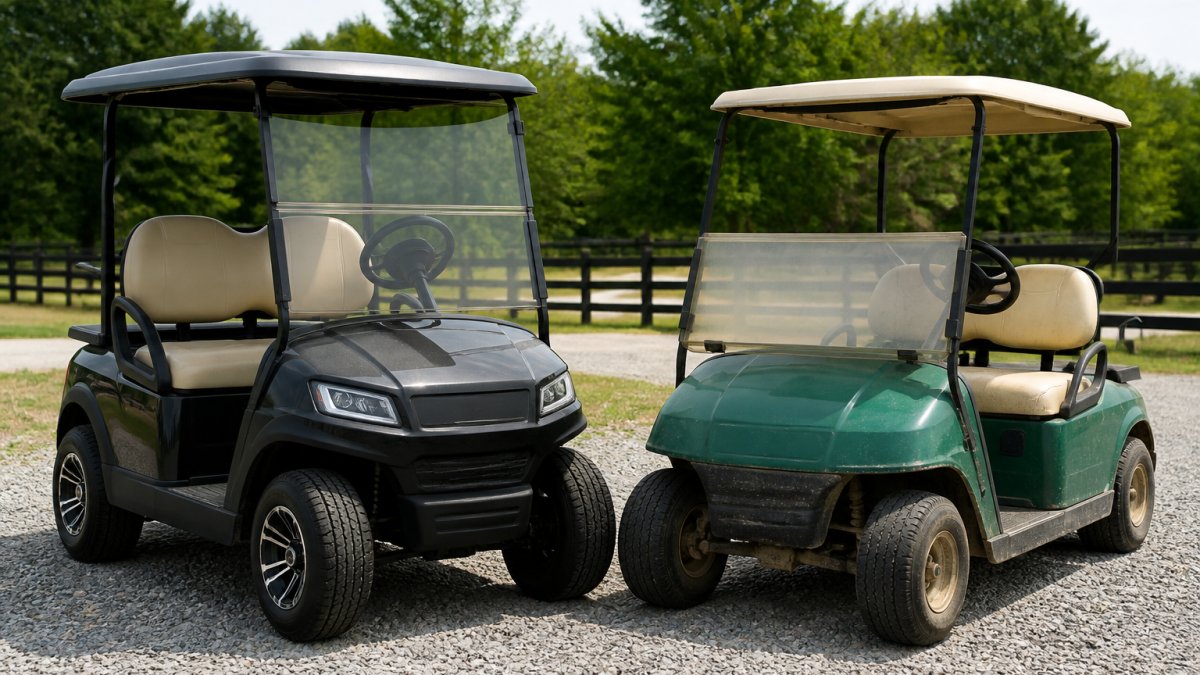
The new vs used golf cart value decision comes down to one question: do you want to pay for certainty or save on the sticker price?
Golf cart value is the realistic amount a cart is worth today, factoring in age, battery condition, brand, and how it was maintained.
This guide breaks down 2026 pricing, depreciation, battery costs, and the inspection checklist we use on every trade-in.
New vs Used Golf Cart Prices: What to Expect in 2026
Broad price ranges are the starting point, not the answer. According to Nick's Golf Carts 2026 price guide, new carts run roughly $5,000 to $18,000, while used carts sit between $2,000 and $8,000. The Cart Finder's cost guide puts the used ceiling closer to $9,000 once street-legal models enter the picture.
New Cart Price Ranges
New prices swing widely based on seating and powertrain. A basic two-seat electric cart sits at the low end. A four-seat lifted cart with lithium power and street-legal equipment lands at the top. Dealership pricing also reflects setup, delivery, and any accessories added before pickup.
Used Cart Price Ranges
Used pricing depends far more on condition than on model year alone. Two identical 2021 carts can differ by several thousand dollars if one has fresh batteries and the other needs a replacement pack. Buyers comparing used golf cart prices should treat battery age as the single biggest swing factor.
| Factor | New Cart | Used Cart |
|---|---|---|
| Upfront cost | Higher | Lower |
| Warranty | Full coverage | Limited or none |
| Battery condition | Known | Must verify |
| Depreciation risk | Highest in year one | Already absorbed |
| Maintenance surprises | Minimal early | Possible anytime |
Depreciation and Golf Cart Resale Value: What You Lose and When
Golf carts depreciate fastest in the first two years, then level off. That curve is why golf cart resale value matters more to new buyers than most realize. A cart that loses a large share of its value in year one is a poor short-term hold.
Battery Type and Its Impact on Resale
Battery type drives resale more than any other single feature. Lithium-ion batteries hold value better than lead-acid packs because they last longer, weigh less, and need no watering.
Lead-acid packs are cheaper to replace but degrade faster and demand regular maintenance. Buyers should ask for the battery's age in writing. A pack past its expected service life is a negotiating point, not a selling feature.
Your Used Golf Cart Buying Checklist: Inspect Before You Pay
Inspect the frame, battery, and drivetrain before money changes hands. Flood damage and frame rust are the two problems that turn a bargain into a money pit, and both hide under cosmetic fixes.
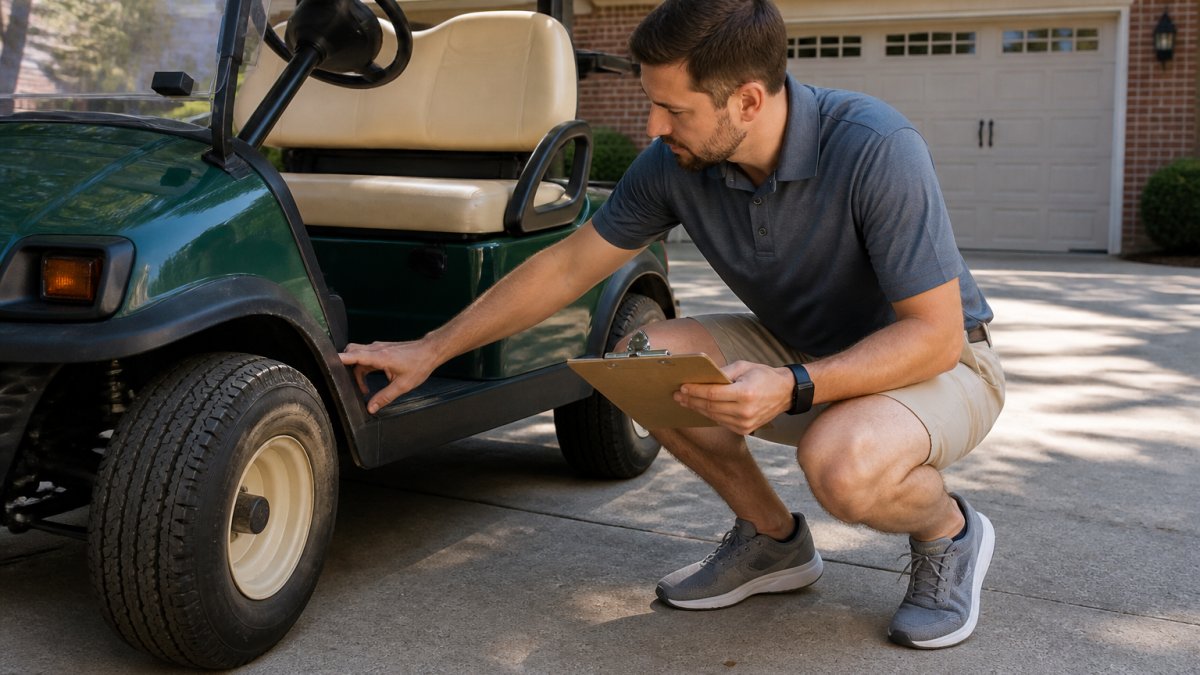
Frame, Tires, and Powertrain Checks
- Check the frame rails for rust, especially under the floor mat and battery tray
- Look for waterlines, mud residue, or mismatched paint that suggest flood exposure
- Inspect tire wear for uneven patterns, which point to alignment or suspension issues
- Test the motor under load on a hill, not just on flat ground
- Confirm the charger works and check its condition
Golf Cart Battery Replacement Cost and Ownership Math
Battery replacement is the largest single ownership expense, and it is the one buyers underestimate most. Golf cart battery replacement cost varies by type. Lead-acid packs generally need replacing every four to six years with diligent watering; lithium packs commonly last eight to ten years with no watering.
That difference is why purchase price alone is a bad comparison. The honest way to compare two carts is total cost of ownership (TCO), which adds four things over your ownership window:
- Purchase price, what you pay today, new or used
- Depreciation, the value you lose between purchase and resale
- Energy cost, electricity to charge the pack, or gas and oil for a gas cart
- Service and consumables, batteries, tires, brakes, and routine maintenance
A Worked TCO Example
Take two otherwise identical four-seat carts you plan to keep for five years, driven about 3,000 miles a year in a community where carts are used daily:
| Cost Component | Used Cart, Tired Lead-Acid | Used Cart, Healthy Lithium |
|---|---|---|
| Purchase price | $4,500 | $6,500 |
| Battery replacement in window | $1,200 (year 1) | $0 |
| Tires and brakes over 5 years | $600 | $600 |
| Routine service over 5 years | $500 | $250 |
| Electricity over 5 years | $450 | $350 |
| Estimated resale after 5 years | $2,000 | $4,000 |
| Net cost of ownership | $5,250 | $3,700 |
The cheaper cart costs more to own. The lithium cart's higher sticker is offset by the battery it does not need, the service it does not require, and the resale value it keeps.
Why the Numbers Swing So Much
Three variables move the TCO math more than anything else:
- Battery age at purchase. A pack past its expected service life is a near-term $1,000-plus expense. Ask for the manufacture date, not just a condition claim.
- Annual mileage. A cart driven 500 miles a year wears far slower than one driven 3,000. High-mileage carts need tires, brakes, and bushings sooner.
- Charging setup. A properly matched charger extends pack life. A mismatched or failing charger shortens it and can damage a new pack.
Upgrades vs. Value Add: What Actually Holds Its Worth
Most aftermarket accessories do not pay you back at resale. Lifted suspensions, custom wheels, and sound systems cost real money but add little to golf cart value.
The upgrades that do hold value are the practical ones: lithium batteries, street-legal lighting and mirror kits, and quality tires.
Cosmetic condition still matters. Clean seats, an intact roof, and working lights raise curb appeal and support a higher asking price.
Which Golf Cart Brands Retain Value Best
Brand reputation is one of the strongest forces behind resale value, and it splits the market into three rough tiers. Established brands with wide dealer networks and available parts hold value better than off-brand carts, because buyers know they can get them serviced. A common pattern in the used market is that top-tier carts retain a noticeably higher share of their original price than no-name imports of the same age.
The Three Tiers
Tier 1, Established brands with national dealer and parts networks. These are the names buyers recognize and mechanics can service anywhere.
Tier 2, Regional and specialty brands with growing dealer support. These brands are well known in the areas where they sell but may have thin service coverage elsewhere.
Tier 3, Off-brand and gray-market imports. These carts often look competitive on the showroom floor but lose value fastest.
What Actually Drives Retention
Four factors separate a brand that holds value from one that does not:
- Parts availability. If a buyer can order a replacement part in days, they will pay more. If they cannot, they discount hard.
- Service network. A local dealer who stocks parts and knows the platform is worth real money at resale.
- Fleet presence. Brands used by golf courses and resorts have proven durability and a deep used-parts ecosystem.
- Model continuity. Brands that keep the same platform for years make used carts easier to service and easier to trust.
How to Use This When You Shop
Check whether a dealer or independent shop near you services the brand before you buy.
Amplify Your Ride specializes in new sales of EPIC, Star EV, and Greyson golf carts. These are the brands we stock and service, and they are the ones we can stand behind on parts and support.
The lesson for shoppers is straightforward: a well-known brand with local service access is worth more than an identical cart with no support nearby.
How to Calculate the True Value of a Used Golf Cart
Start with a baseline and adjust for condition. According to Golf Cart Search's value calculator, a used cart in good condition is typically worth 40 to 70 percent of its original MSRP, depending on age, brand, and power type.
Then adjust:
- Battery age and type, subtract the cost of a replacement pack if the battery is near end of life
- Frame and body condition, subtract heavily for rust or flood damage
- Brand and parts availability, add for brands with local service support
- Street-legal status, add for properly equipped LSV models with valid title and VIN
- Upgrades, add only for functional upgrades like lithium power and lighting kits
- Regional demand, carts move faster and hold value better in communities where they are used daily
That last point is the one most guides skip. Market demand is local. In a community where residents drive carts daily, used inventory turns quickly and prices hold.
Frequently Asked Questions
How much should I spend on a used golf cart?
Used golf cart prices vary, with street-legal models pushing toward the higher end. A used cart in good condition is typically worth a percentage of its original MSRP, depending on age, brand, and power type. Budget for a battery replacement if the cart is more than four or five years old, since that can add a significant cost. Always factor in maintenance history and cosmetic condition before settling on a number.
What affects the resale value of a golf cart?
Golf cart resale value depends on several factors: model year, battery health and type (lithium-ion vs. lead-acid), maintenance history, cosmetic condition, and whether the cart is street legal. Upgrades like aftermarket accessories can help, but they rarely return their full cost. Curb appeal, tire condition, and frame integrity also matter. Carts with documented service records and a clean title typically command higher prices in a private party sale or trade-in.
How do I know if a used golf cart is a good value?
Start with a used golf cart buying checklist: verify the model year, check battery age and health, inspect the frame for rust or flood damage, test the motor and brakes, and review service records. Compare the asking price against general value guidelines. If the cart needs a battery replacement soon, subtract that cost from your offer. A cart with a solid frame and recent battery is usually a better value than a cheaper one needing major repairs.
Is it worth buying a used golf cart instead of new?
A used cart can save you thousands upfront, but you take on more maintenance uncertainty. New carts come with warranties and predictable early ownership costs, while used carts may need battery replacement or repairs sooner. If you can inspect the cart thoroughly or buy from a dealer who stands behind it, used often delivers better value. If you want zero surprises and the latest features, new is worth the premium.
The real challenge is not finding a golf cart. It is knowing whether the one in front of you is worth the price. Amplify Your Ride handles that part for you, with new and used sales, service, parts, and rentals in the Chattahoochee Hills area. We stock EPIC, Star EV, and Greyson carts, inspect every used cart before it hits the lot, and back our sales with a service team that knows these machines. Get started with Amplify Your Ride and buy a cart you can trust, new or used.