 Listicle
Best Golf Carts for 2026 Buyers: Top Models & Brands
Last Updated: October 23, 2026
Quick Summary
The best golf carts for 2026 buyers depend on how you drive: the E-Z-GO RXV 2 at $9,274 suits couples, the RXV 4 at $10,349-$11,949 fits families, and the Club Car Onward 4 Passenger LSV at $14,299 is the street-legal pick. Decide on battery chemistry before choosing a body style, since lead-acid versus lithium-ion can swing the price by thousands.
- Club Car is cited for a durable aluminum frame and a long-standing commercial fleet presence.
- Yamaha earns praise as the most reliable gas cart option for buyers skipping charging.
- Bintelli and MadJax earned recognition in a 2026 buyer survey as top overall brands and top LSV choices.
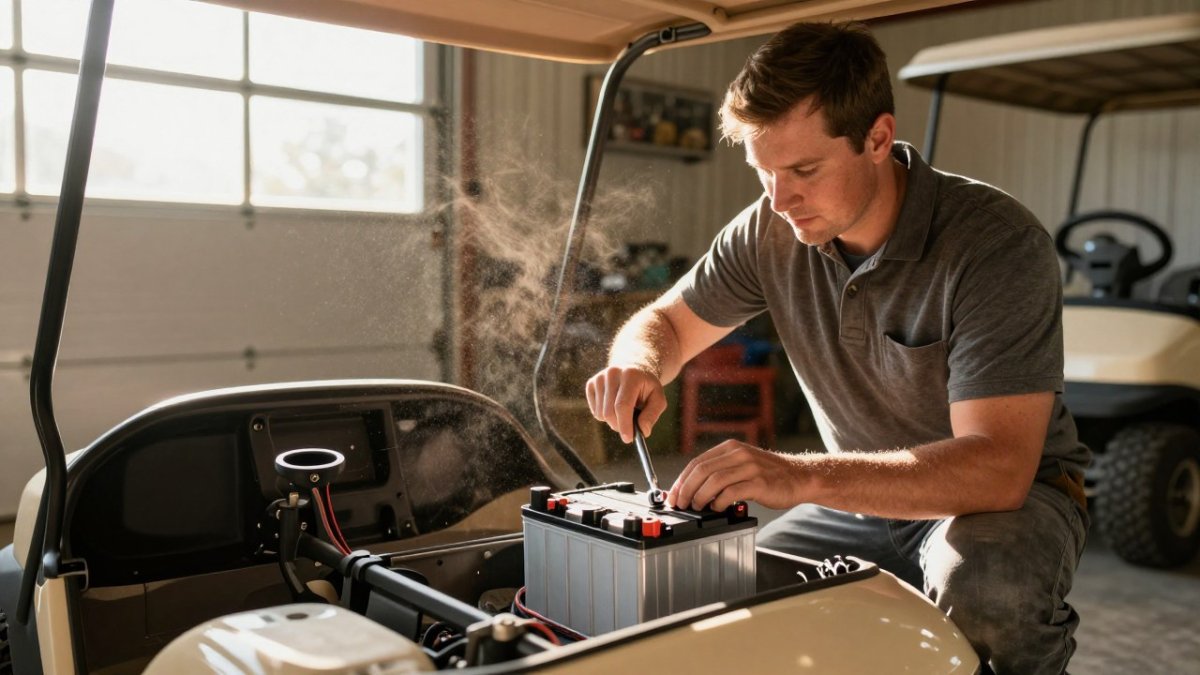
- On a used cart, ask for the battery's age and type and factor a replacement into your offer.
- Electric carts generally need less routine engine service, while gas carts need oil, filters, and tune-ups.
Table of Contents
- Best Golf Carts for 2026: Quick Comparison
- Best Golf Cart Brands for 2026 Buyers
- Club Car vs. E-Z-GO Golf Carts: Which Is Right for You?
- New vs. Used Golf Carts: What 2026 Buyers Should Know
- Golf Cart Range and Battery Life: Electric vs. Gas
- Total Cost of Ownership: What the Price Tag Doesn't Show
- Street-Legal Rules and Where to Buy in 2026
- Frequently Asked Questions
Best Golf Carts for 2026: Quick Comparison
Shopping for the best golf carts for 2026 buyers means matching a cart to how you actually drive it, not just picking the shiniest model on the lot. At Amplify Your Ride, we sell and service new and used carts.
Here's the short version before we get into the details:
| Model | Seats | Power | Listed Price | Best For |
|---|---|---|---|---|
| E-Z-GO RXV 2 | 2 | Electric | $9,274 | Couples and solo drivers |
| E-Z-GO RXV 4 | 4 | Electric | $10,349-$11,949 | Families needing four seats |
| Club Car Onward 4 Passenger LSV | 4 | Electric | $14,299 | Street-legal neighborhood use |
| Club Car Onward | Varies | Electric | Contact dealer | Buyers prioritizing durability |
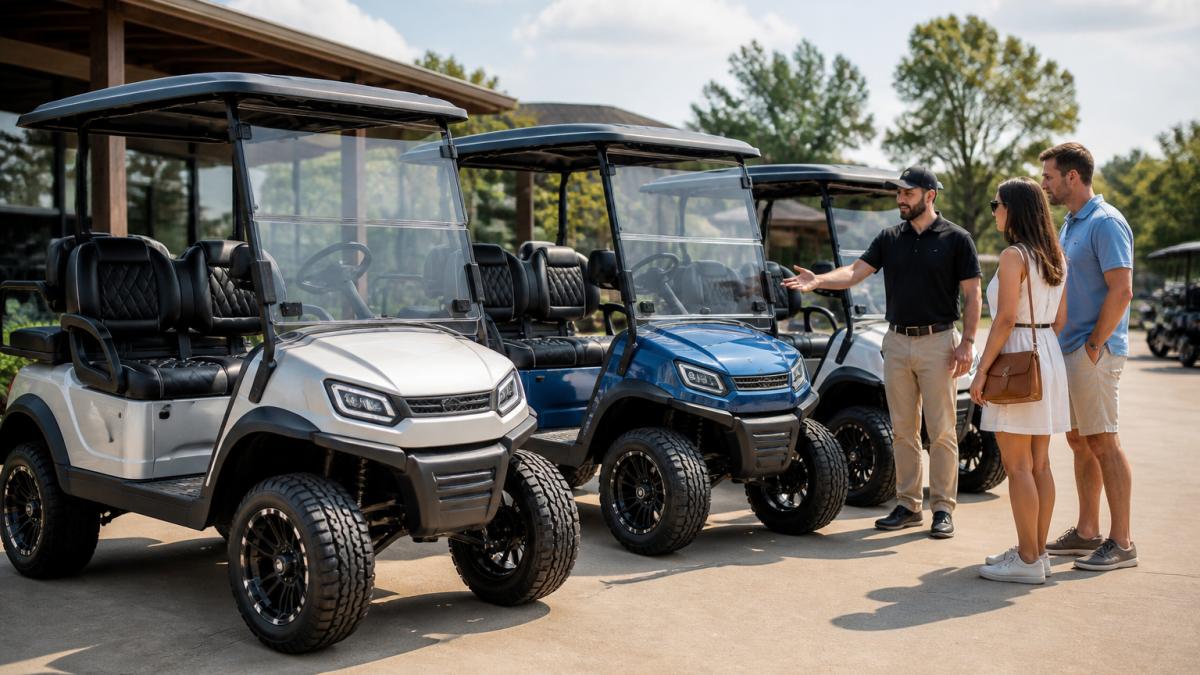
The E-Z-GO RXV 2 is the value pick for two people. The RXV 4 adds rear seating without a huge jump in price. Step up to the Club Car Onward 4 Passenger LSV if you need a street-legal cart, and expect to pay for that classification.
Best Golf Cart Brands for 2026 Buyers
Brand reputation matters less than dealer support, but a few names consistently earn their keep, and the way to compare them is on ownership factors, not marketing.
Club Car is cited for a durable aluminum frame and a long-standing commercial fleet presence, which matters if you plan to keep a cart for a decade.
E-Z-GO offers the widest spread of published price points, from the two-seat RXV 2 at roughly $9,274 up through four-passenger RXV 4 models in the $10,349-$11,949 range. The RXV platform is common enough that independent shops stock parts, which shortens repair waits. E-Z-GO's warranty terms vary by model and dealer, so confirm coverage in writing before you sign.
Yamaha earns praise as the most reliable gas cart option, a real consideration if you want to skip charging entirely. Gas Yamaha carts need oil, filters, and tune-ups, but they avoid battery replacement costs and refuel in minutes. For large properties or long trail use, that trade-off is often worth it.
| Brand | Platform strength | Warranty/service note | Parts availability | Best for |
|---|---|---|---|---|
| Club Car | Durable aluminum frame; fleet-proven | Broad dealer network; confirm model terms | Widely stocked consumables | Long-term private-path and LSV use |
| E-Z-GO | Wide price spread; RXV common platform | Varies by model and dealer | Independent shops stock parts | Value-focused two- and four-seat buyers |
| Yamaha | Gas reliability reputation | Confirm gas vs. electric terms | Common gas consumables | Long-range and large-property use |
| Evolution / ICON EV | Value-tier pricing | Verify local service depth | Varies by dealer | Budget-conscious buyers |
| Bintelli / MadJax | LSV-focused recognition | Confirm LSV warranty terms | Varies by dealer | Street-legal use on a budget |
For buyers weighing terrain performance, our guide to the best golf carts for hilly terrain covers which models actually hold speed and grip on grades.
Club Car vs. E-Z-GO Golf Carts: Which Is Right for You?
Club Car and E-Z-GO are the two names most buyers compare first, and the choice usually comes down to one question: do you need a street-legal vehicle or a course-and-community cart? Club Car's Onward 4 Passenger LSV is classified as a low-speed vehicle, which opens up legal road use in many jurisdictions. E-Z-GO's RXV line covers the two- and four-passenger electric market at lower published prices.
Our read: if you're staying on private paths and community lanes, the E-Z-GO RXV 4 gives you four seats for less. If you need to legally cross or drive on public roads, the Club Car LSV classification is worth the premium. Neither is "better" in a vacuum. They solve different problems.
If you're comparing other head-to-head matchups, our STAR EV vs EPIC comparison walks through another popular pairing so you can see how the decision framework applies.
New vs. Used Golf Carts: What 2026 Buyers Should Know
Used carts can save real money, but the savings evaporate if you inherit someone else's frame rust, flood damage, or a battery pack that's near the end of its life.
When you buy new, you get the current battery technology, a full warranty, and a known service history. When you buy used, you get a lower entry price and often a cart that's already proven itself.
The battery is the hidden variable. A lead-acid pack typically needs replacement sooner than a lithium-ion pack, and the replacement cost can run into the thousands.
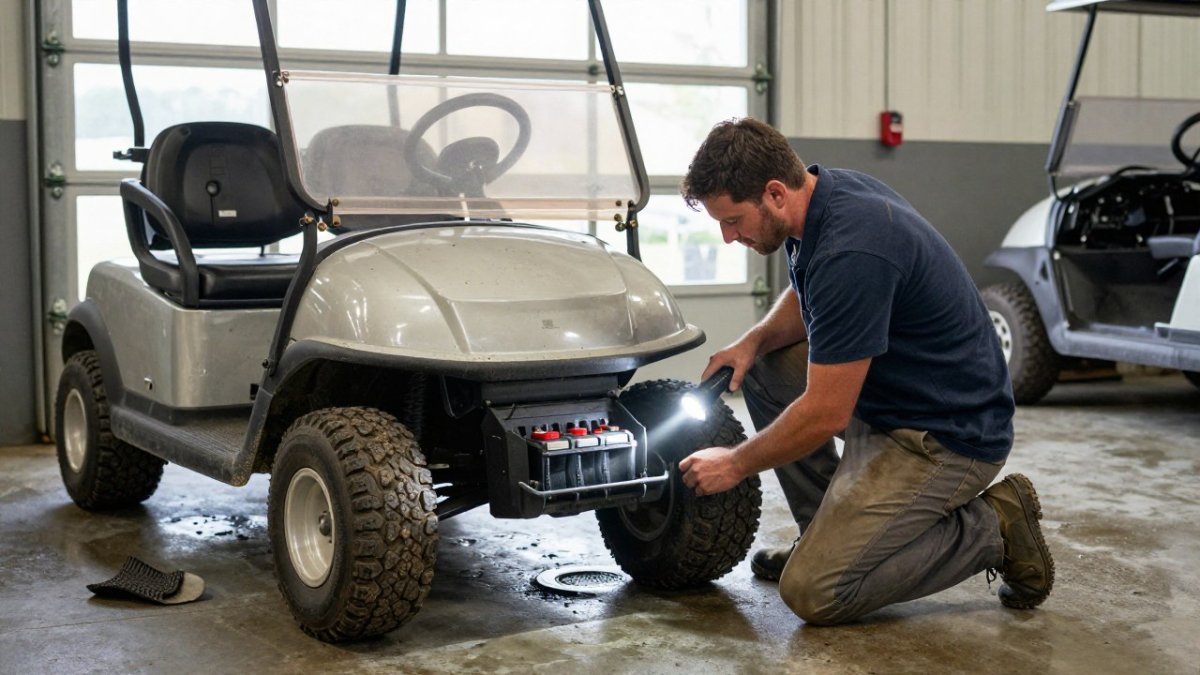
Inspection checklist for any used cart:
- Frame: look for rust, cracks, and signs of flood exposure; check welds and battery trays.
- Battery: confirm age, type, and voltage; ask for a load test or charge-history record.
- Tires and brakes: uneven wear can signal alignment or suspension issues.
- Controller and motor: test acceleration and listen for unusual noise under load.
- Service history: ask who serviced it and whether records exist.
- Title and classification: confirm whether it is a standard cart or a registered low-speed vehicle.
Decision framework:
- If your budget is tight and you can inspect and service locally, a certified pre-owned cart with a documented battery age is often the best value.
- If you need a full warranty, current battery technology, and a known service history, buy new.
- If you plan to keep the cart a decade or more, weigh the new-cart warranty and battery health against the used-cart discount, the gap often narrows once you price in a battery replacement.
For a direct value comparison to help you decide, our new vs used golf cart value guide lays out the trade-offs side by side.
Golf Cart Range and Battery Life: Electric vs. Gas
Range anxiety is the number one concern we hear from first-time electric buyers, and it's mostly overblown for community use. A modern electric cart handles daily local trips without issue, and lithium-ion packs hold their charge better than older lead-acid setups. The trade-off is upfront cost and eventual replacement.
Here's the honest breakdown: electric wins on running costs and quiet, gas wins on long uninterrupted range and refueling speed. For most neighborhood and community driving, electric is the practical choice. For large properties or long trail use, gas earns its place.
Battery replacement is the cost nobody budgets for, so it's worth understanding before you buy. Our golf cart battery replacement cost breakdown covers what to expect down the road.
Total Cost of Ownership: What the Price Tag Doesn't Show
The sticker price is the easy part. The real cost of a golf cart includes batteries, tires, brakes, charging equipment, and routine service over the years you own it. A cart that's cheap upfront but needs a new battery pack in year three can cost more than a pricier model with a healthier pack.
Maintenance costs vary by power type and how hard you drive the cart. Electric carts generally need less routine engine service, while gas carts need oil, filters, and tune-ups. Tires and brakes wear on both. The buyers who budget for these costs upfront are the ones who aren't surprised later.
For a full breakdown of what maintenance actually runs, our golf cart maintenance cost guide itemizes the expenses so you can plan realistically.
Street-Legal Rules and Where to Buy in 2026
Street legality is where buyers get tripped up most. A low-speed vehicle classification, like the Club Car Onward 4 Passenger LSV carries, is what opens up legal road use in many areas, but the specific rules depend on your state and local jurisdiction.
Where you buy matters as much as what you buy. A local dealer who services what they sell, stocks parts, and stands behind the cart is worth more than a slightly lower price from someone who disappears after the sale.
At Amplify Your Ride, we sell new EPIC, Star EV, and Greyson carts alongside used inventory, and we service what we sell.
Frequently Asked Questions
What is the best golf cart brand for 2026?
The best golf cart brands for 2026 depend on your priorities. Club Car is known for a durable platform, E-Z-GO offers a range of two- and four-passenger models, Yamaha is cited as a reliable gas option, and Bintelli and MadJax are named top overall and top LSV choices in a 2026 survey. For value, Evolution is noted for offering substantial value for the money. Test-drive a few brands and compare local dealer support before deciding.
Do golf carts hold their value?
Golf carts generally hold value better than many other vehicles, especially well-maintained models from established brands like Club Car, E-Z-GO, and Yamaha. Depreciation varies by brand, condition, battery type, and local demand. Used carts with documented service history and good batteries tend to sell faster. A certified pre-owned cart from a dealer often retains resale value better because it comes with a warranty and verified condition.
What should I look for when buying a golf cart in 2026?
Focus on your daily route and passenger needs first. Check seating capacity, cargo space, and whether you need a street-legal LSV. For electric carts, ask about battery type (lithium-ion vs. lead-acid), range, and charging time. For gas carts, consider maintenance and noise. Also review warranty terms, dealer parts availability, and total cost of ownership including insurance and service. A test drive on your actual terrain is essential.
Are electric or gas golf carts better for most buyers?
Electric golf carts suit most neighborhood and personal transportation use because they are quieter, require less routine maintenance, and can be charged at home. Gas carts make sense for longer range, hilly terrain, or heavy utility use where charging is inconvenient. Battery technology has improved, with lithium-ion packs offering longer life and faster charging. Consider your daily mileage and access to charging before choosing.
How far can an electric golf cart travel on one charge?
Range varies by battery type, cart weight, terrain, and driving style. Many modern lithium-ion electric carts can travel 30 to 50 miles per charge, while lead-acid models typically offer less. Real-world range is often lower than the manufacturer's estimate, especially with hills or heavy loads. Ask your dealer for tested range figures and consider your longest typical trip before buying.
The hardest part of buying a golf cart in 2026 isn't picking a brand, it's matching the cart to how you'll actually use it and budgeting for the costs that come after the sale. Amplify Your Ride carries new EPIC, Star EV, and Greyson carts plus quality used inventory, and we back every sale with local service and parts support. Get started with Amplify Your Ride and drive a cart that fits your life, not just your driveway.