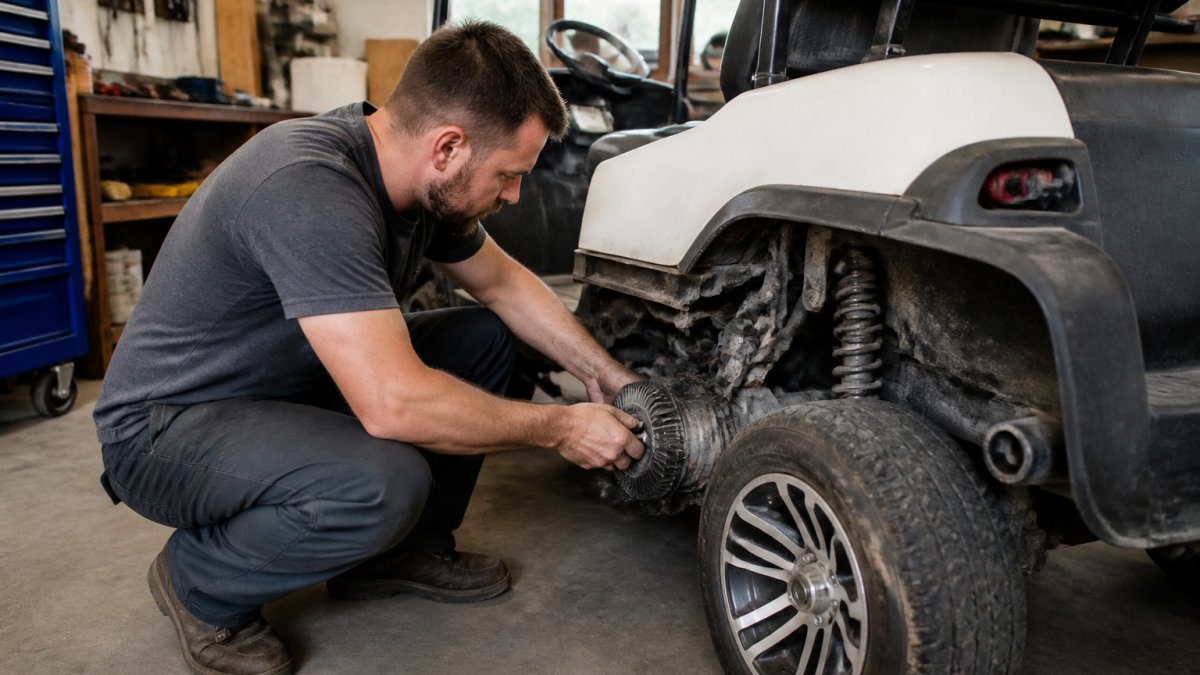
 how-to
Fast Golf Cart Repair Services: Get Back on the Road
Table of Contents
- When Your Golf Cart Breaks Down: What You're Really Facing
- Common Mechanical Issues and Troubleshooting
- How to Fix Golf Cart Steering Problems Before They Worsen
- Golf Cart Battery Maintenance Tips for Longer Life
- Common Golf Cart Electrical Problems and Diagnostics
- DIY vs. Professional Repair: Cost-Benefit Analysis
- Finding Reliable Golf Cart Repair Services Nearby
- Preventative Maintenance: Avoid Costly Repairs
- Frequently Asked Questions
Last Updated: September 29, 2026
When Your Golf Cart Breaks Down: What You're Really Facing
Your golf cart won't start. Or it's losing power mid-drive. Or the steering feels loose. When something goes wrong, you're facing a choice: spend hours troubleshooting yourself, or find fast golf cart repair services nearby that can get you back on the road quickly.
Most golf cart owners don't know where to start when mechanical issues hit. Understanding what's actually broken before calling for help gets you the fastest resolution.
This guide covers the most common golf cart problems, how to diagnose them yourself, and when professional repair is worth the investment.
Common Mechanical Issues and Troubleshooting
Golf carts fail in predictable ways, and knowing which category your issue falls into cuts repair time in half.
Why won't it start?
A golf cart that won't start usually points to one of three culprits: battery, solenoid, or ignition system. Start here before calling for service.
Check your battery first. If the cart clicks when you turn the key but doesn't crank, the battery is likely dead. Clean white or blue crusty buildup off the terminals with a wire brush. If the battery is more than five years old and won't hold a charge overnight, replacement is needed.
If the battery looks clean and charged but you hear nothing when you turn the key, the solenoid is probably stuck. You can sometimes free it by tapping the solenoid gently with a wrench while someone turns the key. If that doesn't work, solenoid replacement is straightforward and inexpensive.
If the battery is good and the solenoid responds but you hear no clicking relay, the ignition switch may be faulty and requires professional diagnosis.
Loss of power or hesitation
A cart that starts but loses power under load or hesitates during acceleration usually has a fuel delivery or ignition timing issue, or a transmission problem if it's electric.
For gas carts, check the fuel filter first. A clogged fuel filter starves the engine of gas and is cheap to replace if you've gone more than a season without doing so.
Worn or fouled spark plugs cause hesitation and power loss. If your cart hasn't had a tune-up in two years, new spark plugs are cheap insurance.
For electric carts, loss of power points to the controller or battery pack. If the cart hesitates during acceleration, the controller may be failing. Battery diagnostics require professional help.
How to Fix Golf Cart Steering Problems Before They Worsen
Steering issues feel minor until they don't. A loose steering wheel or wandering track can become dangerous quickly, especially on slopes or uneven terrain.
Loose steering usually comes from worn steering linkage or a loose steering column. Check where the steering shaft connects to the steering gearbox and tighten the connection bolts if loose.
If tightening doesn't help, worn tie rods and ball joints need replacement. This is not a DIY fix unless you have suspension experience.
Check wheel bearings by grabbing the top of the tire and moving it side to side. Excessive movement means the bearing needs replacement, which requires lifting the cart safely and some mechanical skill.
The fastest way to address steering problems is to have a mobile technician diagnose the issue on-site. Steering safety affects everyone on the cart, not just the driver.
Golf Cart Battery Maintenance Tips for Longer Life
Your battery is your cart's heart. Proper maintenance extends its life by years and prevents the sudden failures that leave you stranded.
Water flooded lead-acid batteries every 30 days. Check the water level when the cart hasn't been used for a few hours, it should cover the plates by about half an inch. Use distilled water only; tap water contains minerals that damage the battery. Never let plates dry out or overfill.
Charge batteries fully after each use. Leaving a partially charged battery overnight speeds up sulfation, which reduces battery capacity permanently.
Keep battery terminals clean and corrosion-free. Disconnect the negative terminal first, then the positive. Clean both terminals and connectors with a wire brush. Reconnect positive first, then negative.
Extreme heat reduces battery life significantly (pubmed.ncbi.nlm.nih.gov). Park in shade when possible and avoid charging a hot battery immediately after use. Let it cool for 30 minutes first.
Replace your battery pack every 4-6 years depending on usage. A battery that won't hold a charge for more than a few hours is nearing end-of-life. Replacement batteries are a significant expense, but a dead battery in the field is far more costly in terms of time and frustration.
Common Golf Cart Electrical Problems and Diagnostics
Electrical issues range from simple to complex, but most start with the same diagnostic steps.
A cart that loses power intermittently often has a loose connection in the main power circuit. Check where the battery cables connect to the controller and motor, tighten all connections, and clean any corrosion.
Flickering headlights or a dim dash indicate a weak battery or poor connection. The lights are the first thing to fail when voltage drops. If your lights dim when you press the accelerator, the battery is struggling to deliver current under load. This points to either a weak battery or a failing alternator (on gas carts).
No power to the lights or accessories while the motor works suggests a blown fuse or relay. Most carts have a fuse box under the seat or near the battery. A blown fuse looks blackened or has a broken wire inside.
DIY vs. Professional Repair: Cost-Benefit Analysis
You can handle some repairs yourself. Battery maintenance, spark plug changes, and basic cleaning are within reach for most owners. But knowing when to call a professional saves money and time.
DIY makes sense for:
- Battery water level checks and cleaning
- Spark plug replacement on gas carts
- Fuel filter changes
- Fuse replacement
- Tire pressure and basic tire maintenance
- Bolts and fasteners that need tightening
Professional repair is worth it for:
- Electrical diagnostics and controller work
- Steering linkage replacement
- Transmission or drivetrain issues
- Suspension work and wheel bearing replacement
- Engine rebuild or major overhaul
- Warranty work that requires certified technicians
Finding Reliable Golf Cart Repair Services Nearby
When you need fast golf cart repair services nearby, the right technician makes all the difference. Not all repair shops are equal.
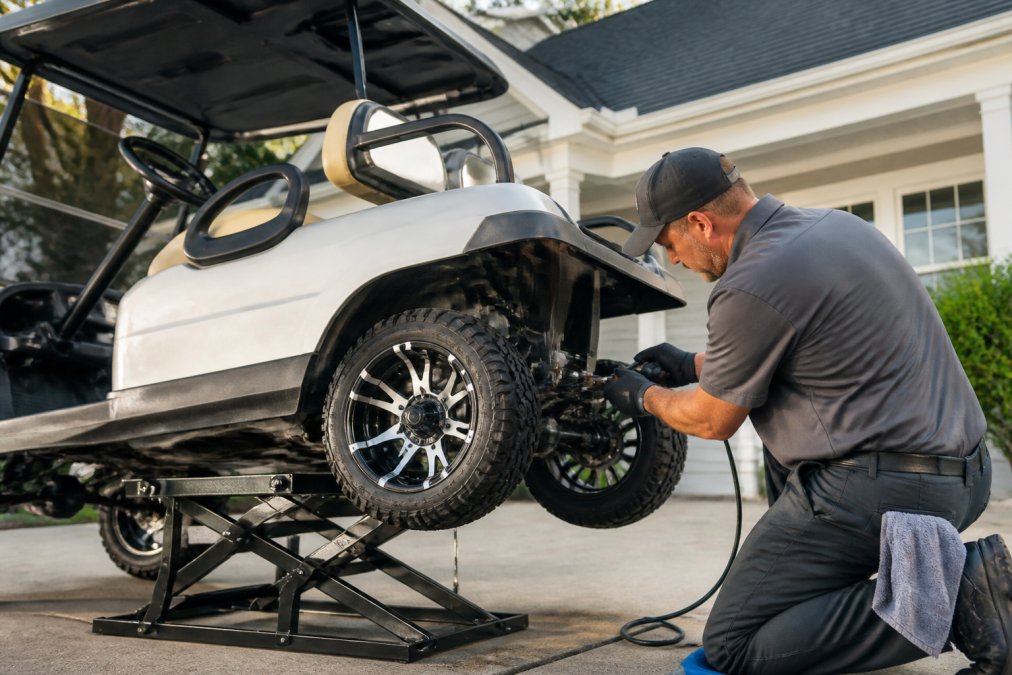
What to look for in a mobile technician
Speed matters, but quality matters more. A technician who arrives quickly but misdiagnoses your problem wastes your time and money. Look for someone who asks questions before quoting a price.
Emergency roadside repair checklist
When your cart breaks down unexpectedly, use this checklist to assess the situation before calling for help.
- Battery: Check terminals for corrosion. Turn the key and listen for clicking or silence.
- Fuel or charge: Is there fuel in the tank or adequate battery charge? How long has it been since you charged?
- Obvious damage: Look for fluid leaks, loose belts, or visible breaks in hoses.
- Lights and accessories: Do any lights work? Can you hear the motor trying to start?
- Recent changes: Did anything unusual happen before the breakdown? Noise, smell, or loss of power?
Preventative Maintenance: Avoid Costly Repairs
The cheapest repair is the one you prevent. A simple maintenance schedule catches problems before they become emergencies.
Every 50 hours of use or monthly, whichever comes first:
- Check battery water level (flooded batteries only)
- Inspect tires for pressure and damage
- Check all fluid levels
- Clean battery terminals
- Test lights and accessories
Every 100 hours or quarterly:
- Change engine oil and filter (gas carts)
- Inspect brake pads and rotors
- Check steering for looseness
- Examine suspension components for damage
Every year:
- Replace fuel filter (gas carts)
- Inspect spark plugs and replace if worn
- Check drivetrain for leaks or wear
- Have brakes serviced and bled if needed
- Inspect the frame for rust or cracks
| Maintenance Task | Frequency | Difficulty |
|---|---|---|
| Battery water check | Monthly | Easy |
| Tire pressure check | Monthly | Easy |
| Oil and filter change | Every 100 hours | Moderate |
| Spark plug inspection | Quarterly | Moderate |
| Full system inspection | Annually | Professional |
| Brake service | Annually | Professional |
Frequently Asked Questions
What are the most common reasons a golf cart won't start?
The most frequent culprits are dead or weak batteries, a faulty solenoid, loose battery connections, or a broken starter motor. Before calling for service, check that battery terminals are clean and tight, the key is fully turned, and the cart is in Park. If the cart clicks but won't turn over, the battery is likely depleted. A professional diagnostic can pinpoint the exact issue in minutes and save you from unnecessary part replacements.
How often should I have my golf cart serviced?
Most manufacturers recommend a preventative inspection every 12 months or every 500 operating hours, whichever comes first. This includes checking battery water levels, inspecting brake pads and steering linkage, testing electrical connections, and verifying tire pressure. Regular service intervals catch small issues before they become expensive mechanical failures and extend the life of your cart significantly.
How long does a typical golf cart repair take?
Simple fixes like solenoid replacement or brake adjustment typically take 30 minutes to 2 hours. Electrical diagnostics and controller repairs may take 2-4 hours. Major work like drivetrain repairs or chassis restoration can take several days. A mobile technician can often give you a time estimate after the initial diagnostic, and many field service providers offer same-day turnaround on common issues.
Can I perform basic golf cart maintenance myself?
Yes, battery water level checks, tire pressure adjustments, and basic cleaning are safe DIY tasks. You can also replace wiper blades and light bulbs. However, work on the electrical system, solenoid, controller, steering linkage, and brake components requires specialized tools and training. Attempting these yourself can cause component compatibility issues, void your warranty, or create safety hazards. A professional diagnostic service can show you what's safe to handle and what needs an authorized dealer.