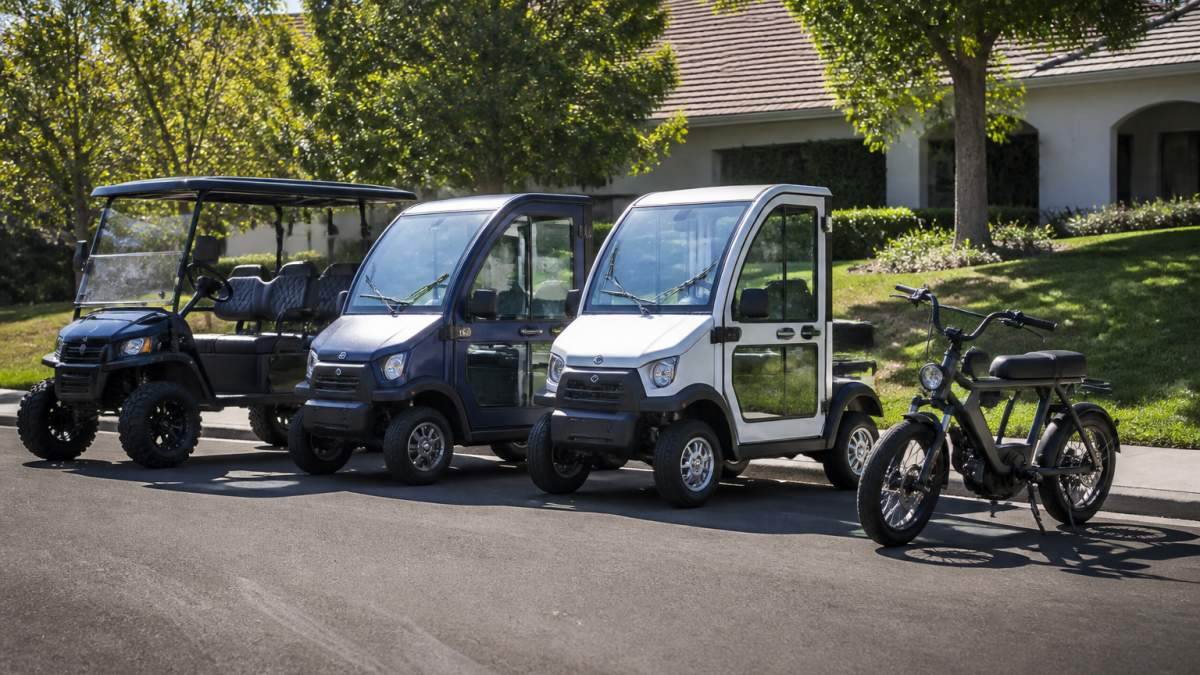
 comparison
Golf Cart Alternatives for North Atlanta: 2026 Guide
Table of Contents
- Why Residents Choose Golf Cart Alternatives
- Street Legal LSV vs Golf Cart: Key Differences
- Top Golf Cart Alternatives Compared
- Choosing a Golf Cart Dealer: What Actually Matters
- Custom Golf Cart Accessories for Sale and Performance
- Total Cost of Ownership: Beyond the Purchase Price
- Legal Requirements and Registration for On-Road Use
- Frequently Asked Questions
Last Updated: September 30, 2026
Why Residents Choose Golf Cart Alternatives
Street-legal LSVs and golf cart alternatives offer the ability to drive on public roads, better safety features, and more passenger comfort than standard golf carts. Amplify Your Ride helps residents understand why golf cart alternatives matter for their daily commute and weekend trips.
Residents want golf cart alternatives that work on public streets, offer weather protection, and provide comfortable seating for longer drives. Standard golf carts handle private paths well, but cannot legally cross main roads or drive on streets with 35 mph speed limits.
This guide breaks down the top golf cart alternatives available today, explains the legal differences that actually matter, and walks you through total cost of ownership so you know what you're really paying for.
Street Legal LSV vs Golf Cart: Key Differences
A street-legal LSV is engineered for public road use with automotive-grade safety features and federal compliance, while golf carts are designed for private property. This difference determines capability, cost, and legal road access.
Here's what separates them:
| Feature | Standard Golf Cart | Street-Legal LSV |
|---|---|---|
| Top Speed | 12-14 mph | Up to 35 mph |
| Public Road Use | No | Yes |
| Safety Features | Basic | Automotive-grade (seat belts, windshield, signals) |
| Registration Required | No | Yes |
| Insurance | Not required | Required |
| Passenger Capacity | 2-6 | 2-6 |
| Weather Protection | Optional | Standard |
Street-legal LSVs meet federal safety standards with automotive-style steering, proper braking systems, and enclosed cabins. For any public road use, an LSV is the only legal choice.
Top Golf Cart Alternatives Compared
Three products stand out for residents seeking reliable golf cart alternatives: Club Car Onward, EZGO Liberty 4F ELiTE, and GEM LSV. Each takes a different approach to comfort, technology, and on-road capability.
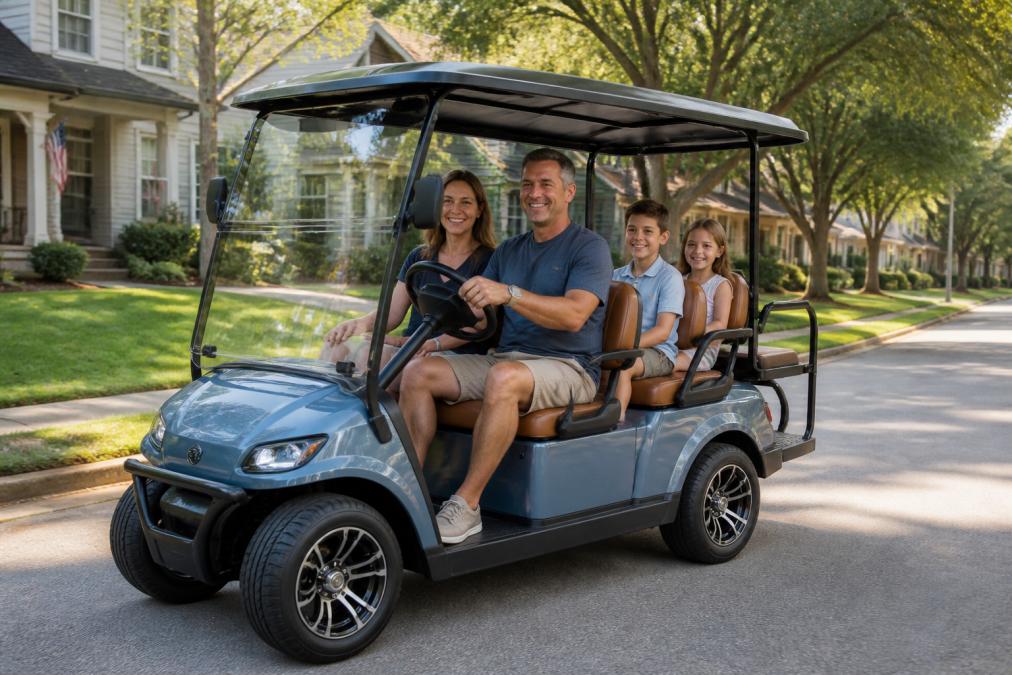
Club Car Onward: Premium Comfort and Reliability
Club Car Onward offers customizable seating for 2-6 passengers in electric or gas powertrains, with integrated safety features and high-back contoured seats for longer drives.
EZGO Liberty 4F ELiTE: Advanced Lithium Battery Technology
EZGO Liberty 4F ELiTE features forward-facing seating for four passengers, a compact footprint, and zero-maintenance lithium batteries with industry-leading warranty coverage.
GEM LSV: Full Street-Legal Capability
GEM LSV is purpose-built for on-road driving with automotive-grade safety, street-legal status for 35 mph roads, enclosed cabin options, and automotive-style steering and braking.
Choosing a Golf Cart Dealer: What Actually Matters
The right dealer shapes your entire ownership experience. A dealer's reputation matters more than price.
Choose authorized dealers with direct manufacturer relationships for faster parts availability, trained technicians, and warranty support.
Ask about service turnaround time. A dealer should handle most service requests in days, not weeks.
Inspect used inventory for frame rust and flood damage. Reputable dealers disclose issues and explain maintenance history. Suspiciously cheap carts often hide serious problems.
At Amplify Your Ride, we disclose condition and explain maintenance history.
Custom Golf Cart Accessories for Sale and Performance
The right accessories improve function and enjoyment.
Performance upgrades enhance speed, range, and handling. Comfort accessories improve longer drives. Utility additions expand capability.
Safety upgrades include LED lighting, mirrors, backup cameras, and seat belts for public road use.
Match accessories to your actual use: commuter vehicles, recreational vehicles, and utility transport have different needs.
Total Cost of Ownership: Beyond the Purchase Price
A complete cost analysis reveals why a cheaper vehicle often costs more over time.
Battery Technology: The Largest Long-Term Cost Variable
Battery choice determines maintenance burden and replacement costs more than any other factor.
Annual Operating Costs
Electricity (Electric Vehicles): 3-5 kWh per 25 miles at $0.12-$0.16/kWh = $360-$600 annually for 500 monthly miles.
Depreciation and Resale Value
Premium Brands (Club Car, EZGO): Year 5 resale value 40-50% of original price due to strong dealer networks and brand recognition.
Complete 5-Year Total Cost of Ownership Example
Electric Club Car Onward (Premium, Lithium): $12,000 purchase + $1,500 insurance + $500 registration + $2,250 electricity + $1,500 maintenance + $2,000 repairs = $20,400 subtotal. Minus $6,000 resale = $14,400 net (or $2,880/year).
How to Calculate Your Specific Total Cost of Ownership
- Determine your holding period (3, 5, or 10 years)
- Estimate annual mileage
- Research battery replacement timing (lead-acid: year 4-6; lithium: year 10+)
- Get local insurance quotes
- Research resale value of comparable vehicles
- Contact your state DMV for registration fees
- Sum all costs, subtract resale value, and divide by years of ownership
This calculation reveals the true economic choice, not just the lowest sticker price.
Legal Requirements and Registration for On-Road Use
Legal requirements for public road use vary by state and locality. Understanding them before purchase ensures your vehicle is usable where you live.
Federal Standards for Street-Legal LSVs
Street-legal LSVs must meet Federal Motor Vehicle Safety Standards (FMVSS) requiring seat belts, safety glass, headlights/taillights, turn signals, automotive-grade steering and braking, a VIN, and maximum 35 mph capability. Golf carts lack these systems and cannot legally operate on public roads.
State Registration and Title Requirements
Once an LSV meets federal standards, registration requirements depend on your state. Most states require:
Registration Process:
- Proof of ownership or bill of sale
- VIN verification (some states require in-person inspection)
- Proof of insurance
- Registration fee (typically $50-$200 annually, varies by state)
- Title application (one-time cost, usually $25-$75)
Local Ordinance Variations That Actually Restrict Use
Federal and state law are only the starting point. Local municipalities impose additional rules that can make an LSV unusable in your area, a critical detail most buyers overlook.
Common Local Restrictions:
- Road access limits: Some cities permit LSVs only on residential streets with speed limits of 25 mph or less, effectively banning them from main roads and commercial districts.
- Parking prohibitions: Certain municipalities restrict where LSVs can be parked overnight or during business hours, requiring dedicated parking areas.
- Time-of-day restrictions: Some jurisdictions allow LSV operation only during daylight hours, prohibiting dawn or dusk driving.
- Age and licensing requirements: A few localities require operators to hold a valid driver's license; others allow unlicensed drivers (typically 16+) to operate LSVs.
- Equipment mandates: Some cities require additional safety equipment beyond federal standards, such as backup cameras, audible warning systems, or reflective striping.
Why This Matters: An LSV legal in your state may be illegal on the specific roads you want to drive. Before purchasing, contact your city or county planning department and request the municipal code sections governing low-speed vehicles. Ask specifically:
- Which roads permit LSV operation?
- Are there time-of-day or seasonal restrictions?
- What parking rules apply?
- Are any additional safety equipment requirements mandated?
Golf Carts on Public Roads: The Gray Area
Standard golf carts are not street-legal and cannot be operated on public roads. However, some states and municipalities allow golf cart operation on specific residential roads under limited conditions:
- Operation only on roads with posted speed limits of 25 mph or less
- Daytime operation only (typically sunrise to sunset)
- Requirement for a slow-moving vehicle emblem
- Operator must hold a valid driver's license
- No crossing of state highways or major arterial roads
Conversion Kits and Street-Legal Claims
Some aftermarket companies sell "street-legal conversion kits" for standard golf carts, claiming to add safety features and enable road use. These kits are misleading and often illegal.
Timeline and Cost Summary
Before you buy, budget for legal compliance:
- Registration and title: $75-$275 (one-time)
- Annual registration renewal: $50-$200
- Insurance: $200-$400 annually
- Potential local permit fees: $0-$100 (varies by municipality)
- Registration processing time: 1-6 weeks
These costs are separate from the vehicle purchase and ongoing maintenance. Factor them into your total cost of ownership decision.
Frequently Asked Questions
What's the main difference between a street-legal LSV and a standard golf cart?
Street-legal LSVs are engineered to meet federal safety standards for on-road use, with features like automotive-grade seat belts, windshield glass, and braking systems. Standard golf carts lack these safety components and are restricted to golf courses and private property. LSVs can legally operate on public roads with speed limits up to 35 mph, while golf carts cannot. The trade-off is higher initial cost and registration requirements for LSVs.
How do I know if a used golf cart has frame rust or flood damage before buying?
Request a pre-purchase inspection from a reputable dealer who can examine the frame welds, undercarriage, and electrical connections for corrosion or water damage. Ask the dealer for service records and the vehicle's history. Inspect the battery terminals and connectors for white or blue corrosion, which signals moisture exposure. A reputable dealer will provide transparency about the cart's condition and warranty coverage, unlike sketchy private listings.
What unexpected maintenance costs should I budget for with a golf cart?
Lead-acid batteries typically need replacement every 4-6 years, costing $1,500-$3,000. Tire replacements run $400-$800 per set. Brake pads, motor brushes, and controller repairs average $200-$600 each. Lithium battery systems cost more upfront but require minimal maintenance. Regular tune-ups and parts availability depend heavily on choosing a dealer with strong inventory and efficient service. A knowledgeable dealer can help you understand maintenance schedules before unexpected bills arise.
What custom golf cart accessories actually improve performance and comfort?
High-performance tires improve handling and reduce wear on the suspension. LED lighting upgrades enhance visibility and safety for on-road use. Upgraded seating with lumbar support reduces fatigue on longer drives. Windshield and roof options provide weather protection. Performance controllers and upgraded motors increase acceleration and top speed. Battery management systems extend lithium battery life. A knowledgeable dealer can recommend accessories that match your specific use case rather than selling unnecessary add-ons.
How do I choose between dealers when comparing golf cart options?
Verify dealer status with the manufacturer, which can indicate access to genuine parts and warranty support. Check service turnaround times, avoid dealers with multi-week wait times. Ask about their inventory of both new and pre-owned vehicles. Request references from recent buyers and ask about their diagnostic process before quoting repairs. Transparent pricing and upfront communication about costs separate reputable dealers from those that hide fees or rush you into poor decisions.